


Direct Answer
Educational content is more effective than traditional ads when the customer needs to understand something before she is ready to buy.
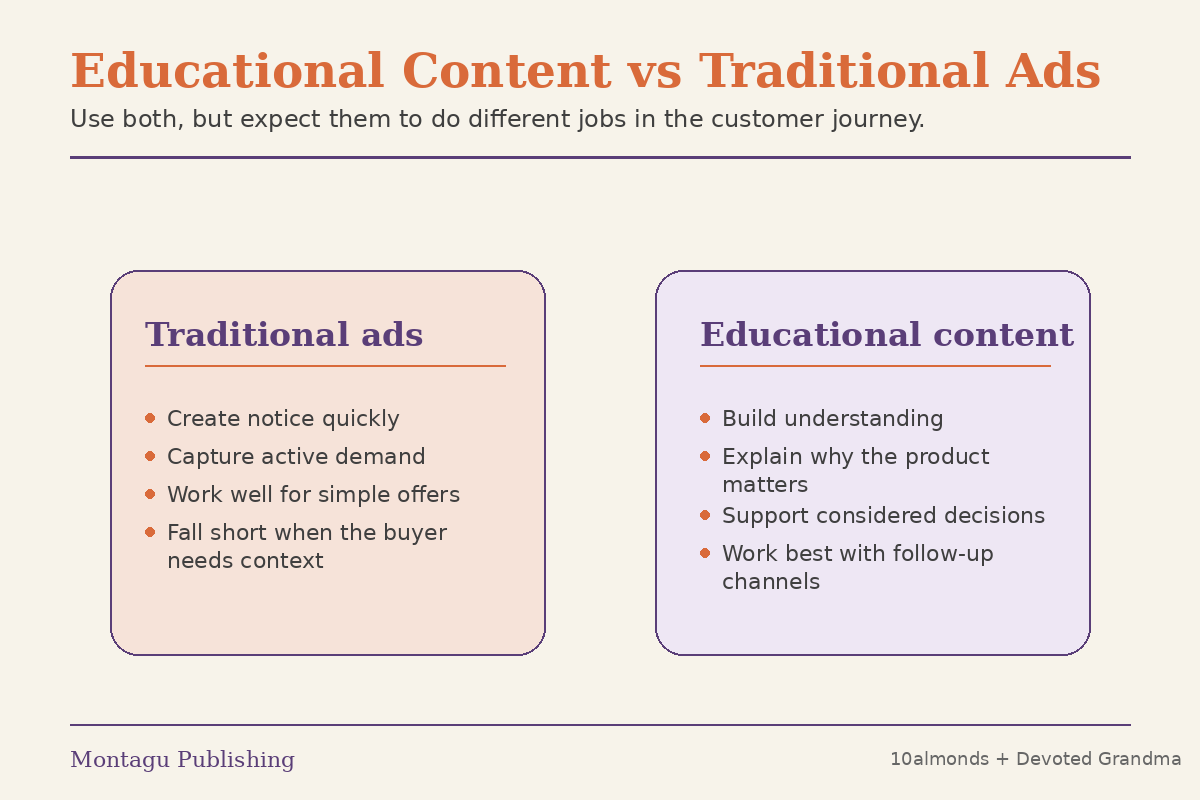
Traditional ads are useful for notice, reminders, offers and demand capture. They can put a brand in front of the right audience quickly. But they are often too short to answer the questions that stand between interest and action.
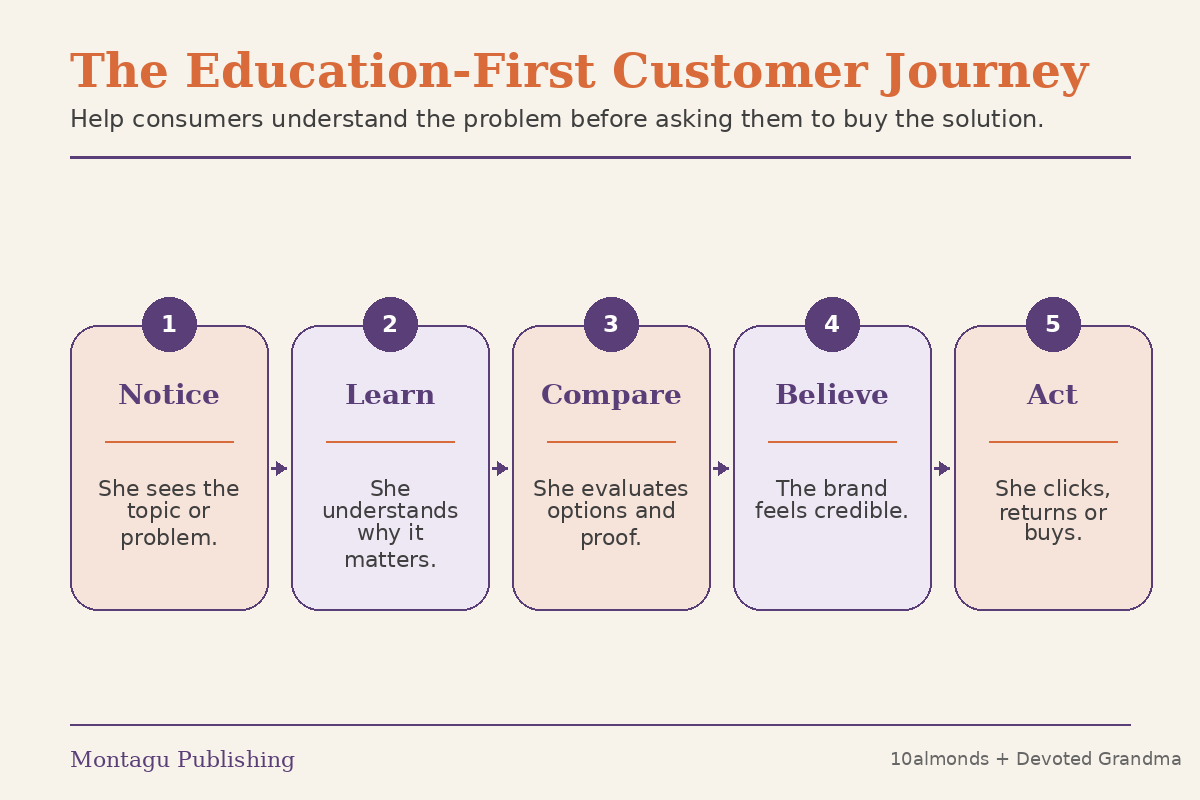
Educational content works differently. It explains the problem, helps consumers compare options, shows why a product matters and gives the brand a chance to build credibility before asking for the sale. That makes it especially useful for wellness, health, healthy ageing, supplements, financial services and other categories where the buying decision is considered rather than impulsive.
Quick Summary
- Educational content works best when a product needs explanation before purchase.
- Traditional ads are still useful, but they should not be asked to do the whole job.
- For wellness brands, education can reduce uncertainty around ingredients, benefits, usage and claims.
- The strongest campaigns often use ads to create notice and educational content to build confidence.
- Success should be measured by quality of attention, qualified traffic, return visits and assisted conversions, not only last-click sales.
The Problem With Asking Ads to Explain Too Much
Many brands expect a short ad to do too many things at once. It has to introduce the brand, explain the problem, communicate the product benefit, create urgency, reassure the customer and persuade someone to click.
That is a lot to ask from a few words, a small image or a short video slot.
This is why some campaigns feel visible but ineffective. People see the message, but they do not understand enough to care. The campaign has created notice, but not belief — the same distinction we drew out in why consumers ignore traditional digital advertising.
For simple products, that may not matter. A discount on a familiar household item does not need a long explanation. But for products that involve health, money, family, safety or daily routines, people usually need more context before they act.
Traditional Ads and Educational Content Do Different Jobs
The mistake is not using traditional ads. The mistake is expecting them to replace explanation.
Paid social can introduce a product to a new audience. Paid search can capture people who are already looking. Retargeting can bring interested visitors back. Display can work as a broad reminder. Each of those channels has a role.
Educational content has a different role. It helps the customer understand the issue that the product is trying to solve. It gives the brand space to explain why the product exists, what the consumer should consider and how to make a better decision.
A useful media plan does not ask one channel to carry the full customer journey. It gives every channel a clear job.
Why This Matters More in Wellness and Health Categories
Wellness purchases often carry more perceived risk than everyday consumer purchases. A customer is not only asking whether she likes the product. She may also be asking whether it is safe, whether the claim is credible, whether the product is right for her age, health goals or routine, and whether it is worth the money.
That creates a gap between attention and action.
An ad can start the conversation. Educational content can answer the questions that appear next.
For example, a magnesium supplement brand may not need to begin by saying buy our magnesium. It may first need to help readers understand what magnesium does, why deficiency is discussed, what questions to ask before choosing a supplement and when to speak with a healthcare professional. Once the reader understands the topic, the product has a more credible place in the conversation.
That does not mean educational content should make exaggerated claims. In health-related categories, claims need to be truthful, clearly qualified and properly supported. The FTC’s Health Products Compliance Guidance is a useful reminder that marketers should consider the express and implied messages consumers may take from an ad and review the support for those claims carefully.
When Educational Content Works Better Than Ads Alone
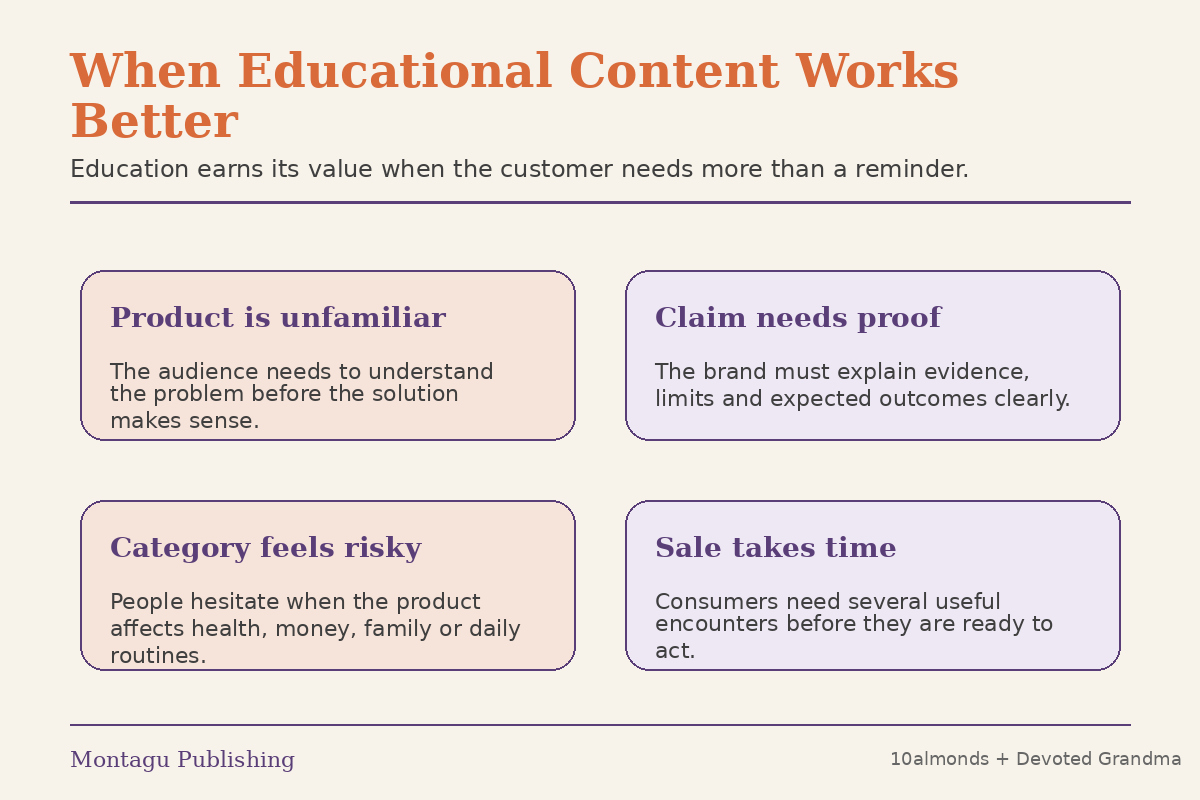
Educational content is especially useful in four situations.
First, the product is unfamiliar. If people do not yet understand the problem, they are unlikely to care about the solution.
Second, the claim needs proof. A short ad can make a claim, but it rarely has room to explain the evidence, limits or context behind it.
Third, the category feels personal or risky. Anything connected to health, ageing, financial security, family wellbeing or long-term lifestyle change usually needs a higher level of confidence before purchase.
Fourth, the sale takes time. If consumers need several encounters before acting, educational content can become the bridge between first awareness and later conversion.
What Educational Content Should Actually Do
Educational content is not a long advertisement. If it begins and ends with the product, readers can usually tell.
A useful educational article should answer a real question the customer may already have. It should explain the problem clearly, describe what matters when comparing options and avoid pretending that one product is the only possible answer — and where reviews or endorsements are involved, the FTC’s guidance on endorsements, influencers and reviews is worth keeping in mind so the content stays honest and properly disclosed.
For a wellness brand, this might mean explaining a health topic before introducing a relevant product. For a financial services brand, it might mean helping women understand a life-stage decision before presenting the service. For a travel brand, it might mean helping empty nesters think through safety, ease and confidence before suggesting a trip.
The reader should feel more informed after reading it, even if she does not buy immediately. That is what gives the brand credibility.
A Mistake We Often See
A common mistake is measuring educational content as if it were a bottom-of-funnel ad — the same category error we described in how brands build trust before asking consumers to buy.
If the only question is how many people bought immediately after reading, the value of education is likely to be underestimated. Educational content often works earlier in the buying journey. It helps people understand the category, remember the brand and return later with more confidence.
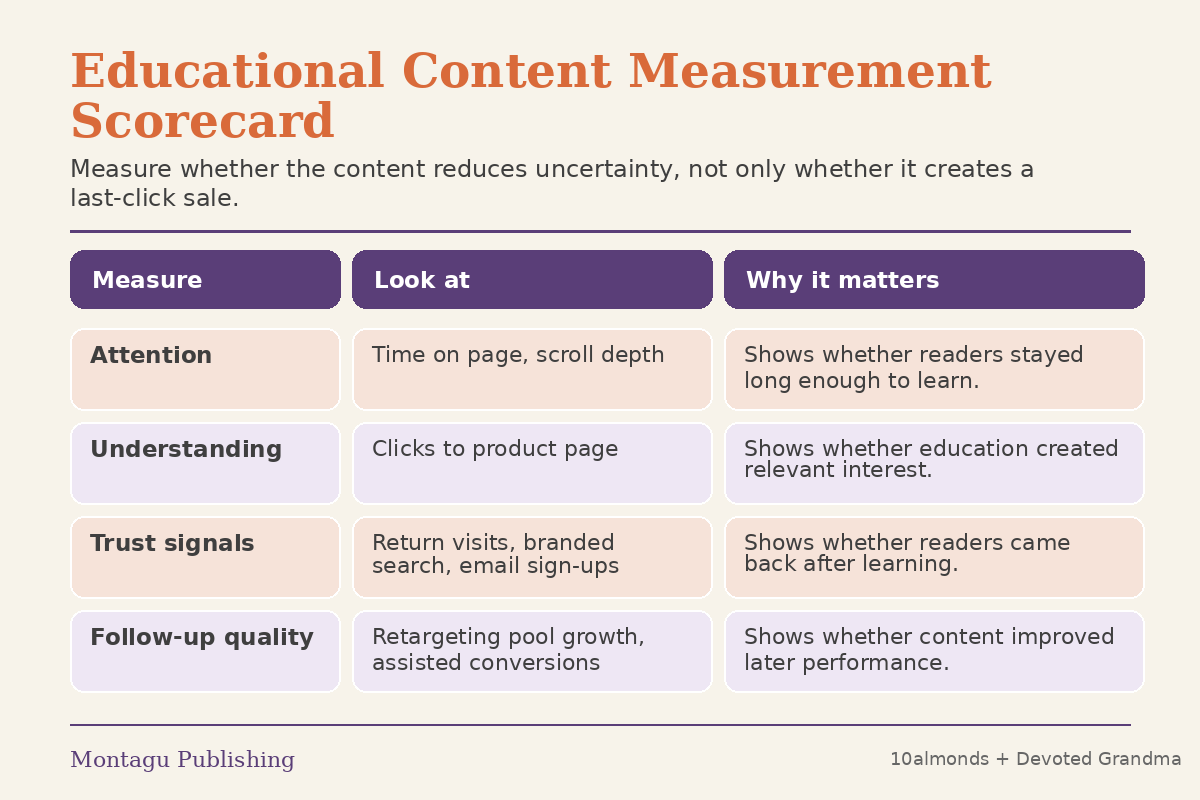
That does not mean measurement should be vague. It means the metrics should match the job.
Look at time on page, scroll depth, qualified clicks, product page visits, returning users, email sign-ups, branded search and assisted conversions. Those signals help show whether the content reduced uncertainty and moved the reader closer to a decision.
What We Would Do
If we were helping a wellness brand launch a product for women over 50, we would not begin by asking whether to run ads or educational content. We would ask what the customer needs to understand before she would consider buying.
If the answer is simple, advertising may do most of the work. If the answer involves ingredients, benefits, expectations, routines, safety or comparison, education should be part of the plan.
A practical campaign might use paid social to introduce the topic, an educational article to explain it, newsletter placements to reach readers in a more attentive environment, search to capture active demand and retargeting to bring interested people back.
The point is not to replace advertising. The point is to stop asking ads to do the work of education.
Where Newsletter Partnerships Fit
Newsletter partnerships are useful when the audience is already open to reading, learning and considering advice from a trusted source — though as covered in how brands should test newsletter sponsorships for the first time, it is worth testing that fit deliberately rather than assuming it.
That makes them a natural fit for educational content. Instead of interrupting someone between unrelated posts, the brand appears in an environment where the reader has chosen to spend time with useful information.
For brands targeting health-conscious women, 10almonds offers an audience that regularly engages with practical, evidence-informed wellness content — the kind of channel fit we mapped out in which channels women over 50 actually trust. For brands trying to reach women who make household and family-oriented decisions, Devoted Grandma offers a different kind of context, one rooted in family life, care, gifting, travel and everyday choices.
The choice depends on the campaign objective. If the product is about personal health, healthy ageing, nutrition, sleep or mobility, 10almonds may be the better fit. If the product connects to family life, household decisions, grandchildren, travel or shared experiences, Devoted Grandma may be more relevant.
Frequently Asked Questions
The Bottom Line
Educational content is not automatically better than traditional advertising. It is better when the customer needs explanation before action.
Ads create notice. Education builds understanding. Retargeting and search then help capture the interest that education creates.
For brands with limited budgets, the goal should not be to choose between ads and content. The smarter question is how to make them work together.
If your product can be understood in seconds, ads may carry most of the campaign. If your product needs context, proof or reassurance, educational content should not be treated as a nice extra. It may be the part of the plan that helps consumers feel ready to buy.
Considering Educational Sponsored Content?
If your next campaign needs to explain a product, health topic or life-stage decision before asking for action, educational sponsored content may be worth testing alongside your existing paid channels.
At Montagu Publishing, we work with brands through 10almonds and Devoted Grandma to create campaigns that combine newsletter placements with brand-supported educational content.
The objective is not to replace your current media plan. It is to strengthen the part of the journey where consumers need context, reassurance and useful information before they decide.
If this approach could support an upcoming campaign, reach out to sales@10almonds.com.