


Direct Answer
Brands build trust before asking consumers to buy by answering the questions that sit between first awareness and purchase. A consumer usually needs to understand the problem, believe the claim, compare options and know what to do next before she feels ready to act.
For products in wellness, healthy ageing, supplements and healthcare-adjacent categories, that means education should come before the sales message. Paid ads can create notice, but they rarely carry the full burden of explanation. Trust usually comes from a sequence: useful content, clear proof, repeated exposure and a simple next step.
Quick Summary
- Trust-building starts before the product pitch.
- Consumers are more likely to act when they understand the problem and believe the claim.
- Paid ads, search, educational content, newsletter partnerships and retargeting should each have a clear job.
- The first goal is not always an immediate sale. Sometimes it is to reduce uncertainty.
- Newsletter partnerships are useful when a product needs explanation before purchase.
Why This Matters for Brands With Limited Budgets
When budgets are tight, the pressure is usually to make every campaign more direct. The natural instinct is to send more people to a product page, add a stronger discount or increase paid media spend around the offer.
That can work when the product is already understood and the consumer is already looking for it. It is less effective when the product requires explanation.
A woman considering a new sleep supplement, joint health product, menopause support solution or healthy ageing service may not be ready to buy after one ad. She may first need to understand why the product is relevant, whether the claim is credible, whether the brand feels safe and whether the next step is worth taking.
That is why trust is not a soft brand idea. It is a practical conversion issue. If the consumer does not believe the message, the campaign has to work much harder to generate the same result.
The Mistake: Asking for the Sale Too Early
One mistake we often see is brands treating the first interaction as a conversion opportunity — the same pattern behind why consumers ignore traditional digital advertising.
The consumer sees an ad, clicks through to a product page and is immediately asked to buy. But if she still has unanswered questions, the page has to do too much work. It has to explain the problem, prove the product, build credibility and close the sale in one visit.
That is a lot to ask from a single landing page.
A stronger plan separates those jobs. Use one part of the campaign to create awareness, another to educate, another to provide proof and another to bring interested people back when they are closer to making a decision.
The Trust Sequence
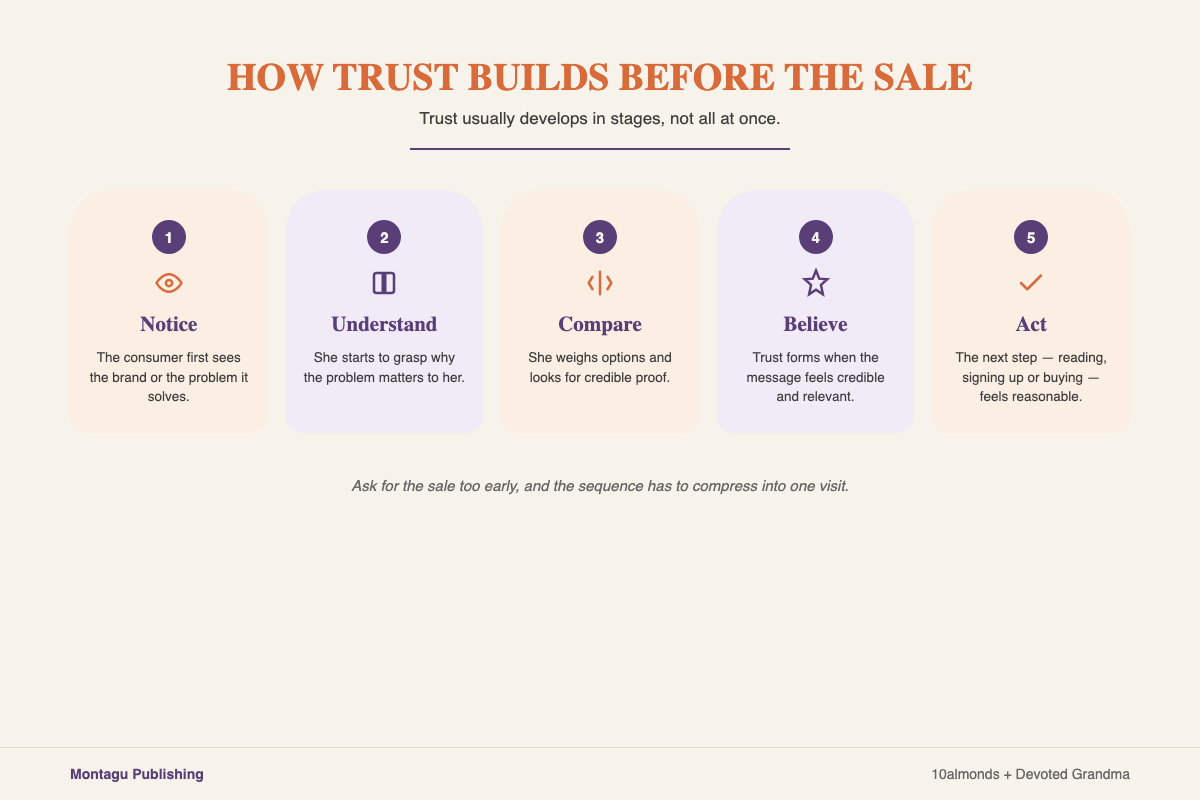
Trust usually develops in stages. It rarely appears all at once.
First, the consumer notices the brand or the problem. Then she starts to understand why it matters. After that, she compares options and looks for proof. If the message feels credible and relevant, belief starts to form. Only then does the next action feel reasonable.
This sequence matters because it changes how a brand should plan its media mix. A channel that creates notice may not be the best place to explain the product. A channel that educates may not be the fastest place to close a sale. A retargeting campaign may perform better after the consumer has already spent time with useful content.
The goal is not to make every channel do everything. The goal is to make the sequence work.
Three Questions to Answer Before Asking for the Sale
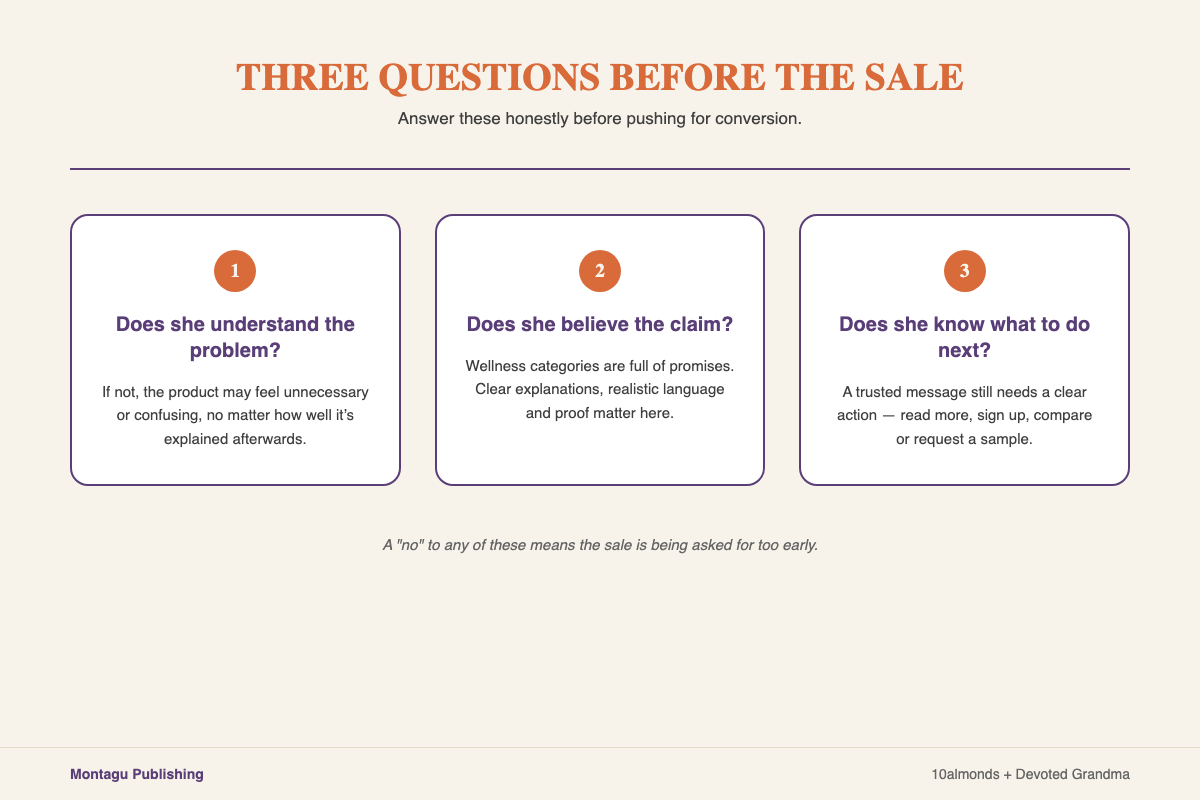
Before pushing for conversion, a brand should answer three questions.
First, does the consumer understand the problem? If she does not, the product may feel unnecessary or confusing.
Second, does she believe the claim? Wellness and health-related categories are full of promises. Consumers are right to be cautious. Clear explanations, realistic language and proof matter.
Third, does she know what to do next? A trusted message still needs a clear action. That could be reading more, signing up, comparing products, requesting a sample or buying.
Give Every Channel a Trust Job
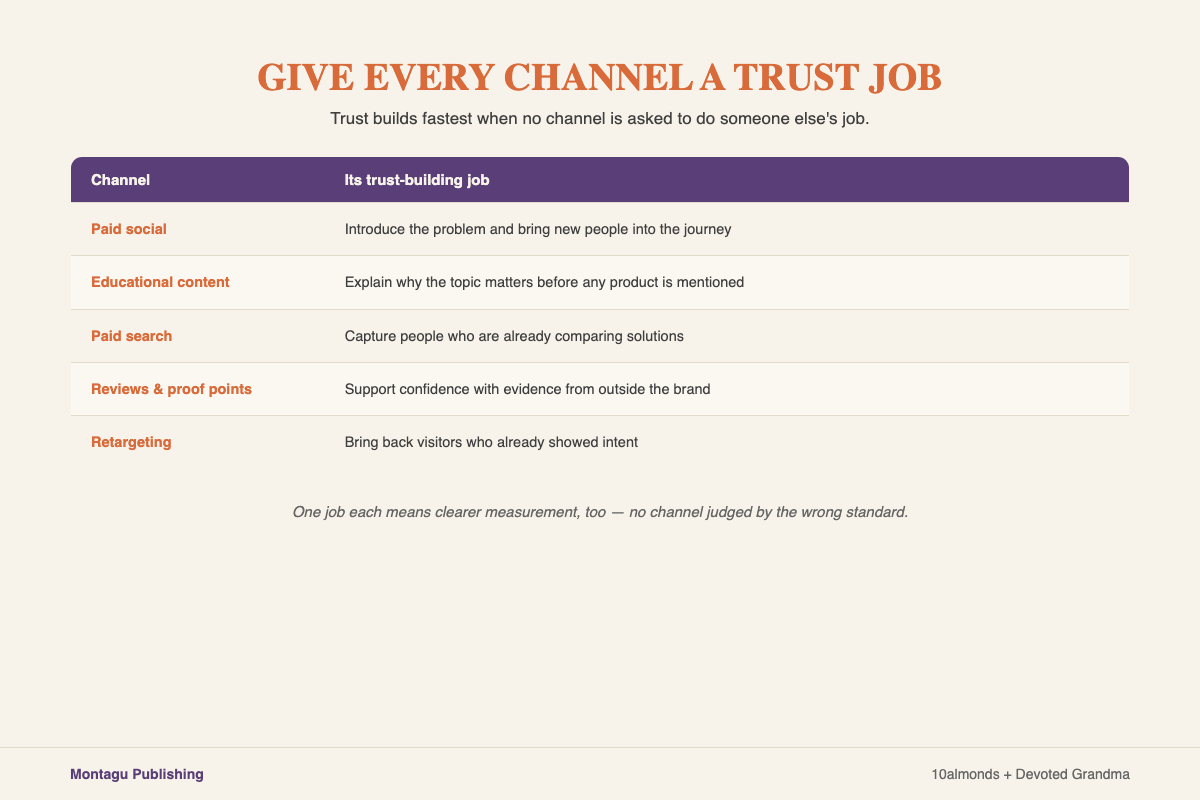
A trust-building media plan should not begin with the question, where should we advertise? It should begin with the question, what does the consumer need to believe before she acts? This is the same channel-by-channel discipline behind which channels women over 50 actually trust.
Paid social can introduce the problem and bring new people into the journey. Educational content can explain why the topic matters. Paid search can capture people who are actively comparing solutions. Reviews and proof points can support confidence. Retargeting can bring interested visitors back once they have already shown intent.
When each channel has one job, measurement also becomes clearer. You stop judging educational content by the same standard as paid search, and you stop expecting short ads to do the work of long-form explanation.
What We Would Do
If we were helping a wellness brand promote a new product to women over 50, we would not start with the sales message. We would start with the questions a reader is likely to ask before buying.
For a magnesium supplement, those questions might include: why does magnesium matter, what signs suggest someone may need more of it, what should women over 50 know before comparing products and how should they evaluate quality — the same audience-first approach behind choosing the most cost-effective way to reach women over 50.
Once those questions are clear, the campaign becomes easier to build. Educational content answers the topic-level questions. Newsletter placements bring that content to a relevant audience. Search captures people already looking for solutions. Retargeting brings back readers who engaged but did not act immediately.
That does not guarantee sales. No honest media plan can. But it gives the campaign a better chance because it supports the way people actually make decisions.
Where Newsletter Partnerships Fit
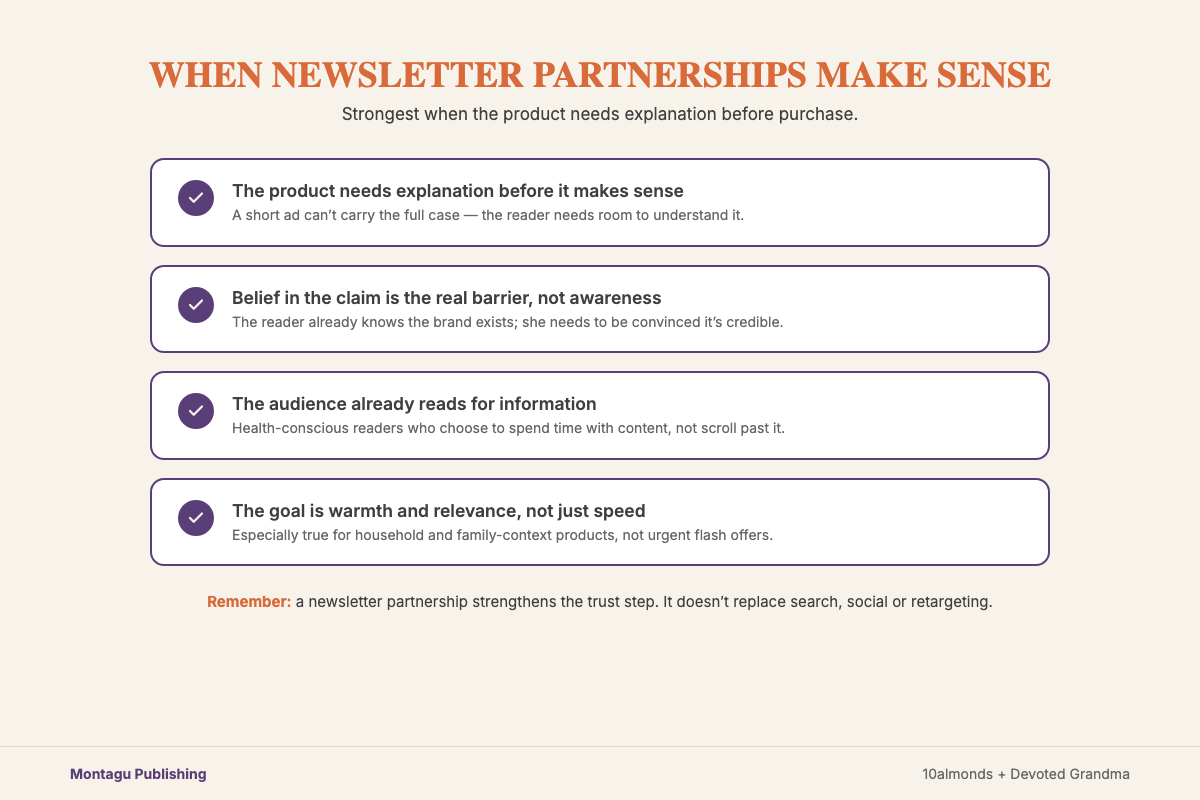
Newsletter partnerships are useful when a brand needs more than attention. They create space for explanation, which is often missing from short digital ads — though as we noted in how brands should test newsletter sponsorships for the first time, this is worth testing deliberately rather than assumed.
For 10almonds, the natural fit is health-conscious readers who are already interested in topics such as healthy ageing, nutrition, mobility, sleep, brain health and preventative wellness. Sponsored educational content can help a brand explain the subject before asking readers to consider a product.
For Devoted Grandma, the buying context is broader. Readers may be making decisions for themselves, their homes, their families or their grandchildren. That can make the newsletter useful for brands that need trust, warmth and practical relevance rather than only a direct product pitch.
In both cases, the newsletter should not replace search, social or retargeting. It should strengthen the part of the journey where consumers need understanding and confidence.
How to Measure Trust-Building Work
Trust-building content should not be measured only by immediate purchases. That would miss much of its role in the customer journey.
Useful signals include time spent with content, click quality, returning visitors, branded search movement, email sign-ups, assisted conversions and whether retargeting audiences grow after the content goes live.
A sponsored educational article may not always be the final click before purchase. Its job may be to make the next click more informed. That distinction matters when reporting results internally.
Frequently Asked Questions
The Bottom Line
Brands do not build trust by saying they are trustworthy. They build trust by reducing uncertainty before asking for action.
For products that require explanation, the campaign should help consumers understand the problem, believe the claim, compare their options and return when they are ready. Paid ads can create notice, but they cannot always carry that whole journey alone.
The stronger question is not how quickly can we ask for the sale. It is what does the consumer need to know before the sale feels reasonable?
Answer that well, and the media plan becomes clearer.
Considering a Newsletter Partnership?
If your product benefits from explanation before purchase, educational content and newsletter placements may be worth testing alongside your existing paid media.
Through 10almonds and Devoted Grandma, Montagu Publishing works with brands that want to reach engaged female audiences in trusted reading environments.
If this approach might fit an upcoming campaign, reach out to sales@10almonds.com.