


Direct Answer
Consumers are not ignoring every digital ad. They are ignoring ads that reach them at the wrong moment, say too little, ask too much too soon or fail to connect with a problem they already care about.
Traditional digital advertising still has a clear role. Paid search captures demand. Paid social creates awareness. Retargeting brings interested people back. The problem starts when brands expect short ads to do work that requires more explanation, trust or context.
For wellness, healthy ageing and healthcare-adjacent brands, the answer is not always to buy more impressions. It is often to fix the customer journey around the ads, so people understand the problem before they are asked to buy the product.
Quick Summary
- Consumers ignore digital ads when the audience, message, timing or follow-up is weak.
- Digital ads still work well for awareness, demand capture and retargeting.
- They struggle when the product needs explanation before purchase.
- Wellness brands often need an education layer alongside paid media.
- Before increasing spend, check whether the campaign is missing context, clarity or trust.
The Problem Is Not That Digital Ads Stopped Working
It is easy to blame the channel when performance drops.
A paid social campaign stops producing the same response. Display ads attract fewer clicks. Retargeting gets cheaper attention but not enough conversions. The instinct is to say that people no longer respond to digital advertising.
That is too simple. People still search, click, compare and buy online. The issue is usually not that digital advertising has stopped working. The issue is that many ads are being asked to do too much on their own.
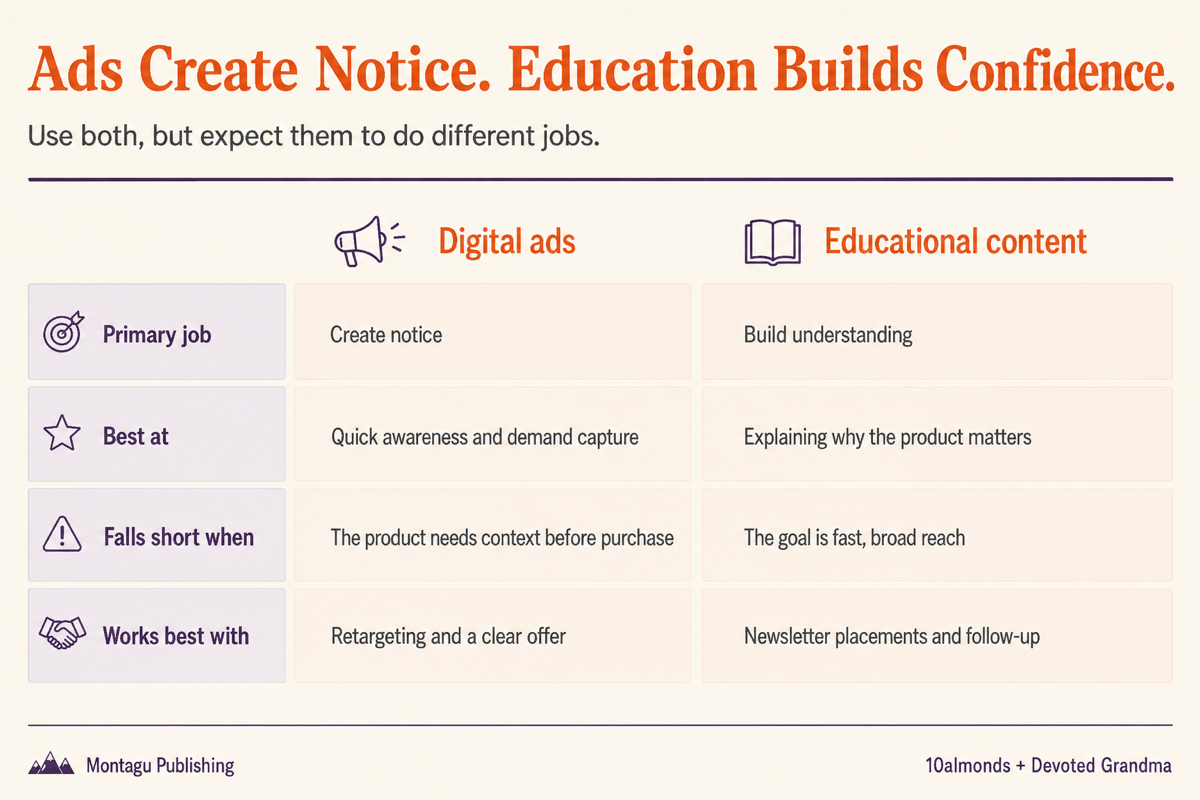
A short ad can remind someone of a product. It can introduce a brand. It can bring a previous visitor back. But it cannot always explain a new ingredient, build trust in a health claim or help a sceptical buyer feel comfortable enough to purchase.
Why Consumers Ignore Digital Ads
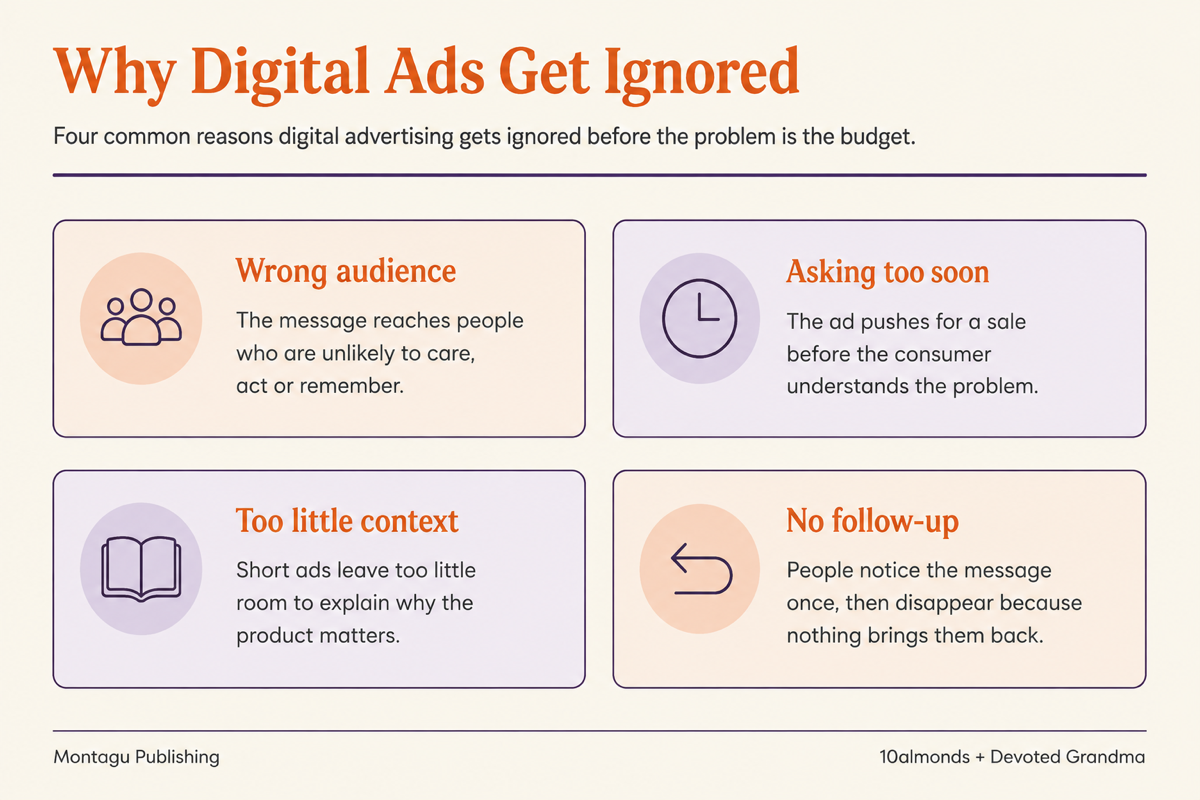
Most ignored ads share at least one of four problems.
The first is poor audience fit. The ad may reach many people, but not enough of them have a real reason to care. Reach without relevance creates waste.
The second is timing. A brand may be asking for a purchase before the consumer has understood the problem. This is common in wellness categories where people often need to learn before they compare products.
The third is lack of context. A small ad unit or short social post cannot always carry the explanation a considered product requires.
The fourth is weak follow-up. Someone may notice an ad, click once or read briefly, but if the campaign does not bring that person back with a clearer next step, the interest disappears.
What Traditional Digital Ads Still Do Well
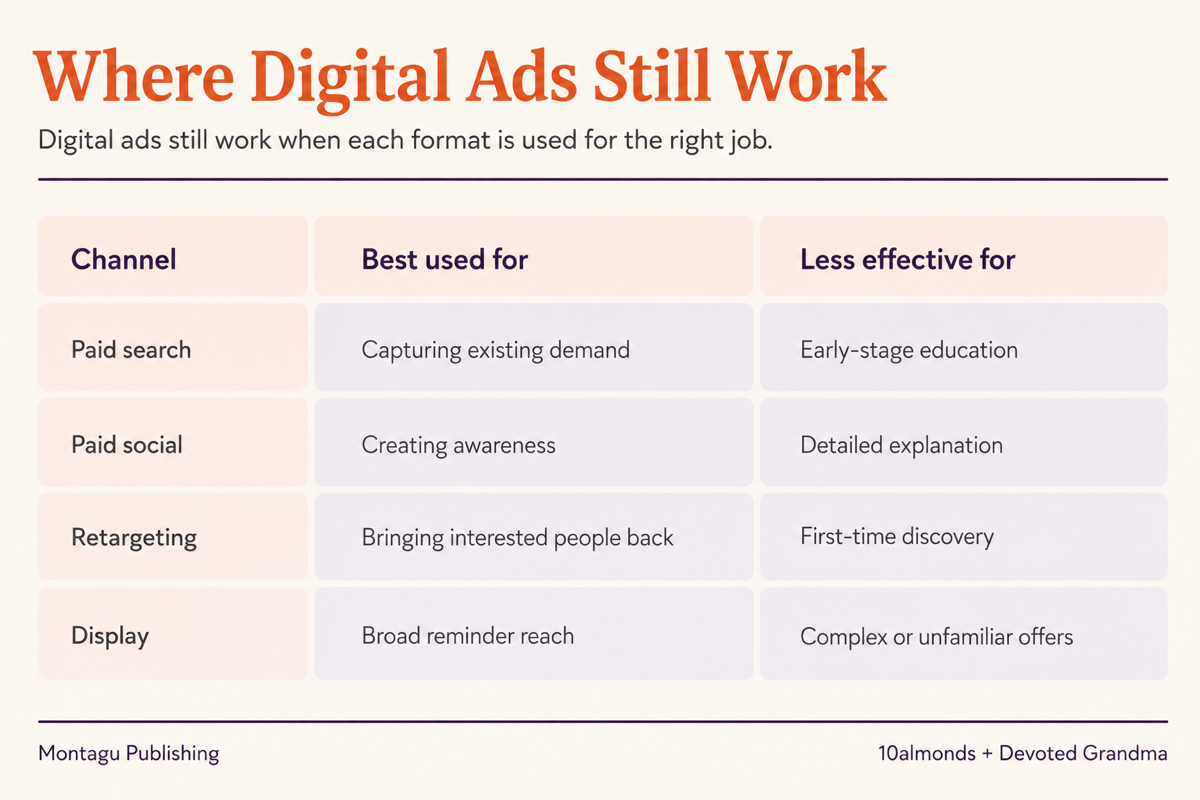
Digital ads remain useful when they are given a clear and realistic job.
Paid search works well when consumers already know what they are looking for. Retargeting works well when someone has already visited the site or shown interest. Paid social can introduce a brand to people who would not otherwise discover it.
The mistake is not using these channels. The mistake is asking them to carry the entire customer journey alone.
Where Traditional Digital Advertising Struggles
Traditional digital advertising tends to struggle when a purchase depends on understanding rather than impulse.
A woman considering a magnesium supplement, a menopause support product or a healthy ageing service may want to know why the product matters, what the evidence says, how it compares with alternatives and whether the brand feels credible.
Those questions usually need more space than an ad can provide. If the brand only appears as a promotion, the consumer may see the message but still not feel ready to act.
That is why some campaigns need an education layer alongside advertising. Not instead of advertising. Alongside it.
Give Every Channel a Realistic Job
A stronger media plan starts by deciding what each channel is responsible for.
| Channel | Realistic job | What it should not carry alone |
|---|---|---|
| Paid search | Capture existing demand | Explaining a product nobody is searching for yet |
| Paid social | Create awareness | Detailed education or trust-building |
| Display advertising | Maintain light visibility | Complex product explanation |
| Retargeting | Bring interested people back | Finding entirely new audiences |
| Newsletter partnerships | Educate and build confidence | Flash sales or very short-term urgency |
Why This Matters More for Wellness Brands
Wellness purchases often feel personal. Consumers are not only buying a product. They are deciding whether to trust something they may put in or on their body, recommend to a family member or add to a daily routine.
That changes the role of marketing. A campaign cannot simply be visible. It has to help the consumer understand the issue clearly enough to feel comfortable taking the next step.
This is especially true for brands targeting women over 50. Many of these consumers actively research health, nutrition, sleep, mobility, skincare, brain health and preventative wellness before they buy. They are not passive audiences waiting for a slogan. They are active decision-makers looking for useful information.
What to Fix Before Increasing Spend
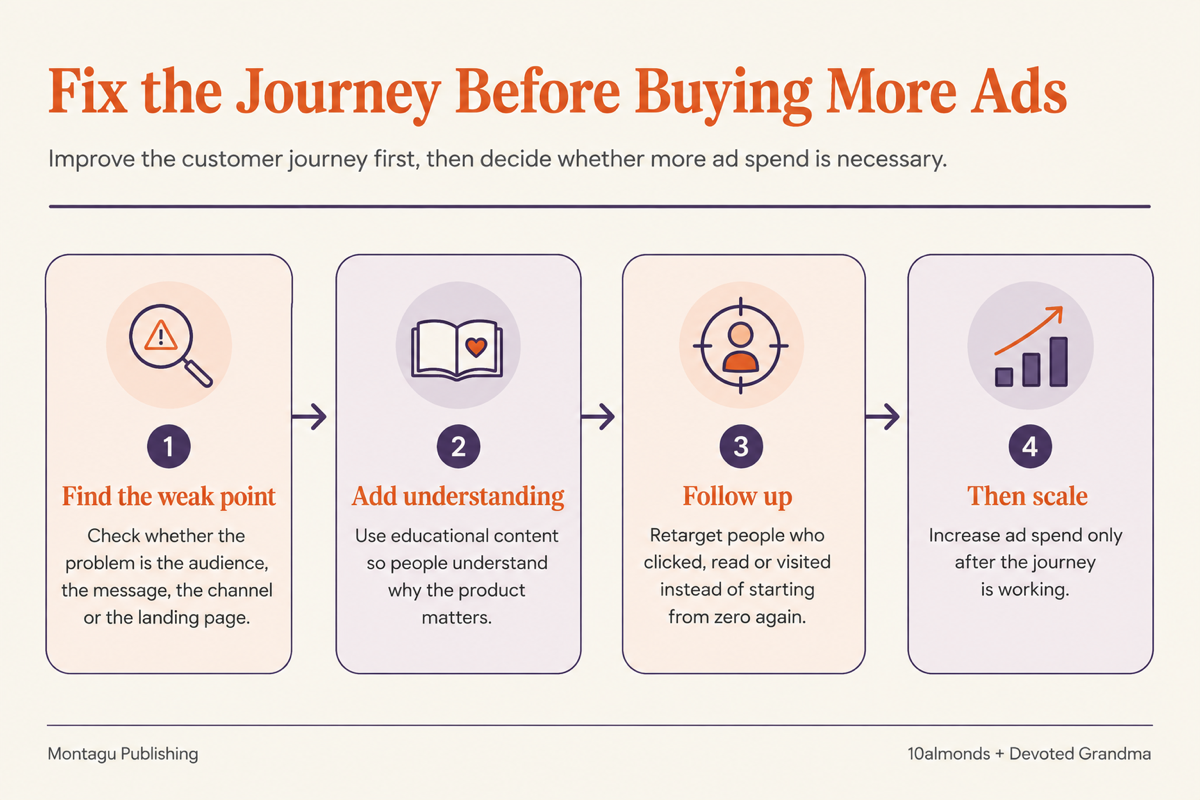
Before putting more budget behind a digital campaign, ask four questions.
- Are we reaching the right audience? If the audience is too broad, more spend may simply buy more waste.
- Is the message clear enough? If the value of the product cannot be understood quickly, the issue may be positioning rather than media spend.
- Have we educated the consumer before asking for action? If the product needs explanation, advertising should point to useful information, not only a product page.
- Are we following up properly? If people engage once and disappear, the campaign may need better retargeting, email capture or repeat exposure.
What We Would Do
If we were helping a wellness brand whose digital ads were being ignored, we would not begin by increasing the ad budget.
We would first look at the journey around the ads. What does the consumer see before the ad? What does she understand after clicking? What question remains unanswered? What makes her hesitate?
If the product requires explanation, we would create or promote educational content that answers those questions before asking for the sale — the same journey-first approach behind how to build awareness without increasing spend. Paid media would then support that content, search would capture active demand, and retargeting would bring interested visitors back once they had more context.
The objective would be to make the advertising easier to respond to by making the product easier to understand.
Where Newsletter Partnerships Fit
Newsletter partnerships can help when the problem is not reach, but understanding — one of the five jobs we mapped out in how brands should diversify their channel mix.
A trusted newsletter gives a brand space to explain a health topic in a setting where readers have already chosen to spend time with information. That is different from interrupting someone in a feed or following them around the internet with the same short message.
For brands targeting women over 50, this can be useful when the product needs education before purchase. A sponsored educational article can explain the problem. A newsletter placement can introduce the brand in a relevant context. Paid search and retargeting can then support the later stages of the decision — though as we noted in how brands should test newsletter sponsorships for the first time, this is worth testing deliberately rather than assuming it will work.
Newsletter partnerships should not replace paid media. They should make paid media work harder by giving consumers the context that short ads often cannot provide.
Choosing Between 10almonds and Devoted Grandma
10almonds is best suited to brands that want to reach women who are actively thinking about their own health and wellbeing. It is a natural environment for wellness, healthy ageing, nutrition, supplements, skincare, sleep, brain health and preventative health topics.
Devoted Grandma is better suited to brands whose products sit within family life, household decisions, gifting, travel, safety, health, lifestyle or shared experiences. Its reader may be making decisions for herself, but often also for the people she loves.
The question is not which audience is bigger. The question is which buying context is more relevant to the brand.
A Mistake We Often See
A common mistake is judging every digital campaign by immediate click or conversion numbers alone.
That can be useful for paid search or retargeting, where purchase intent may already exist. It is less useful for educational content, where the job is to make the consumer more informed, more confident and more likely to respond later.
If the campaign objective is education or trust-building, success should also include qualified traffic, time spent, returning visitors, branded search lift, email sign-ups and assisted conversions — the same alternative-to-increasing-spend logic covered in what is a smarter alternative to increasing your Meta budget.
Frequently Asked Questions
The Bottom Line
Consumers are not ignoring digital advertising because every ad is useless. They are ignoring ads that do not feel relevant, helpful or worth acting on yet.
For brands with limited budgets, the answer is not always more spend. Sometimes the smarter move is to make the journey around the ads stronger. Reach the right audience. Clarify the message. Add education where the product needs explanation. Follow up with people who have already shown interest.
Traditional digital advertising works best when it is part of a wider plan that helps consumers move from noticing a product to understanding it, trusting it and eventually buying it.
Considering a Newsletter Partnership?
If your digital ads are creating visibility but not enough confidence, a newsletter partnership may be worth testing alongside your existing paid media.
Through 10almonds and Devoted Grandma, Montagu Publishing works with brands to combine newsletter placements with brand-supported educational content, helping marketers reach engaged female audiences in moments when they are open to learning, comparing and making informed decisions.
If this approach might fit an upcoming campaign, reach out to sales@10almonds.com.