


Direct Answer
Women over 50 are more likely to trust channels that help them understand, compare and feel confident before buying. For wellness, healthcare, finance, travel and household brands, that usually means a mix of search, reviews, expert or educational content, trusted newsletters and careful retargeting.
The mistake is treating trust as one channel’s responsibility. Paid search can capture intent. Reviews can reassure. Educational content can explain. Newsletter partnerships can provide a trusted reading environment. Retargeting can bring people back when they are closer to deciding. The strongest plan gives each channel a clear trust-building role rather than asking one platform to do everything.
Quick Summary
- Trust is not the same as attention. A channel can reach people without helping them believe the brand.
- Women over 50 often research before buying, especially in categories that affect health, money, travel or family decisions.
- Search, reviews, educational content, newsletters, expert content and retargeting each support a different part of the decision.
- Paid social can create awareness, but it is rarely enough on its own when the product needs explanation.
- The most trusted channel is usually the one that answers the question blocking the next step.
Trust Is Not the Same as Attention
A marketing channel can create attention without creating trust — the same distinction that explains why consumers ignore traditional digital advertising in the first place.
That difference matters. A woman may notice a supplement ad in her feed, but noticing it does not mean she understands the ingredient, believes the claim or feels ready to buy. A travel brand may reach her with a beautiful image, but that image alone may not answer the questions that matter: is this trip suitable, safe, worth the money and right for this stage of life?
Marketing managers often use reach as a shortcut for influence. It is an easy number to report, but it does not tell you whether the audience has moved closer to a confident decision. Edelman’s 2025 Trust Barometer makes a related point at brand level: earning trust increasingly depends on more than visibility alone. Trust is built when the channel helps reduce uncertainty.
Start by Asking What the Audience Needs to Trust
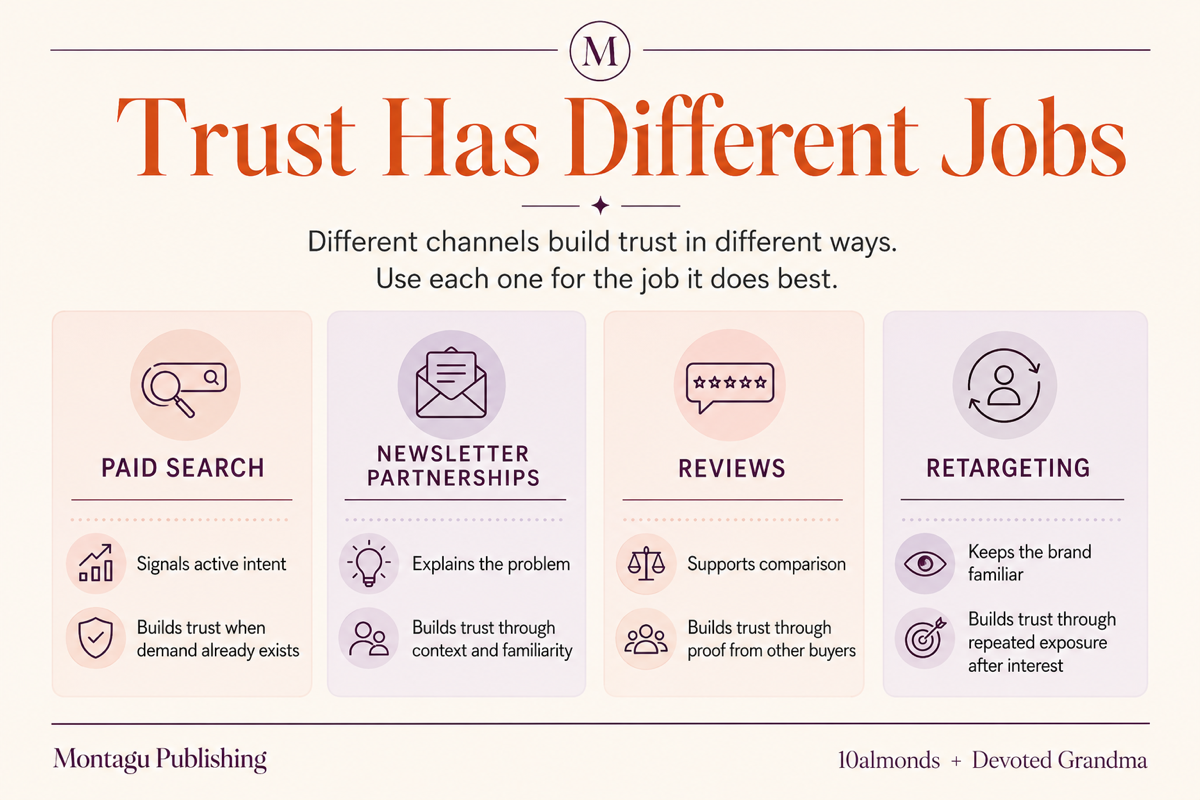
Before choosing channels, define what your audience needs to believe before she takes action.
For a wellness product, she may need to understand the ingredient, the expected benefit, the evidence behind the claim and whether the product is suitable for her. For financial services, she may need reassurance around safety, credibility and long-term value. For travel, she may want confidence around comfort, planning, support and who else the experience is designed for.
The channel choice should follow that trust barrier. If the barrier is awareness, paid social may help. If the barrier is understanding, educational content is stronger. If the barrier is credibility, reviews, expert content or trusted publisher environments matter more.
The Channels Women Over 50 Are Most Likely to Trust
There is no universal ranking that applies to every woman, every category or every campaign — Pew Research Center’s 2025 data on social media use shows platform habits still vary meaningfully by age and gender, which is a useful reminder against one-size-fits-all channel assumptions. A better approach is to look at the role each channel plays in the decision.
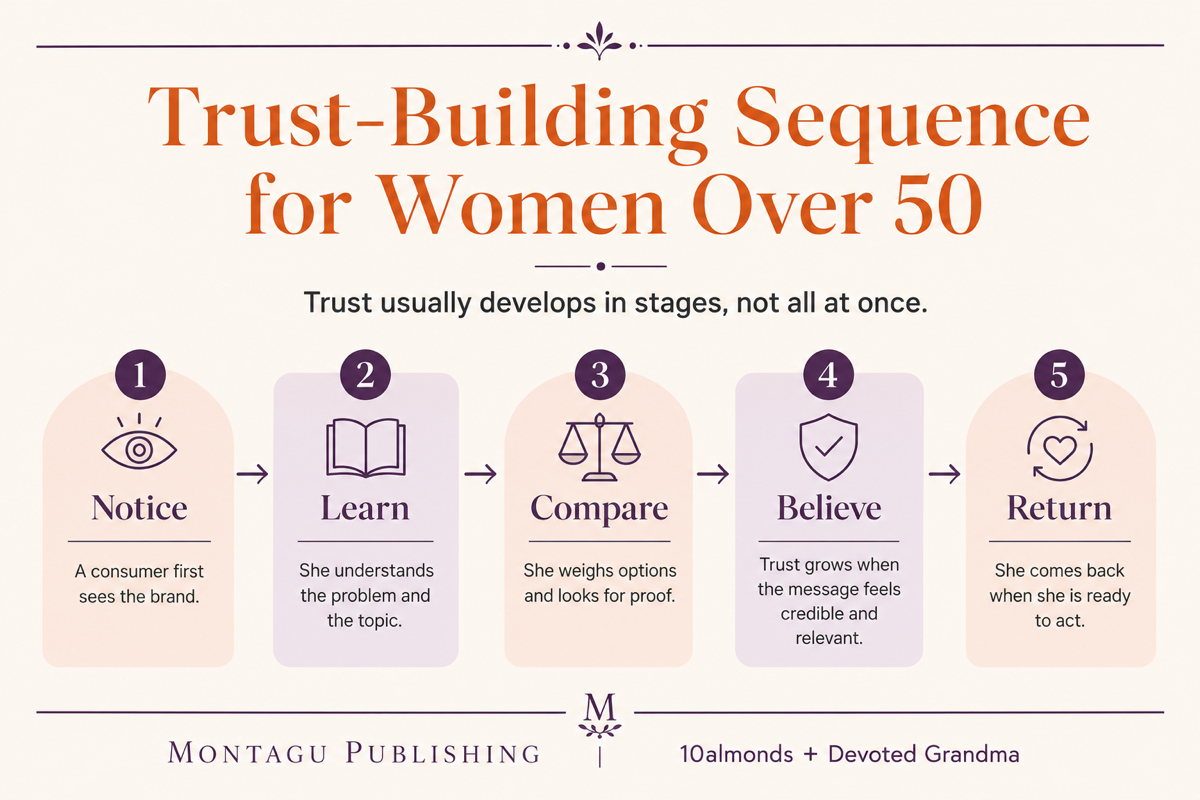
Search is trusted when the consumer already has a question and wants to compare answers, in the same way we described choosing the most cost-effective way to reach women over 50. Reviews and referrals are trusted because they provide reassurance from people outside the brand. Educational content is trusted when it explains the problem clearly before introducing a product. Newsletters can be trusted when the reader already values the publication and has chosen to spend time with its content. Retargeting can support trust when it reminds an interested visitor at the right time, but it can damage trust when it feels too persistent or poorly timed.
Paid social still has a role, but it should not be expected to carry the whole trust burden. It is often better at introducing a brand than making a considered buyer feel fully confident.
Give Each Trust Channel One Job
The easiest way to make a media plan more trustworthy is to stop asking every channel to do the same thing — the same one-job-per-channel discipline behind what a low-risk media plan looks like in 2026.
Paid search should capture people who are already looking. Paid social should introduce the brand to relevant new audiences. Educational content should explain what the audience needs to understand. Newsletter partnerships should place that education in a trusted reading environment. Reviews and testimonials should help people feel reassured. Retargeting should bring back people who already showed interest.
When every channel has one job, the campaign becomes easier to plan, easier to measure and easier to improve.
A Practical Trust-Fit Matrix
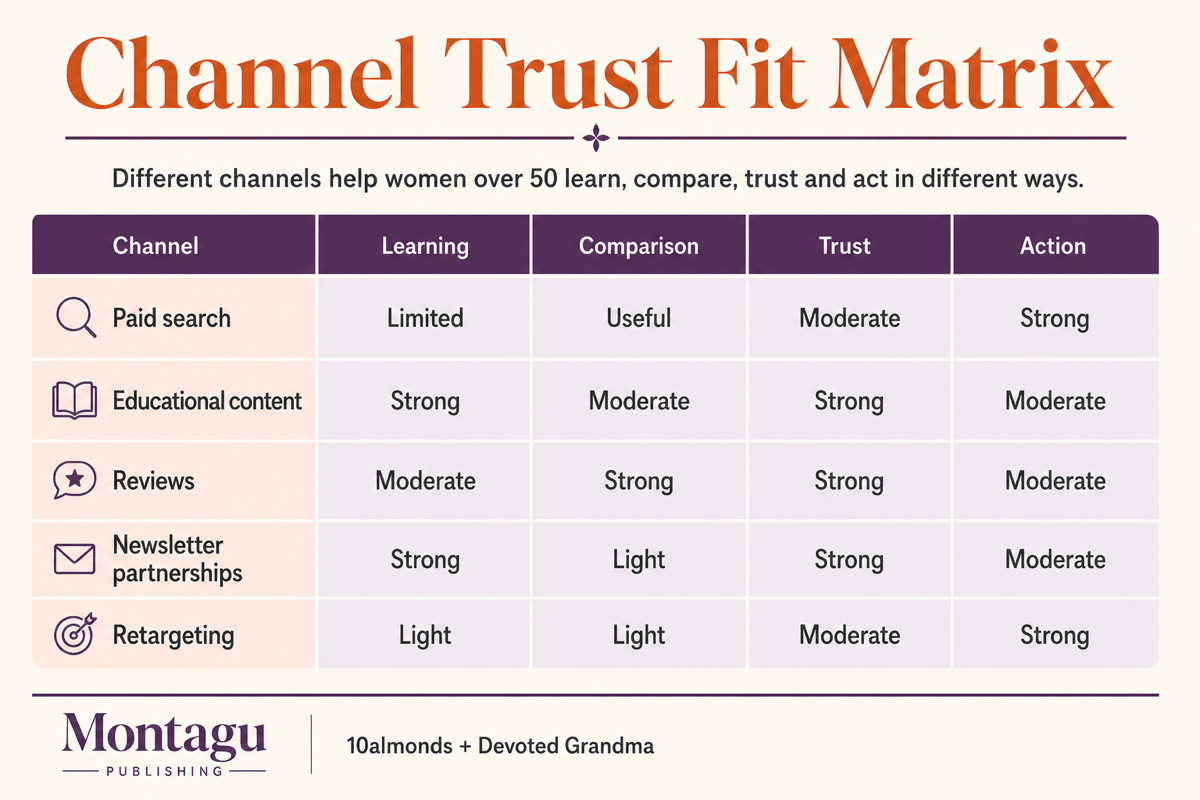
The table below shows how different channels can support trust at different stages of the decision. It is not a universal scorecard. It is a planning tool to help marketing managers decide which channels deserve budget for a specific campaign.
If your product is already well understood and people are searching for it directly, search may deserve a larger share. If the product requires explanation, educational content and newsletter partnerships should receive more attention. If the brand is new and credibility is the issue, reviews, expert content and trusted media environments become more important.
Where Newsletter Partnerships Fit
Newsletter partnerships are strongest when the reader needs more than a short ad before making a decision.
They give brands the space to explain a topic, answer common questions and appear in an environment where the audience has already chosen to read. That is especially valuable for products where the buying decision involves health, ageing, family, money or quality of life.
A newsletter partnership should not be treated as a direct replacement for search or social. It works best as the education and trust layer of the plan, sitting between awareness and conversion.
When Newsletter Partnerships Are Not the Right Answer
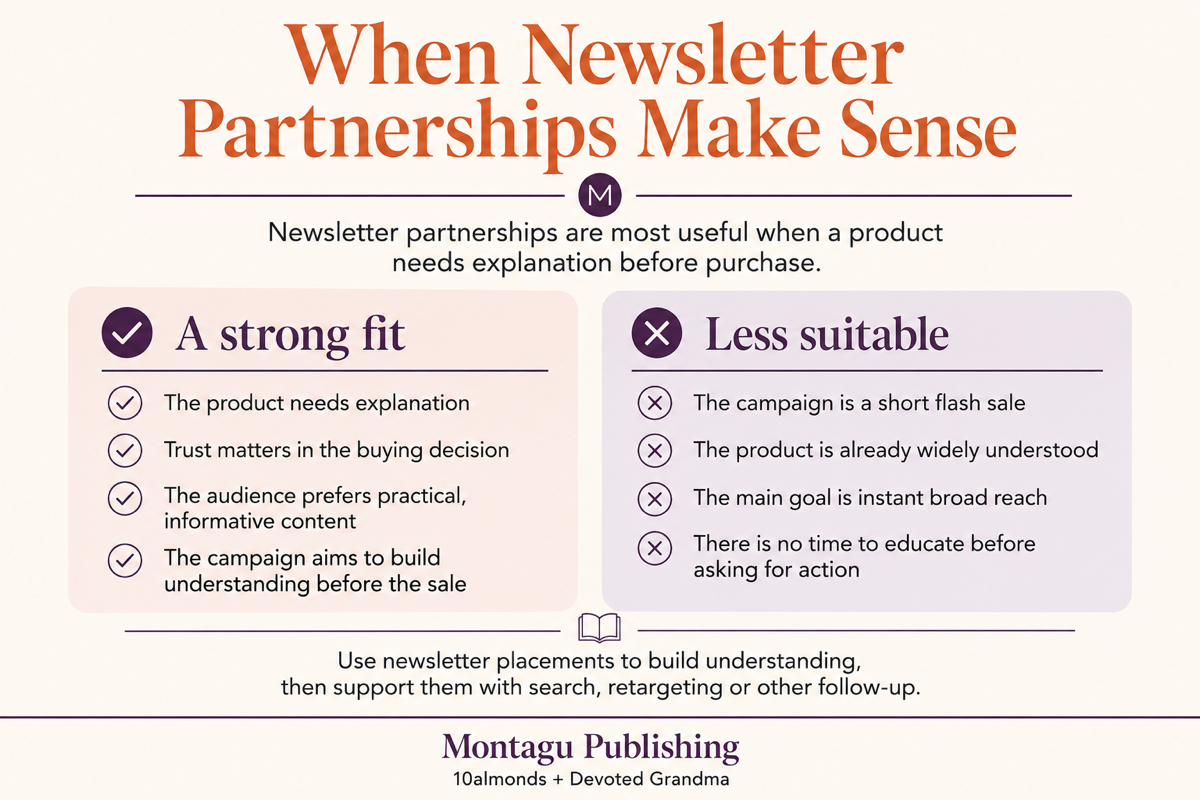
Newsletter partnerships are not the right answer for every campaign, which is exactly why we recommend testing them deliberately, as covered in how brands should test newsletter sponsorships for the first time.
If the objective is a 48-hour flash sale, paid social, email to your own list and retargeting may be more suitable. If people already understand the product and are searching for it directly, paid search may be the more efficient first step. If you need huge reach in a very short period, larger paid platforms may be necessary.
The value of a newsletter partnership is not that it does every marketing job. Its value is that it can do one job particularly well: help the right readers understand and trust a brand before they are asked to act.
What We Would Do
If we were advising a wellness brand trying to reach women over 50, we would not begin by asking which channel is most trusted. We would begin by asking what is preventing trust — the same diagnostic approach we used in how a wellness brand should spend its next $10,000 to reach women over 50.
If the audience does not understand the product, we would prioritise education. If they understand the category but do not know the brand, we would prioritise credibility and proof. If they are already visiting the website but not buying, we would look at retargeting, product page clarity and follow-up. If they are not aware of the problem at all, we would use paid social and publisher partnerships together, one to introduce the issue and the other to explain it properly.
The plan would not be built around one trusted channel. It would be built around the sequence of trust required for the purchase.
Choosing Between 10almonds and Devoted Grandma
10almonds and Devoted Grandma both reach older female audiences in the United States, but they are not interchangeable.
10almonds is better suited to brands that want to reach women thinking about their own health, wellbeing, ageing, energy, sleep, mobility, nutrition or daily routines. This makes it a strong fit for wellness, supplements, functional foods, skincare, menopause support, healthy ageing and preventative health brands.
Devoted Grandma is better suited to brands whose products connect with family life, household decisions, gifting, shared experiences, travel, home safety, finance or multigenerational wellbeing. The reader may still be making decisions for herself, but she may also be thinking about children, grandchildren or the wider household.
The right choice depends on the buying context, not only the audience age.
A Mistake We Often See
A common mistake is assuming that trust can be bought by increasing spend in the same channel.
If the audience does not understand the product, more impressions will not fix that. If the claim feels unclear, more clicks will not solve it. If the brand lacks credibility, retargeting alone may only remind people of uncertainty they have not resolved.
When trust is the problem, the answer is usually not more pressure. It is better explanation, better proof and a better environment for the message.
Frequently Asked Questions
The Bottom Line
The channels women over 50 trust most are usually the ones that help them make a confident decision.
That may include search when they are actively researching, reviews when they are comparing options, educational content when they need explanation, newsletters when they value the source, and retargeting when they have already shown interest.
The better question is not which channel is most trusted in general. It is this: which channel reduces the specific uncertainty stopping this audience from taking the next step?
Answer that clearly, and the media plan becomes much easier to build.
Considering a Newsletter Partnership?
If your campaign needs to educate women over 50 before asking them to buy, a trusted newsletter partnership may be worth testing alongside search, social and retargeting.
Through 10almonds and Devoted Grandma, Montagu Publishing works with brands to create campaigns that combine newsletter placements with brand-supported educational content.
The objective is not to replace your existing channels. It is to strengthen the part of the customer journey where trust, understanding and confidence are built.
If this approach might fit an upcoming campaign, reach out to sales@10almonds.com.