


Direct Answer
Brands should prioritise audience context before audience size when the product needs trust, explanation or a more considered buying decision. A large audience can create reach, but context determines whether the message arrives in a moment where people are likely to care.
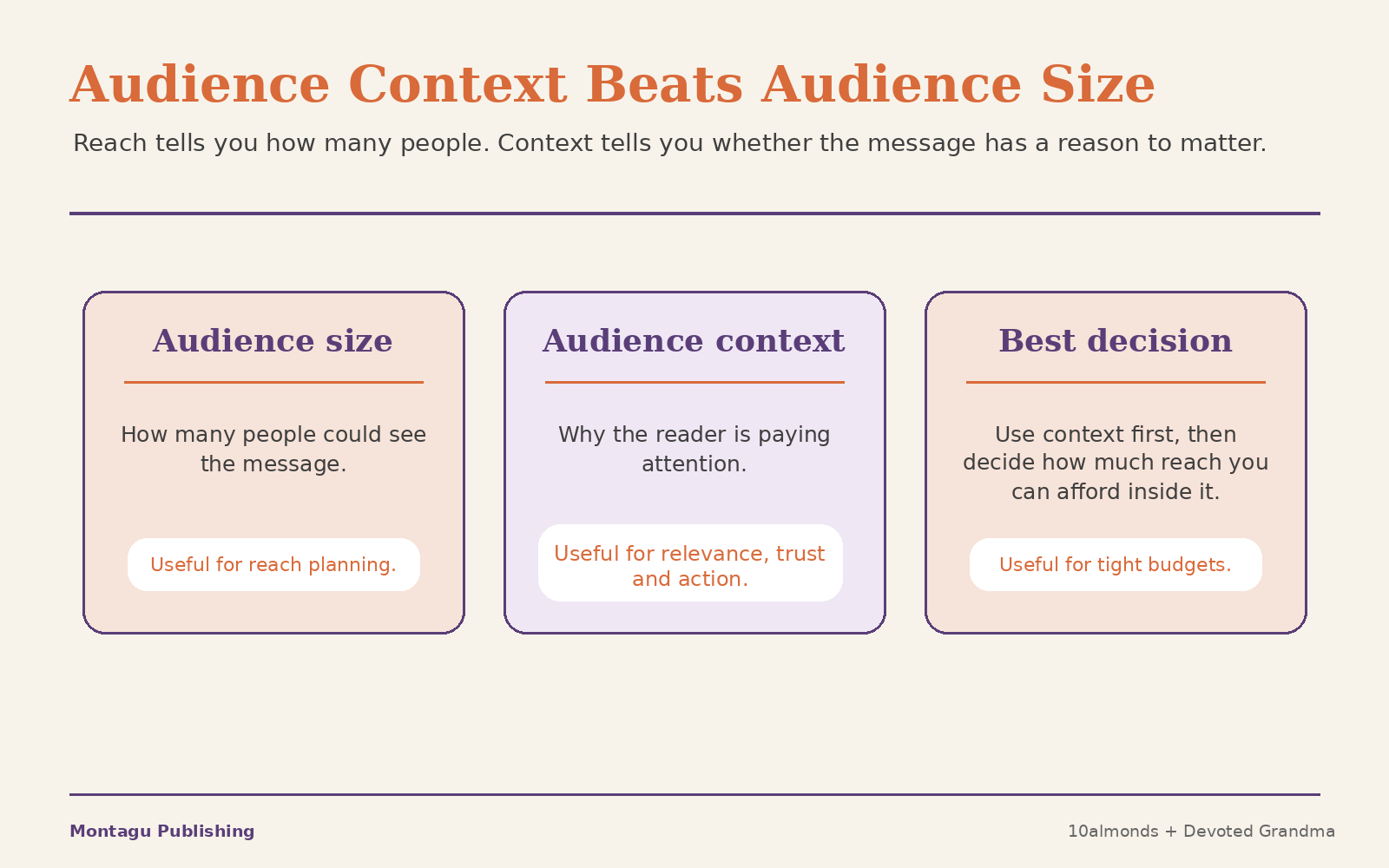
Audience size tells a marketer how many people might be reached. Audience context tells the marketer why those people are reading, what they are trying to solve and whether the brand has a legitimate reason to enter the conversation.
For brands with limited budgets, context often matters more because there is less room to waste impressions on people who are technically reachable but not meaningfully relevant.
Quick Summary
- Audience size is useful, but it should not be the first filter for every campaign.
- Audience context helps a brand understand reader mindset, problem fit and likely buying questions.
- Newsletter communities can be valuable because readers arrive with a known habit and interest, not only a demographic label.
- A smaller audience can be more useful than broad reach when the content, reader need and product category naturally fit.
- The better question is not how many people can we reach, but how relevant will the message feel when it appears?
Why Marketers Keep Reaching for Size
Audience size is easy to compare. It looks clean in a media plan and it gives leadership a number they understand quickly.
The difficulty is that reach does not explain whether the audience is ready to listen. A campaign can reach a large number of people and still fail because the message arrives in the wrong setting, at the wrong moment or with too little relevance.
This is especially important for wellness, health-adjacent, family and lifestyle categories. Many consumers do not respond only because they see a product. They respond when the product connects to something they are already thinking about, researching or trying to solve.
What Audience Context Actually Means
Audience context is the reason the reader is there. It includes the topics she regularly engages with, the kind of advice she expects, the decisions she is already making and the level of trust she has in the environment.
For example, a woman reading about sleep, energy, nutrition or healthy ageing is not just an impression. She is in a learning mindset. A grandmother reading about practical gifts, family activities or household decisions is also in a specific context. She is not only browsing. She may be thinking about people she cares for.
That is why a newsletter sponsorship should not be judged only by list size. The real question is whether the publication gives the brand a credible reason to be part of the reader’s day.
A Simple Way to Compare Audience Size and Context
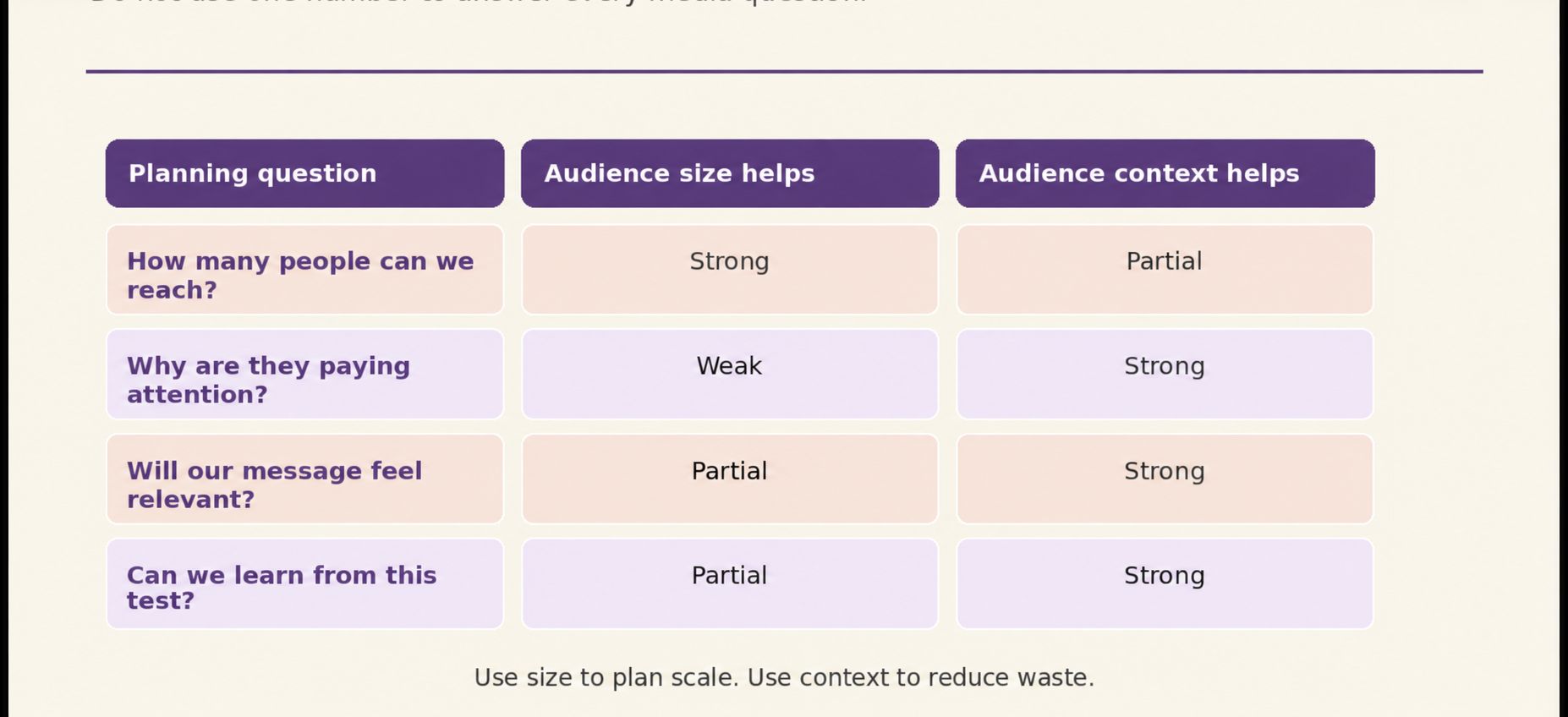
A useful media decision should compare reach and relevance side by side.
| Question | Audience size answers | Audience context answers |
|---|---|---|
| How many people can we reach? | Strong answer | Partial answer |
| Why are they paying attention? | Weak answer | Strong answer |
| What problem are they trying to solve? | Weak answer | Strong answer |
| Will our message feel relevant here? | Partial answer | Strong answer |
| Can we learn something useful from this audience? | Partial answer | Strong answer |
Why Context Matters More for Smaller Budgets
A large brand can often afford some waste. A smaller brand cannot. When every dollar has to work harder, the campaign needs to reduce mismatch before it begins.
That does not mean small brands should only buy small audiences. It means they should avoid paying for reach that looks impressive but does not match the buying situation.
If the audience is wrong, better creative will only fix part of the problem. If the context is wrong, the message may feel like an interruption no matter how well it is written.
How to Use Context in a Media Decision
Start with the campaign question, not the audience number. A brand may need to introduce a product, explain a problem, support a launch or bring interested readers back to a page. The right publication is the one where that first message has a sensible place.
Then look at the reader setting. Read recent issues, note the recurring topics and ask why readers return. A health-focused reader may be thinking about her own sleep, nutrition or mobility. A family-focused reader may be thinking about a household decision, a gift or time with grandchildren. The same product may suit both settings, but the message should not be copied without thought.
Finally, decide what the first placement should achieve. It may send readers to an educational page, introduce a useful idea or give the retargeting plan a relevant starting audience. This gives size a proper role in the decision. Reach determines how far the message can travel after the message has a reason to be there.
The Community-Based Marketing Lens
A community-based approach to marketing starts with the reader relationship, not the ad slot.
It asks: what does this community already care about? What questions does it trust this publication to help answer? What would feel useful rather than forced?
That shift changes the brief. The brand is not simply buying space next to content. It is trying to enter a trusted reader environment in a way that makes sense to the people already there. It also helps clarify whether a newsletter ad or sponsored content is the better format.
What Brands Should Ask Before Buying Reach
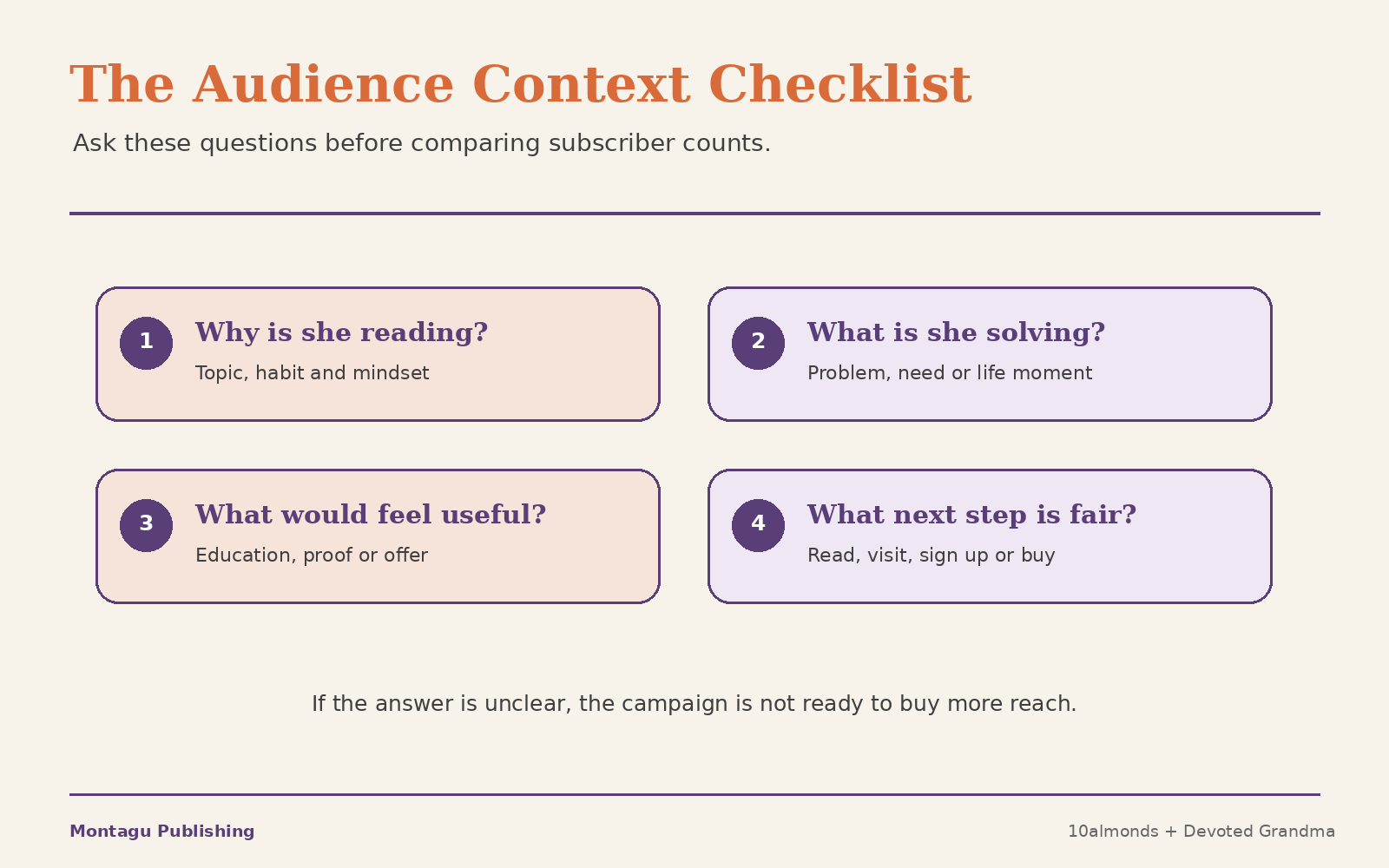
- What is the reader likely doing when she sees this message?
- Does the publication already cover topics connected to our product or problem?
- Will the message feel useful in this environment, or does it need too much explanation first?
- Can the publisher describe reader interests, behaviour or survey insights without pretending to know what the data cannot show?
- What will we learn from this placement even if it does not convert immediately?
A first newsletter sponsorship test should be designed to answer those questions, rather than simply to buy the largest available send.
Where 10almonds and Devoted Grandma Fit
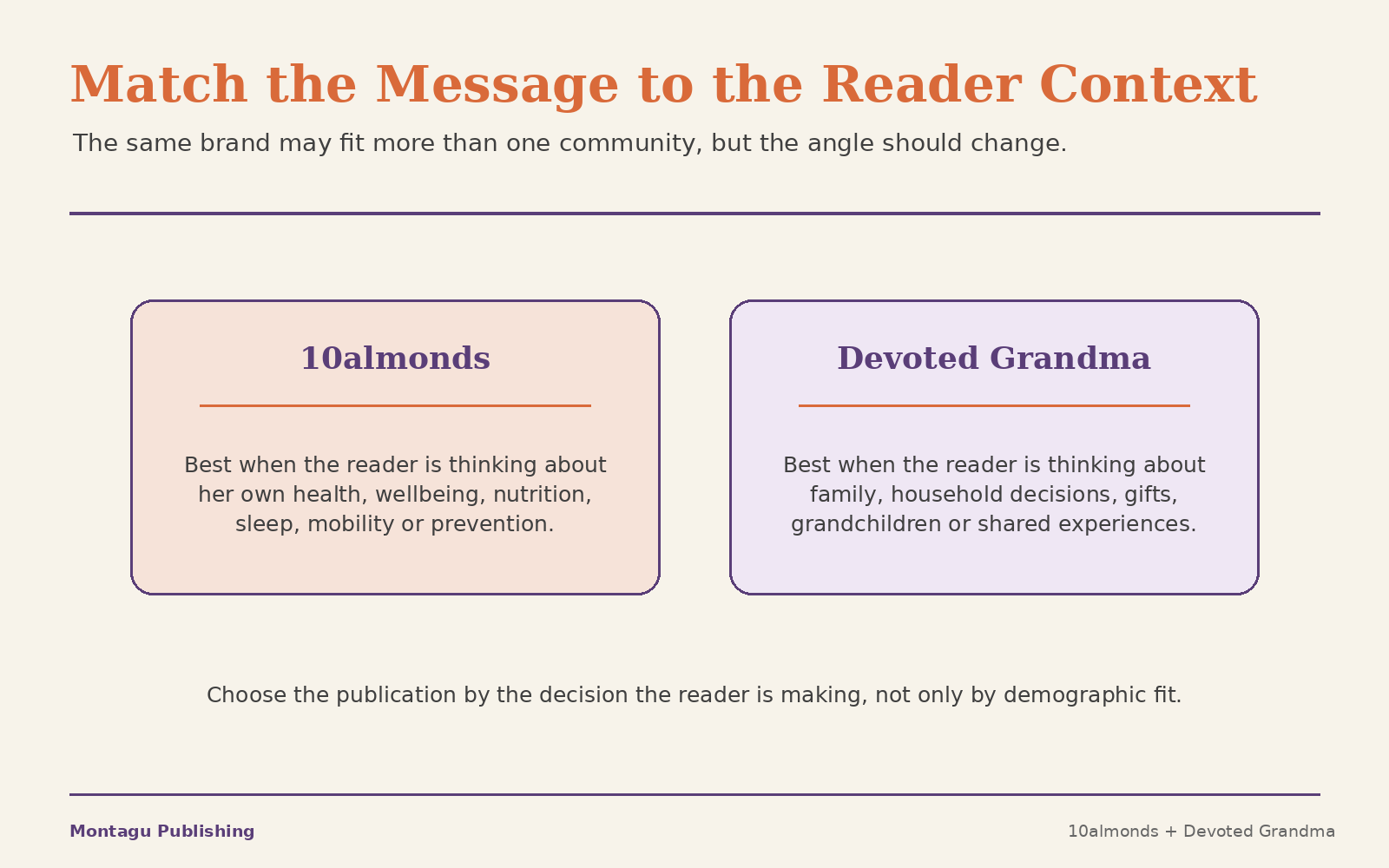
10almonds and Devoted Grandma offer different audience contexts. That distinction matters more than treating them as two lists of readers.
10almonds is more suited to campaigns where the reader is thinking about her own health, wellbeing, nutrition, sleep, healthy ageing or prevention. Devoted Grandma is more suited to campaigns where the reader may be thinking about family, household choices, gifts, experiences or practical support for others.
The same brand may fit both publications, but the message may need to change because the reader context changes.
Frequently Asked Questions
The Bottom Line
Audience size tells you how many people might see the message. Audience context tells you whether the message has a fair chance of mattering.
For brands with tight budgets, that difference is not theoretical. It affects how much spend is wasted before the campaign even has a chance to work.
The strongest media plans do not choose reach instead of relevance. They choose the right context first, then decide how much reach they can afford inside it. They should also measure sponsored content beyond clicks to understand what the placement actually achieved.
Considering a Community-Based Sponsorship?
If your campaign needs to reach women in a setting where the message feels useful, Montagu Publishing can help you choose the right reader context, format and follow-up across 10almonds and Devoted Grandma.
For newsletter placements or sponsored educational content, email sales@10almonds.com.