


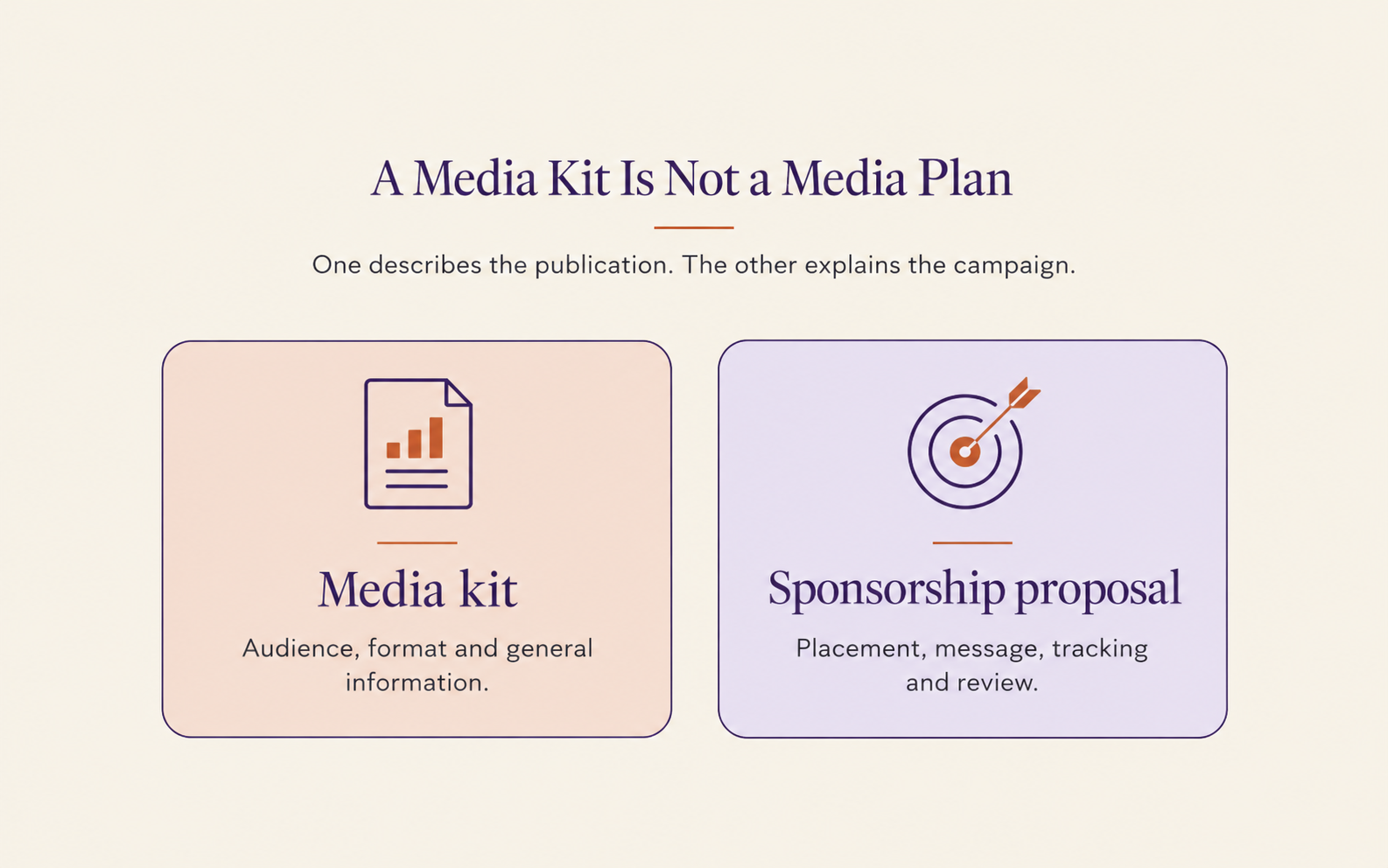
A newsletter media kit is a useful starting point. It can introduce the publication, describe its readers and show the formats available. It is not enough, by itself, to approve a sponsorship.
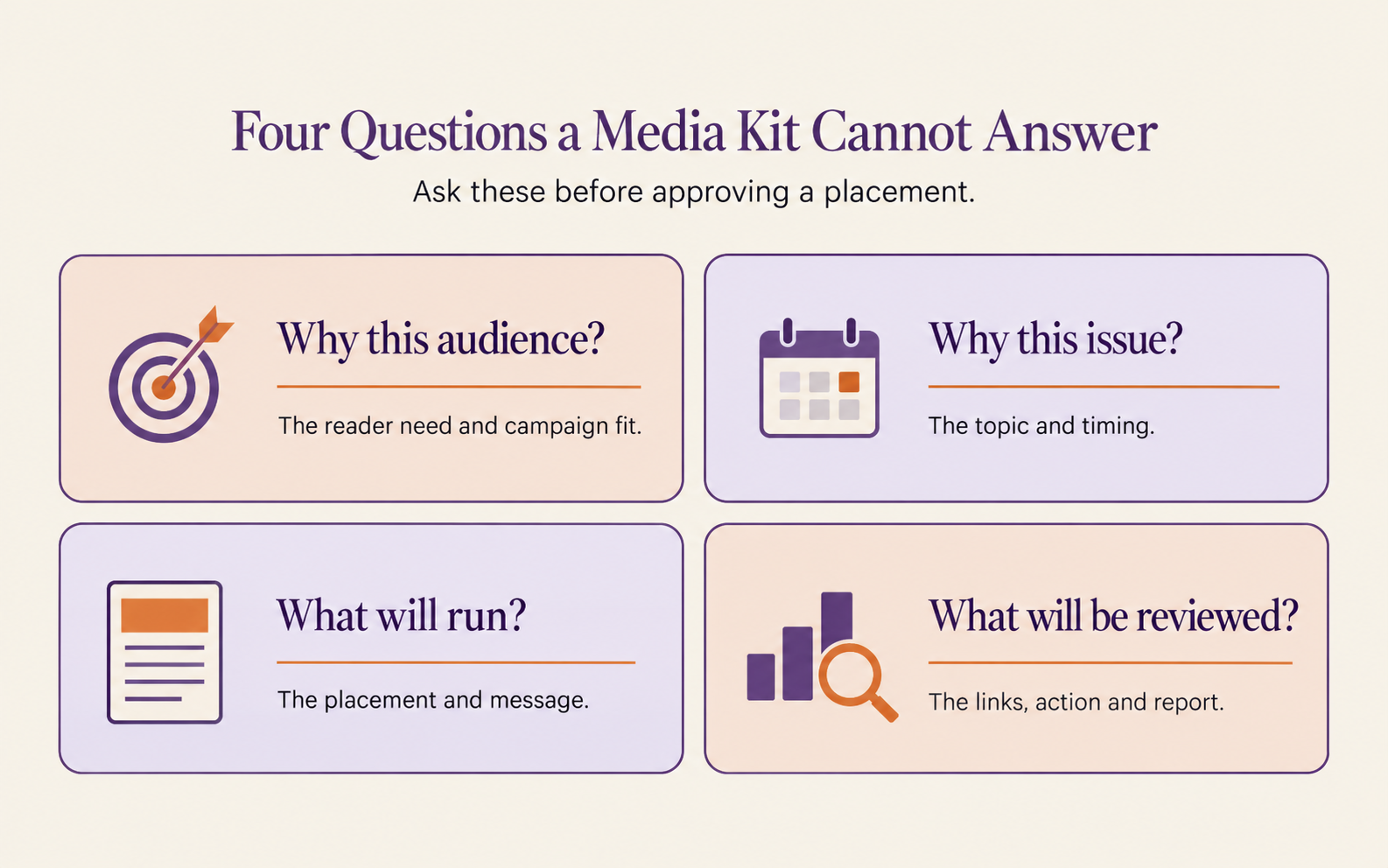
A brand or agency still needs to decide whether a specific placement is right for a specific campaign. That means asking a different set of questions: Why this reader group? Why this issue? What exactly will run? What happens after the reader clicks? What will the team review when the placement is over?
The distinction matters because a media kit describes a publication in general terms. A sponsorship proposal should describe the work being bought. It should make the campaign clear enough for the brand, agency and publisher to agree on the same test before an issue is sent.
A Media Kit Is an Introduction
A good media kit can save time at the start of a conversation. It may include an audience description, publication topics, sample sponsorship formats, a rate card and some general reporting information. That helps a buyer decide whether the publication belongs on a longer list of possible options.
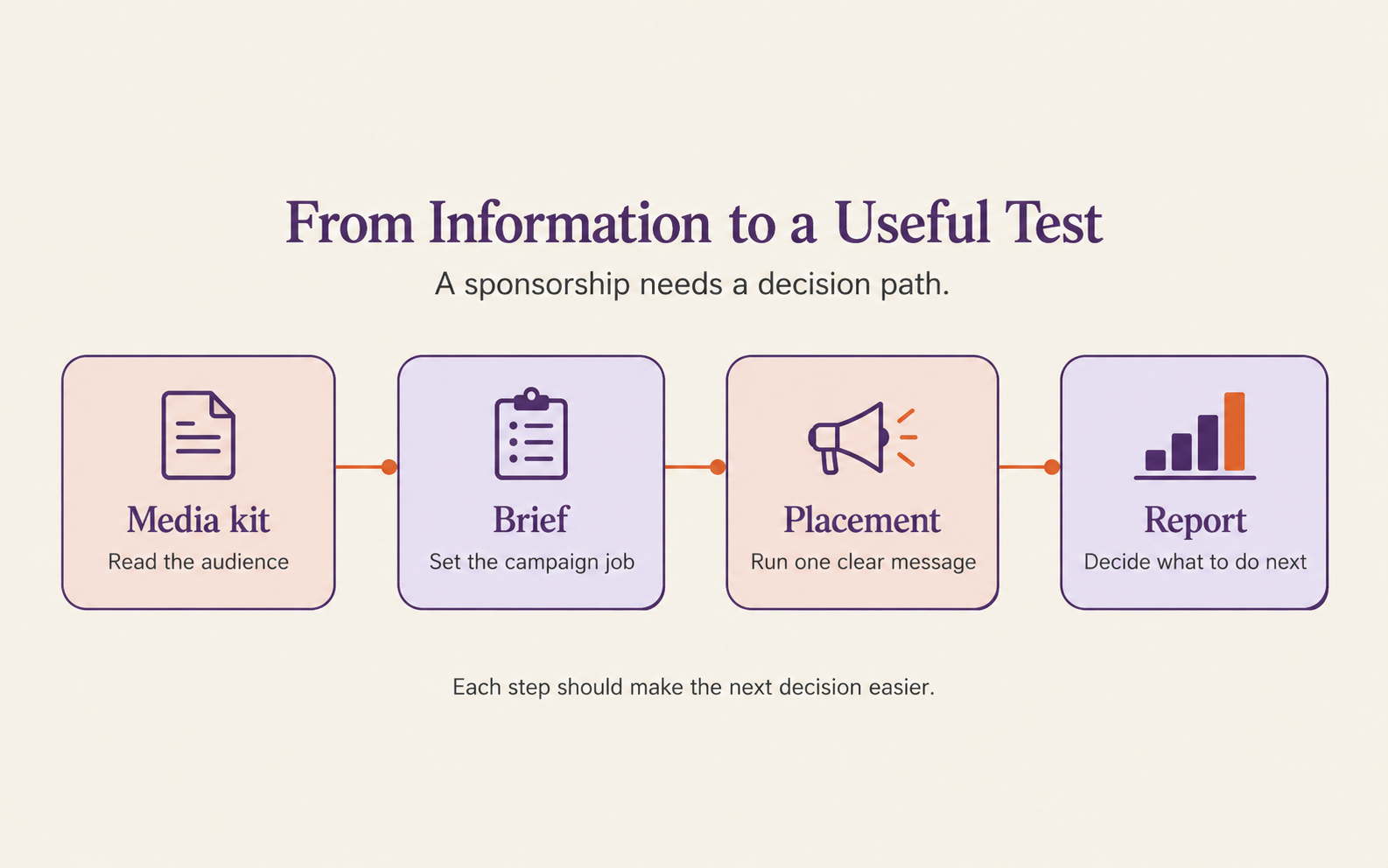
It should not be treated as a promise about a campaign that has not yet been planned. A reader group can be relevant to a brand while the proposed message is still weak. A newsletter can be a good fit for the category while the issue date, offer or landing page is wrong for this particular test. The kit gives the first level of information. The brief and proposal provide the next level.
Use the kit to decide whether to continue the conversation, not whether to sign the order. A clear reader description, example formats and a stated price range can justify the next call. They cannot decide the message, the timing or the next action for the brand. Those decisions need the people responsible for the campaign to be in the room.
This also keeps the request fair to the publisher. Instead of asking for a broad claim about expected results, the buyer can ask for a defined placement and a clear explanation of how it will support the campaign. The publisher can then respond to the actual brief, rather than guessing which part of the rate card matters most.
Ask Why This Audience
A demographic description alone is not a campaign reason. A marketing manager needs to know why the readers are paying attention to the publication and how that connects with the decision the brand wants to support. The answer may be health, household choices, financial planning, a life stage or another reader need. State it in plain language.
For example, a wellness product may be suitable for more than one community. The message may need to change depending on whether the reader is thinking about her own routine, a family decision or a practical problem at home. The publication is part of the decision, but not the whole decision. Reader context should come before raw audience size when the team is choosing where a message belongs.
Ask Why This Issue
The same publication can give a campaign different settings from one issue to the next. A seasonal topic, an editorial theme, a relevant article or a known reader question can make one issue a better place for a message than another. This does not require a complicated calendar. It requires the buyer and publisher to decide whether the reader will have a reason to care about the subject at that moment.
An agency can put this into a brief with one sentence: the reader is considering this problem now, and the sponsorship gives her a useful next step. If that sentence cannot be written, the placement may still be too general. A media kit cannot supply this answer because it is about the publication as a whole, not the campaign in front of the team.
Ask What Will Actually Run
Sample formats in a media kit are helpful, but a proposal needs to name the actual placement. It should state the issue date, position, format, copy length, links, assets and approvals. If editorial support, copy review, a supporting article or a dedicated page is included, write that down too.
This protects both sides from a familiar problem: everyone thinks they agreed, but each person pictured a different deliverable. A clear proposal leaves less room for that. It also gives the creative team enough direction to prepare a message that fits the reader setting instead of dropping a homepage headline into an inbox. See why sponsorship copy needs to fit the reader context before reusing a line from another channel.
Ask What Will Be Reviewed
A media kit may list general reporting measures. The proposal should say what this placement will be reviewed against. Start with one campaign job. It may be qualified visits to an educational page, sign-ups for a relevant offer, or a first introduction to a new audience. The action should fit what the placement is asking the reader to do.
Agree on the destination link before the campaign runs. The brand should know where the reader will arrive, what the page will explain and what the next action is. The publisher should know which tracking link to use and when the report will be shared. These details are simple, but they make it possible to have a useful discussion after the placement rather than a vague one.
Turn the Kit Into a Brief
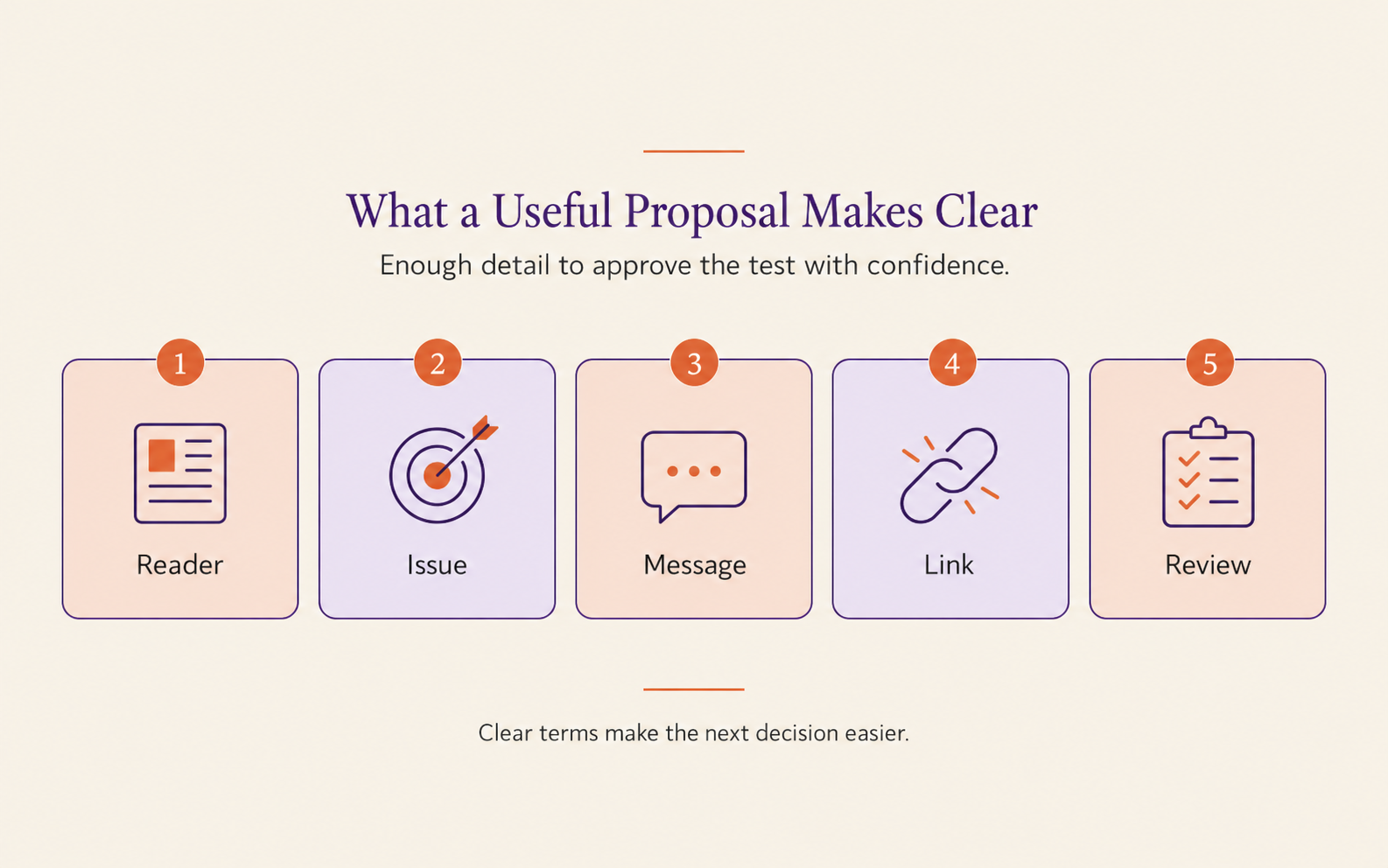
The buyer does not need a long document to move from a media kit to a useful brief. One page is often enough if it makes five points clear:
- Reader: Who is the message for, and why are these readers a fit?
- Issue: What topic, timing or reader need makes this placement relevant?
- Message: What single idea should the reader take away?
- Link: Where will the reader go, and what action is fair to ask for?
- Review: What will the team look at after the placement, and what decision will it inform?
This brief gives the publisher a real assignment and gives the agency a basis for comparing options. It can also reveal whether the problem is the media choice, the message or the destination page before money is committed. For a practical starting point, see how to prepare a newsletter sponsorship brief.
Keep the First Test Small and Clear
A first sponsorship does not have to answer every question about a publication. It should answer one useful question well. Does this audience respond to this message? Does the destination page continue the conversation? Does the offer give the reader a fair reason to act? A small, well-defined test gives the team a better next decision than a broad placement with no shared purpose.
Price is part of that decision, but only after the scope is clear. A flat fee, CPM or performance-based arrangement can each be useful in the right situation. The important point is that the buyer can see what the price covers and what will be reviewed. Read how to choose a newsletter sponsorship pricing model before comparing rates.
Frequently Asked Questions
Considering a Newsletter Sponsorship?
Montagu Publishing helps brands reach engaged female reader communities through newsletter placements and sponsored educational content.
For newsletter placements or sponsored educational content, email sales@10almonds.com.