


When a brand buys a newsletter sponsorship, it is reasonable to want control of the copy. The brand is responsible for product facts, approved claims, offer terms and the destination link. It cannot hand those decisions to someone else.
That does not mean the brand should send a finished advertisement and expect it to run word for word. A newsletter is a reader setting with its own tone, topic and rhythm. The publisher understands how the message sits beside the surrounding content and what a reader is likely to find useful there.
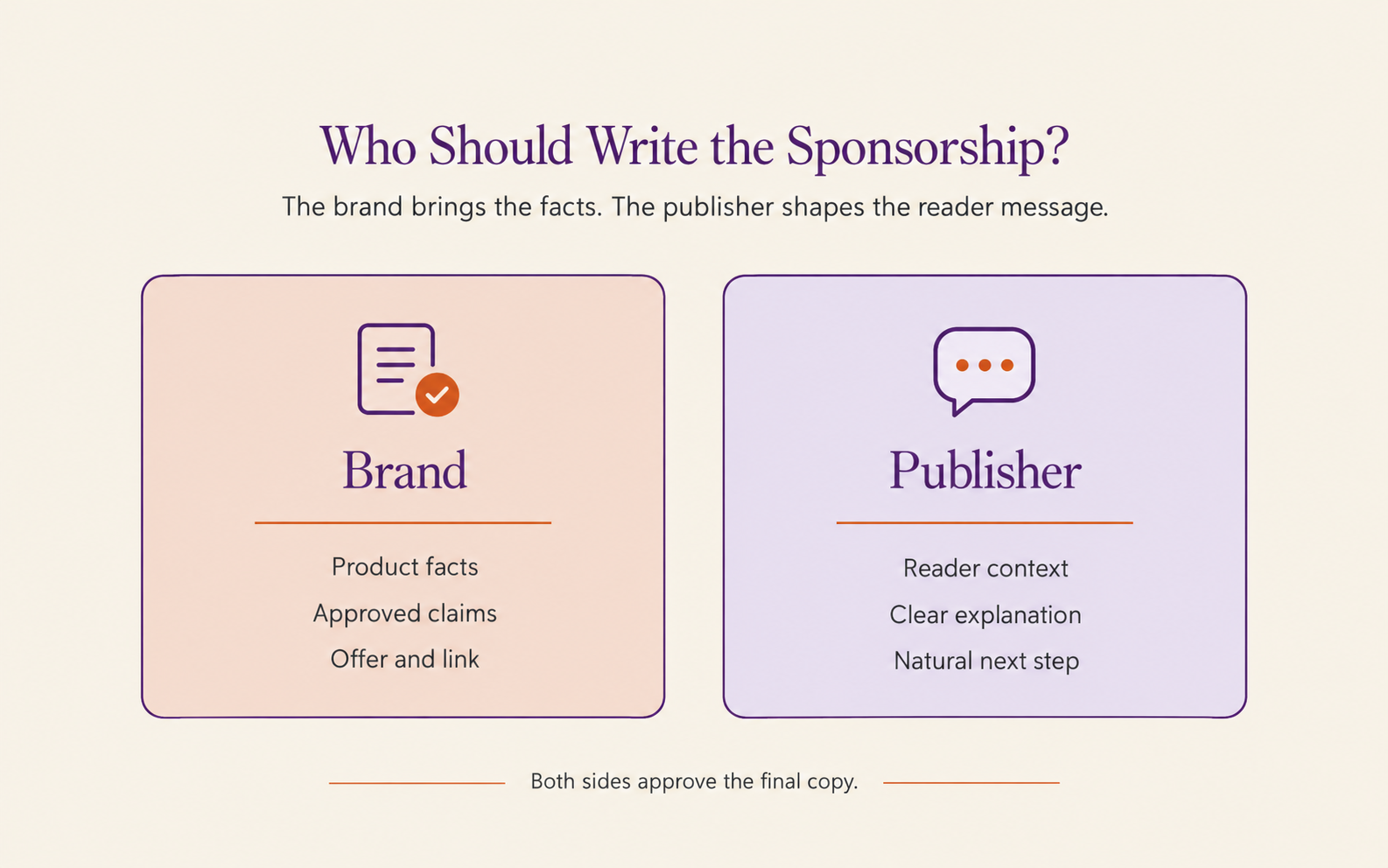
The practical answer is shared work. The brand provides the information that must not change. The publisher turns that information into a clear message for the reader. Both sides approve the final copy before it is scheduled.
What the Brand Should Own
The brand should decide the facts. This includes the product name, the problem it is intended to help with, the offer, the landing page, approved supporting detail and any words that cannot be used. If the brand has legal, regulatory or category-specific limits, put them in the brief before the draft is written.
The agency can make this easier by giving the publisher one source of truth. A short list of approved facts is more useful than a long presentation. Include the current offer, the final link, product terms that need to be stated and one named person who can answer questions. This reduces late changes that affect the issue schedule.
Control should be precise. It is not a reason to make every sentence sound like a homepage banner. The brand needs to protect accuracy. It does not need to remove the explanation that helps a reader understand why the message is appearing in her newsletter.
What the Publisher Should Own
The publisher should shape the explanation. That means choosing a sensible entry point, using plain language and connecting the offer to the subject the reader is already considering. The work is not to change the product. It is to help the product make sense in the reader’s current setting.
For a health or wellness audience, the first sentence may name a practical concern before it names the brand. For a family audience, it may begin with the household decision the reader is making. The same approved product information can be used in both cases, but the order and explanation may be different.
This is why a useful sponsorship is not the same as pasting an advertisement into an email. The reader needs enough context to understand the problem, the supporting detail and the fair next step. A message should fit the reader context, even when the central campaign idea stays the same.
Give the Writer a Short Brief
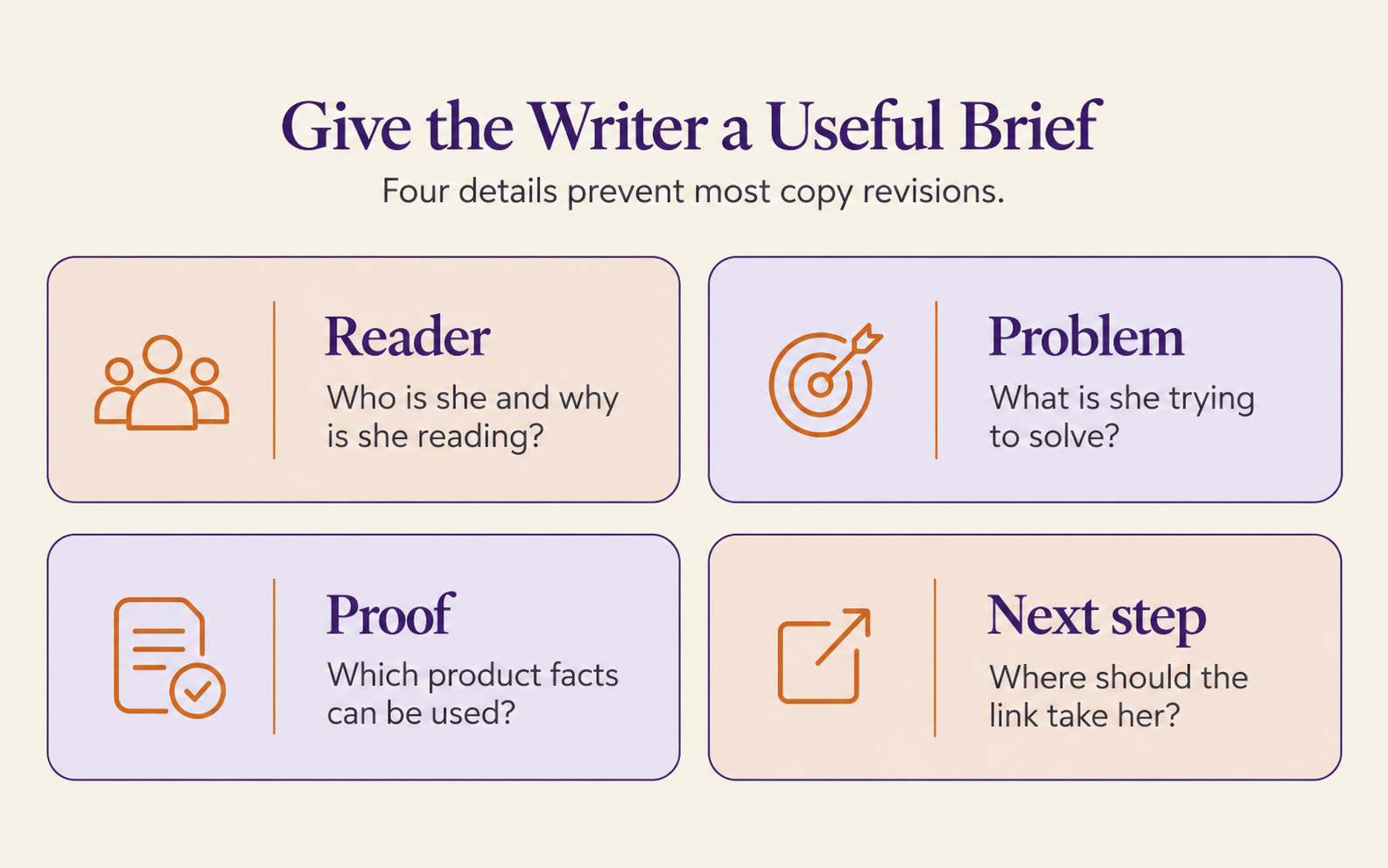
A short brief is the best handoff between the brand and publisher. It gives the publisher enough information to write, while keeping the brand’s limits clear. Four details usually do most of the work:
- Reader: Who is the message for, and why is she paying attention to this publication?
- Problem: What question, need or decision is the message helping her with?
- Proof: Which product facts, sources or claims have been approved for use?
- Next step: Where will the link take her, and what action is the page asking for?
Add the issue date, placement format, word count and asset deadline. If a phrase must appear exactly as written, include it in the brief. If a claim must not appear, include that too. The writer should not have to guess which points are fixed and which points can be explained in a different way.
Review the Right Things
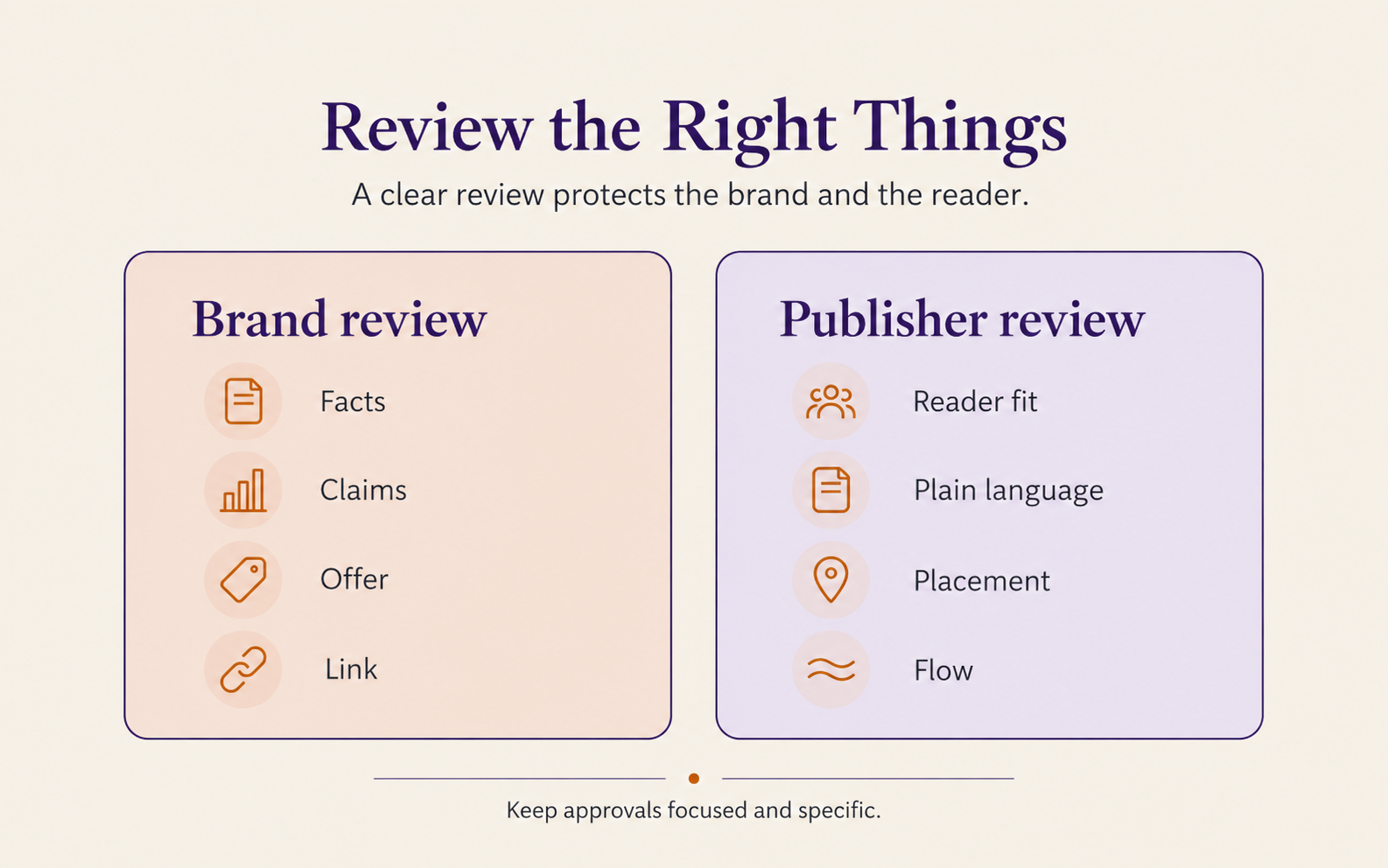
Once the publisher has drafted the placement, the brand should review the facts, claims, offer and link. Check that the product is described correctly, that the required wording is included and that the destination page is ready. If the campaign uses a tracked link, check that it is the final one.
The publisher should review reader fit, clarity, placement and flow. Check that the message is easy to understand without a long preamble, that it belongs beside the planned content and that the next step matches what the reader has just been told. These are different checks, and that is useful. Each side catches a different kind of problem.
Avoid turning the review into a complete rewrite after the brief has been approved. If a factual point is wrong, fix it. If a claim goes beyond the agreed material, remove it. If the offer or link changed, update it. But changing the whole structure because it does not sound like a banner ad usually takes the message further from the reader setting it was bought for.
Where Teams Get Stuck
Most delays come from a missing decision, not from the writing itself. The offer changes after the draft is ready. The final landing page has not been chosen. A required claim was not supplied. Or several reviewers are asked for comments without anyone deciding which comment is final. These are planning problems that appear as copy revisions.
Handle them early. Put the final link in the brief, confirm the current offer and ask the brand for a list of required or restricted wording. Then name the person who can approve the copy. The writer can spend time making the message useful instead of trying to solve missing campaign decisions in the last draft.
Set a Simple Approval Process
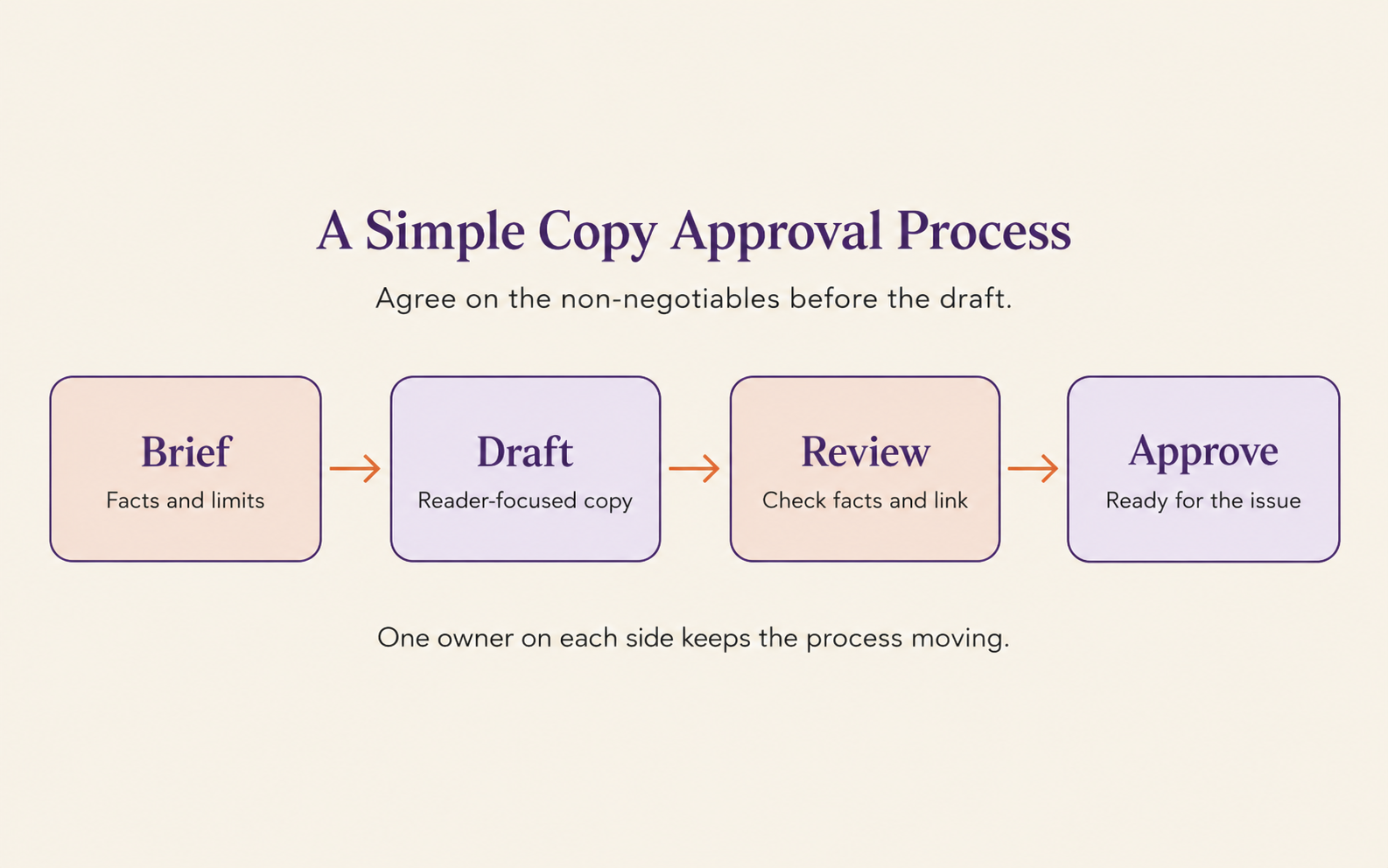
A straightforward process prevents rushed decisions. Agree on the non-negotiables first. The publisher prepares one draft. The brand or agency reviews it through one named owner. The publisher makes the agreed factual changes. Then both sides confirm the final version and the link before the issue is prepared.
One owner on each side matters. When several people send separate edits, the writer cannot tell which ones are required. The process slows down and the copy can become a collection of different voices. A single reviewer can collect feedback, decide what matters and send back one clear set of changes.
This is also a good place to state the deadline. A newsletter issue has a send date. Copy approval, link testing and any image assets need to be finished before the production work begins. Clear timing helps the campaign run as planned and keeps last-minute changes from becoming avoidable errors.
Keep the Test Useful
The first placement does not need perfect copy for every future campaign. It needs one clear message, one relevant link and a report that helps the team decide what to do next. A well-run approval process makes that easier because the brand knows what was said, the publisher knows why it was written that way and the agency can connect the result to the original brief.
Before approving a sponsorship, make sure the scope is just as clear as the copy. The placement, audience context, creative process, tracking link and review plan should all be in the proposal. A media kit introduces the publication, but the proposal should explain the campaign the brand is actually buying.
Frequently Asked Questions
Considering a Newsletter Sponsorship?
Montagu Publishing helps brands reach engaged female reader communities through newsletter placements and sponsored educational content.
For newsletter placements or sponsored educational content, email sales@10almonds.com.