


No. A brand can keep one campaign idea, but it should not use the same sponsorship copy in every newsletter without checking the reader context.
A reader opens a newsletter for a reason. She may be looking for practical health information, household ideas, family activities or a particular type of advice. The sponsorship message should make sense alongside that reason for reading.
This does not mean creating a completely new campaign for every placement. It means keeping the central idea while changing the problem named, the explanation given and the next step offered.
Why Standard Website Copy Can Miss the Moment
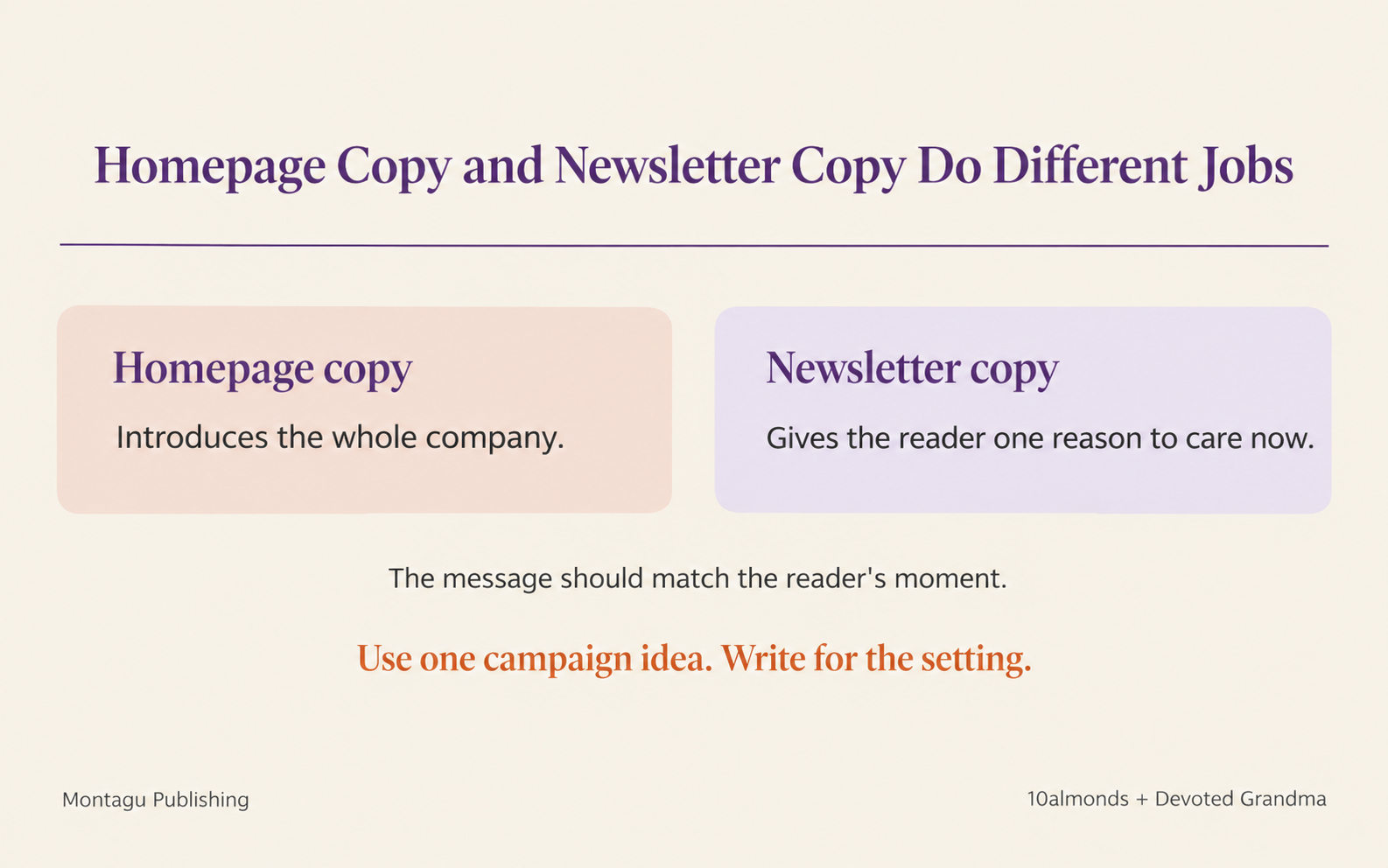
Website copy often has a broad job. It may need to introduce the company, explain several products, answer common questions and guide different visitors to different pages. That is appropriate for a homepage.
A newsletter sponsorship has a narrower job. It appears in the middle of a reader’s regular publication. The reader needs to understand quickly why the message is relevant to the subject she came for and why she should take one more step.
When a brand places a broad homepage line into a newsletter, the message can feel detached from the issue. It may name the company but fail to name the reader problem. It may ask for a purchase before the reader has enough context to consider it.
Start With the Reader’s Question
Before writing a sponsorship message, ask what the reader is likely to be thinking about in that publication. The answer should come from the editorial setting, not from a broad demographic label alone.
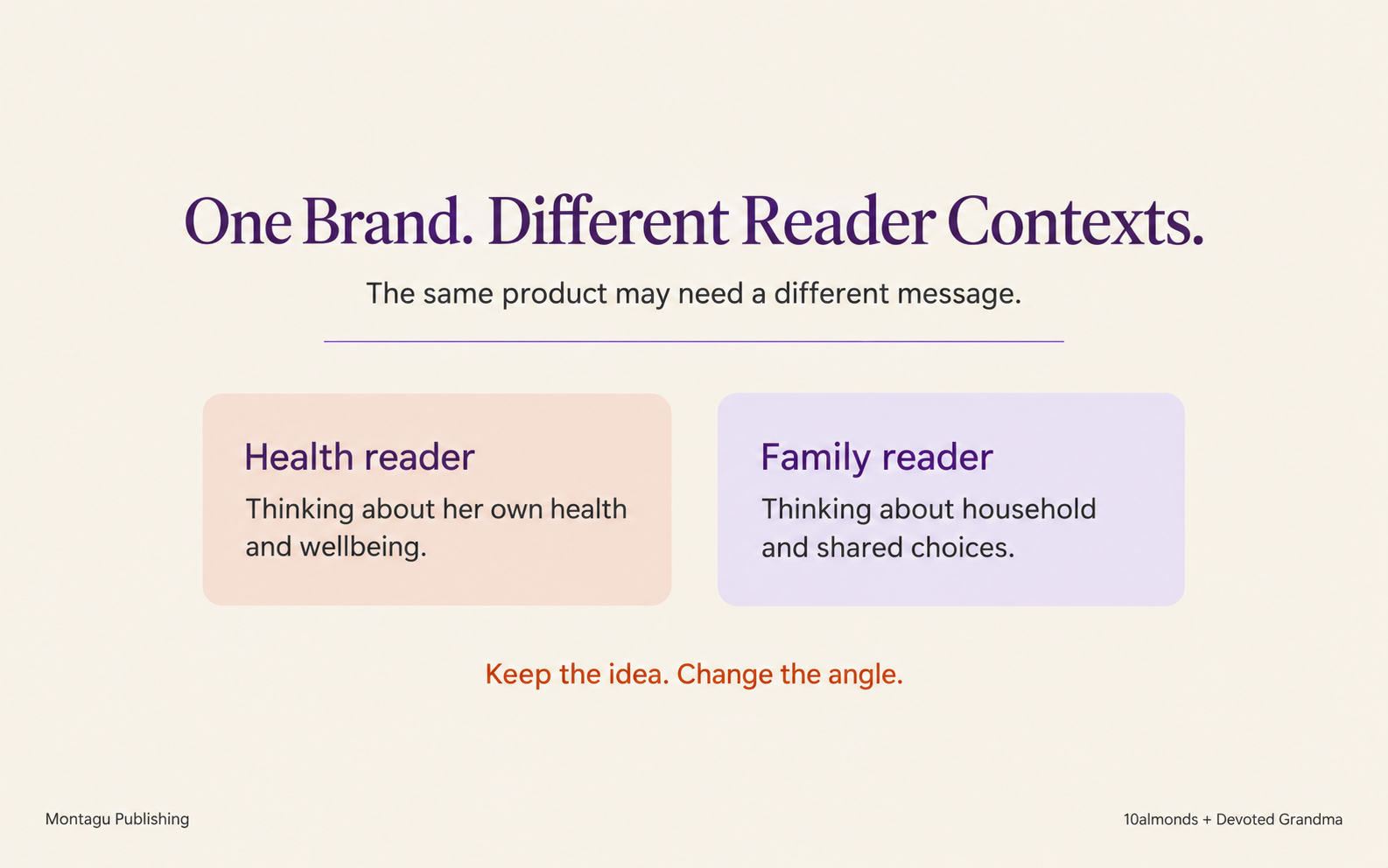
A reader in a health newsletter may be thinking about her own sleep, nutrition, mobility or prevention. A reader in a family publication may be weighing a household choice, a gift, an activity or a shared experience. Both readers may suit the same brand, but they are not necessarily ready for the same opening line.
This is the practical side of audience context. The message should begin with the situation the reader recognises. It can then explain how the product or service relates to that situation. Audience Context vs Audience Size explains why the reason for reading should come before the reach number.
Keep the Idea. Change the Angle.
The central campaign idea can remain consistent. A brand may want readers to understand a product, consider a service or visit a page for more detail. What changes is the route into that idea.
For one publication, the message may begin with a personal health question. For another, it may begin with a household decision. The product stays the same. The brand voice stays the same. The explanation changes because the reader’s starting point has changed.
This also helps an agency make a stronger recommendation. Rather than sending the same asset to every publisher, the agency can state what each placement is meant to do. That makes the media plan easier to review and gives the publisher useful direction.
Build the Message Around Four Parts
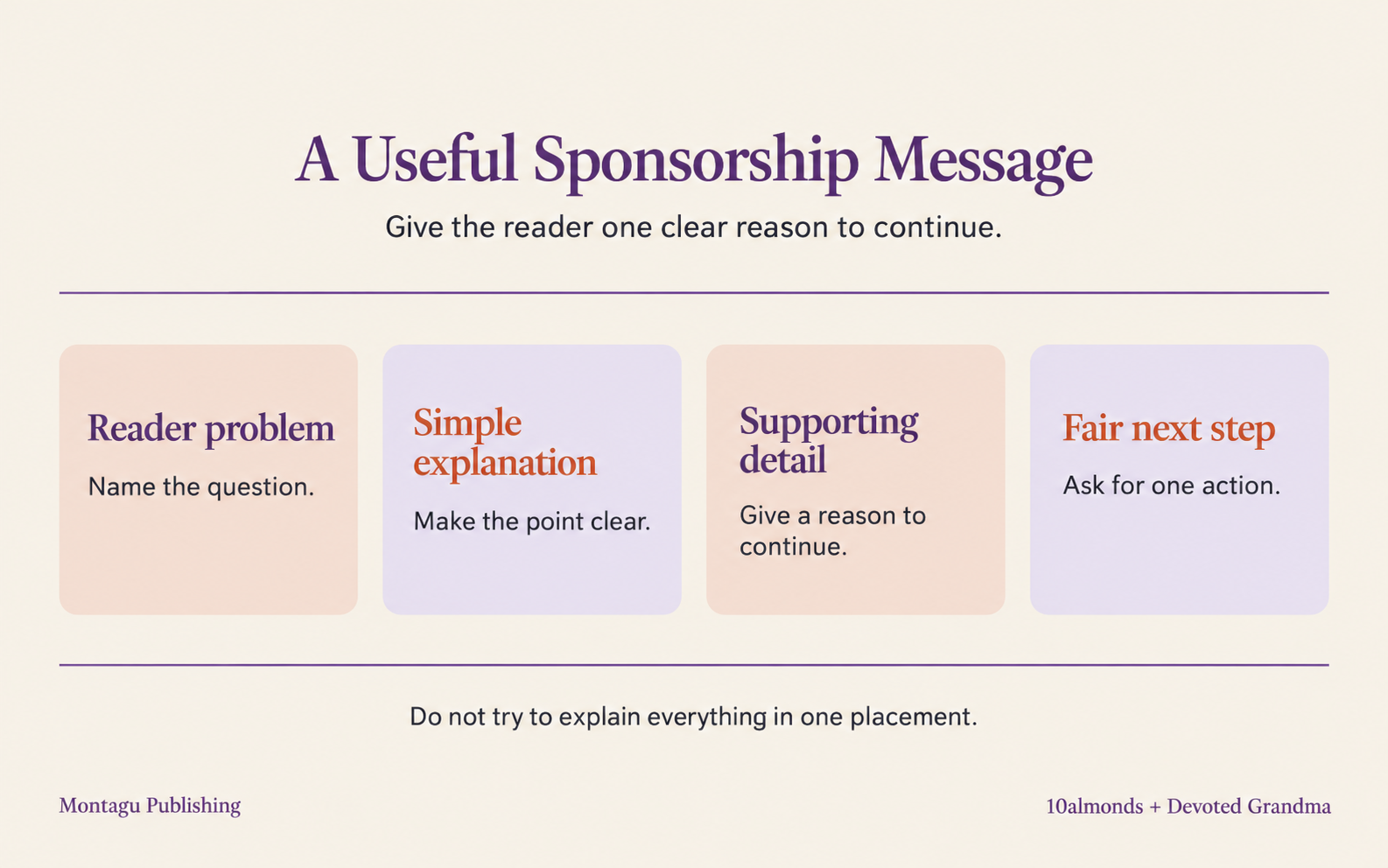
A useful newsletter sponsorship does not need a long list of product features. It needs one clear thought that carries the reader from the placement to the next page.
- Name the reader problem. Start with a question, need or life moment that fits the publication.
- Give a simple explanation. State the useful point without trying to explain the whole company.
- Add supporting detail. Give the reader a reason to learn more, such as an article, comparison, example or product detail.
- Offer one fair next step. Ask the reader to read, visit, sign up or buy only when that step fits the amount of context she has received.
Make the Landing Page Continue the Message
The reader should recognise the same idea after she clicks. If the sponsorship names one problem, the landing page should explain that problem. If the placement introduces a product benefit, the page should show the supporting detail rather than send the reader to a general homepage.
This does not require a new page for every newsletter. It requires a page that matches the message and gives the reader a clear next action. A reader who has only seen a short placement may be better served by an explanation before a direct purchase request.
What Should a Landing Page Do After a Newsletter Sponsorship? gives a practical way to check this part of the campaign.
A Quick Check Before the Placement Runs
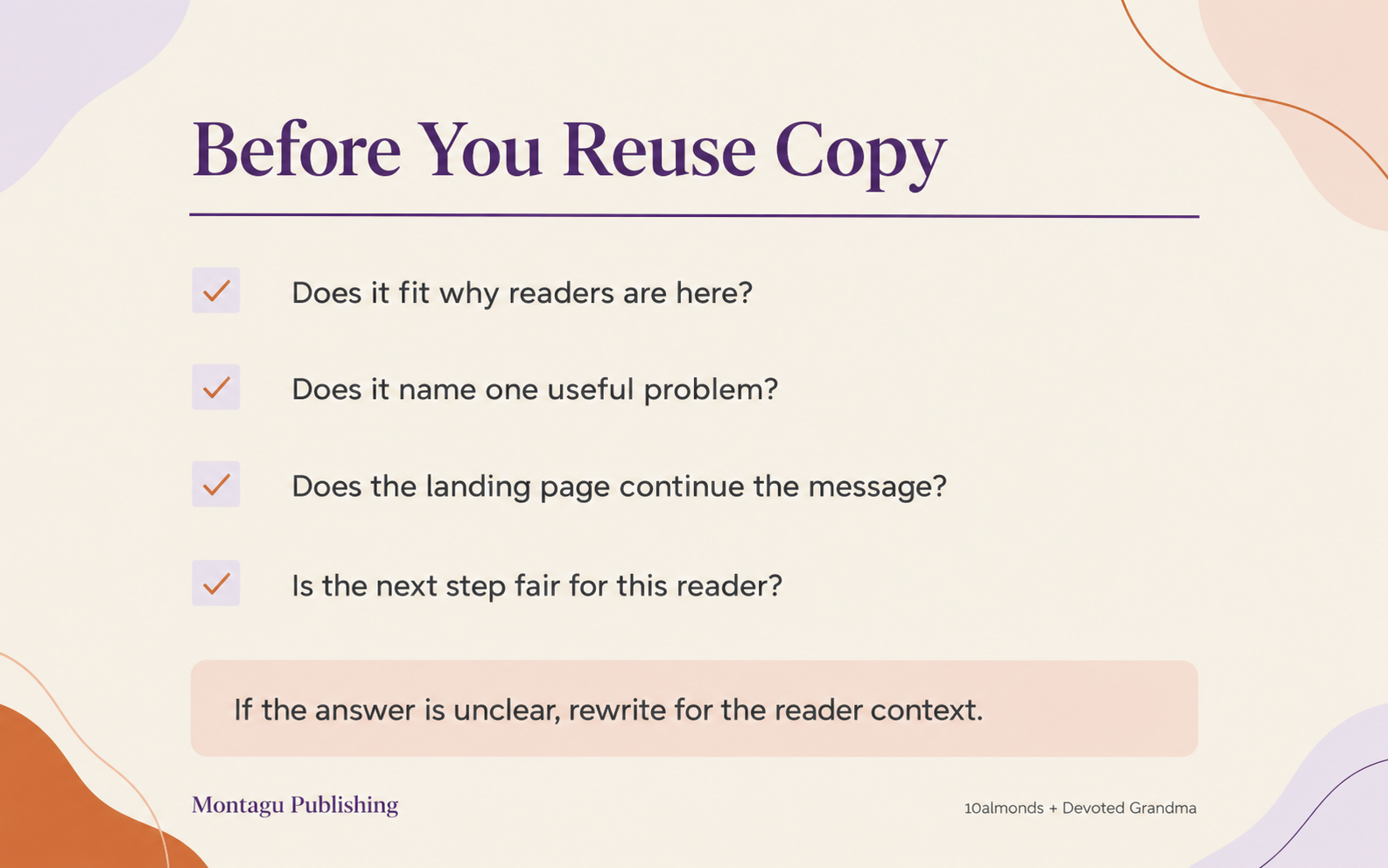
- Does the copy fit why readers are opening this publication?
- Does it name one useful problem rather than list every feature?
- Does the page after the click continue the same idea?
- Is the next step fair for a reader who is seeing the brand for the first time?
If the answer is unclear, rewrite the sponsorship message before the placement runs. It is usually easier to adjust a short message than to explain weak campaign results afterwards.
How an Agency Can Adapt Copy Without Losing Consistency
Adapting the message does not mean losing control of the campaign. The agency can keep a short set of fixed points: the product, the main campaign idea, the approved claims, the brand voice and the action the campaign is meant to support.
Then it can change the opening problem, the supporting example and the landing-page introduction for each reader setting. This gives the publisher enough room to make the placement feel appropriate without turning it into a different campaign.
The result is usually easier to review. The client can see what stays consistent across every placement and what changes because the reader context changes. The publisher can see the purpose of the message rather than receiving a piece of copy with no explanation.
What to Give the Publisher Before Copy Is Written
A short, useful brief is enough to begin. It should tell the publisher:
- Who the campaign needs to reach.
- What reader problem or question the message should address.
- Which approved claims, details or limits need to be included.
- What the reader should see after clicking.
- What action the campaign should make easier.
What Should a Brand Include in a Newsletter Sponsorship Brief? gives the full planning checklist. The purpose is not to create more paperwork. It is to give the publisher enough context to help shape a relevant message.
Frequently Asked Questions
The Bottom Line
Do not treat a newsletter placement as a place to repeat a homepage message. Keep the campaign idea, then adapt the copy to the reader context, the editorial setting and the next step the reader can reasonably take.
Planning a Newsletter Sponsorship?
Montagu Publishing helps brands reach engaged female reader communities through newsletter placements and sponsored educational content.
For newsletter placements or sponsored educational content, email sales@10almonds.com.