


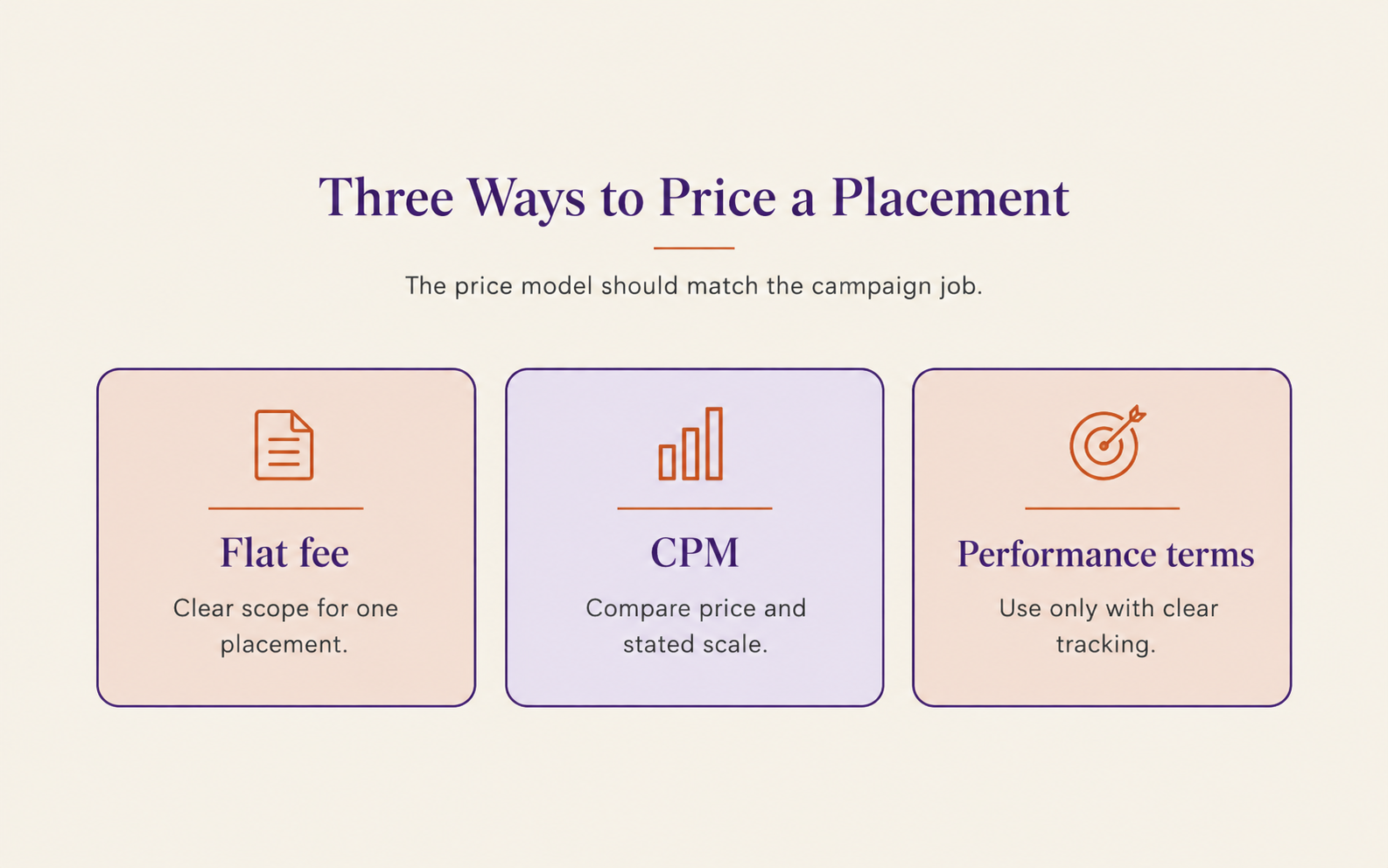
There is no single best way to price a newsletter sponsorship. A flat fee is useful when the placement is clearly defined. CPM is useful when a team needs to compare stated scale across options. Performance-based terms can be useful when the action, tracking and reporting are clear before the campaign starts.
The rate card should not be the first decision. Start with the job of the campaign. Is the brand trying to introduce an idea, bring qualified visitors to a page, collect sign-ups, or support a later sale? The answer affects what the publisher is being asked to provide, what the brand can measure and which price model is sensible.
For an agency, this matters when several publishers are being considered for the same plan. For a marketing manager, it matters because a low price does not explain what is included, and a high price does not explain whether the placement is right for the work. A useful proposal makes the scope clear enough that both sides know what they are agreeing to.
Start With What Is Being Bought
Before choosing a pricing model, write down the placement itself. Include the publication, issue date or date range, position in the newsletter, format, copy length, links and any supporting work. If the proposal includes editorial development, a dedicated landing page, more than one issue, or post-campaign reporting, say so. These are parts of the work, not small details to settle later.
A number without this scope is hard to compare. Two placements may both be called a newsletter sponsorship, while one is a short text placement and the other includes a larger unit, a supporting article, a review of copy and a campaign report. The price may differ for a good reason. The proposal should make the difference visible.
When a Flat Fee Works
A flat fee is usually the simplest option when the placement has a fixed scope. The buyer knows the agreed deliverable and the publisher knows what it is being asked to run. It can work well for a first test, a single issue, a defined series or an educational placement where the goal is to put a clear message in front of an appropriate reader group.
A flat fee does not remove the need for questions. Ask what position the placement will have, what audience information is available, whether the copy will be reviewed, what links will be used and what will be reported afterwards. A fixed price is useful because the scope is fixed, not because it should hide the scope.
When CPM Helps
CPM, or cost per thousand impressions, gives a team a way to compare the stated scale of different media options. It can be useful when an agency is building a media plan and needs a common starting point. It is a comparison tool, not a complete answer to whether a newsletter placement is the right purchase.
Ask how the publisher defines the number behind the calculation. Is it the size of the subscribed list, a forecast for a specific issue, or another measure? Ask what is included in the placement and whether the reader context suits the message. CPM can help plan the scale of a buy, but it cannot show whether the message, offer and landing page make sense for the reader.
When Performance-Based Terms Need More Care
Performance-based terms connect payment to a specified action, such as a sign-up, qualified lead or sale. They can make sense when that action is defined in the same way by everyone involved and the tracking can show it. They need more preparation than a flat fee because a result may depend on many parts of the campaign beyond the newsletter placement.
Before using this model, agree on the action, the tracking link, the reporting source, the time period and how invalid or duplicate actions are handled. Also look at the landing page, offer and follow-up process. A publisher can place a message in front of readers. The brand still controls the page that receives them and the next step it asks them to take.
What the Price Should Include
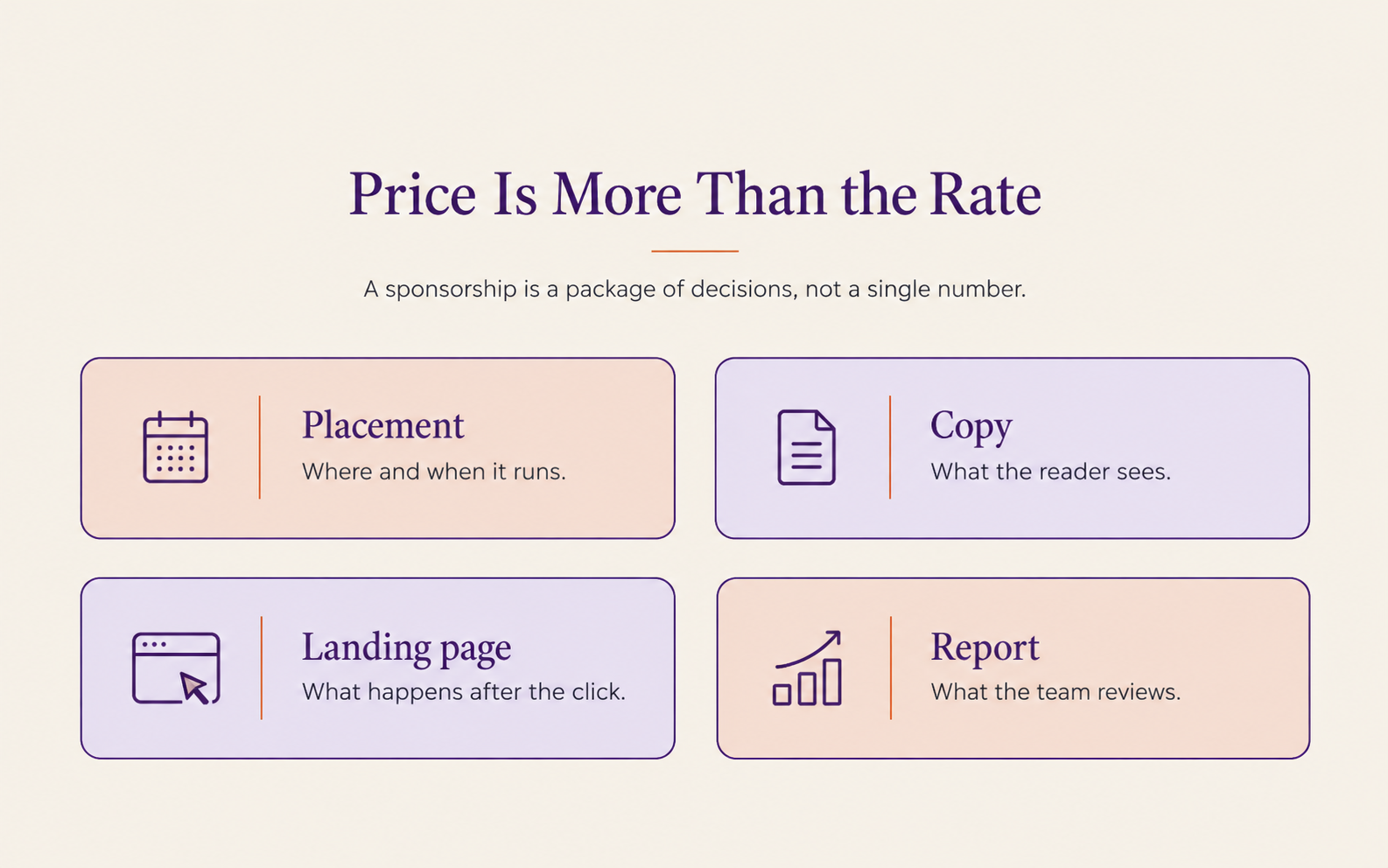
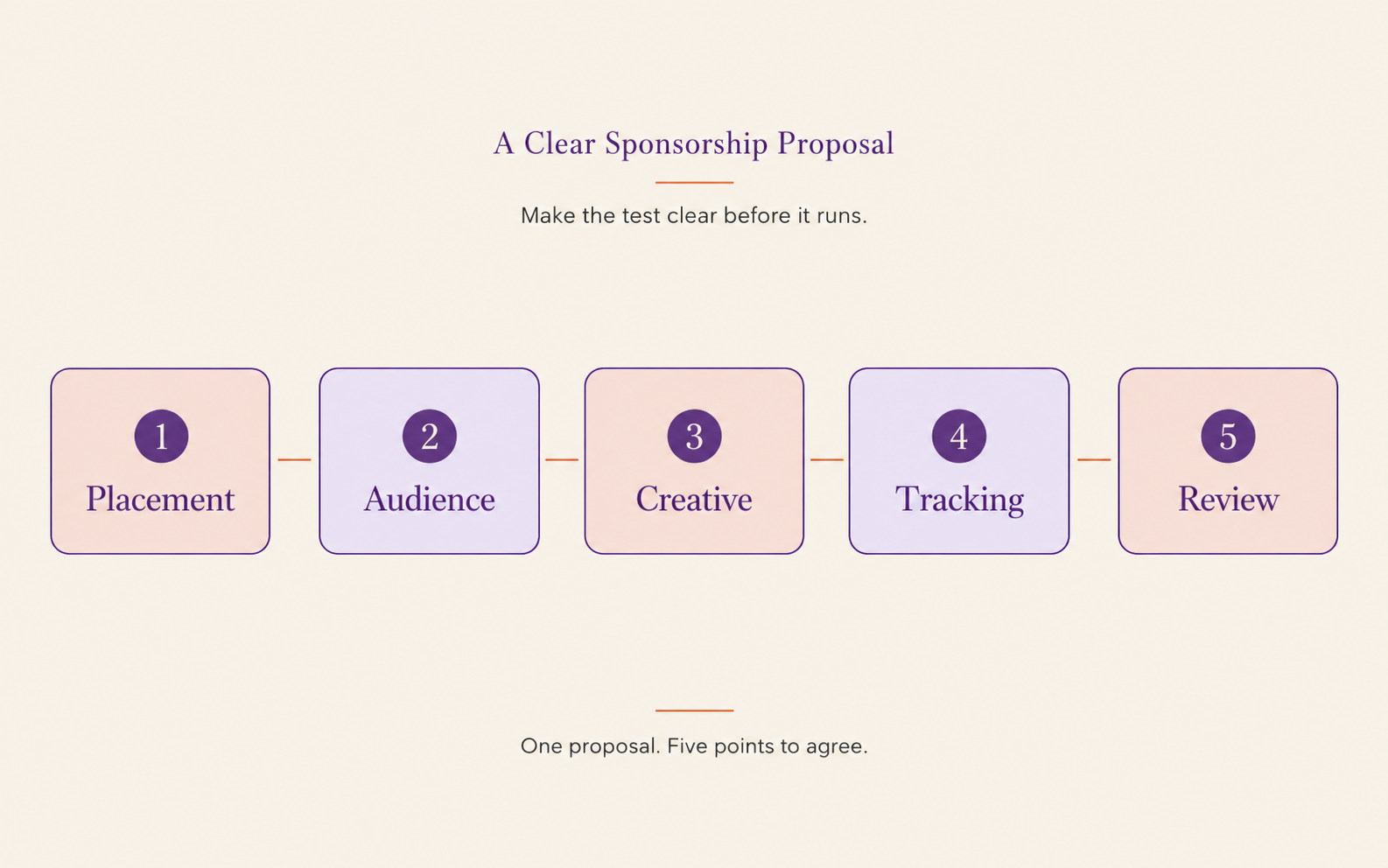
Whether the campaign uses a flat fee, CPM or performance terms, the proposal should answer five basic questions:
- Placement: What will run, where it will appear and when.
- Audience: Which reader group the publication serves and why the message belongs there.
- Creative: Who supplies the copy and creative, who approves it and the deadline for final assets.
- Tracking: Which links will be used, which actions are measured and who can see the reporting.
- Review: When the team will review the placement and what it will decide from the result.
This is especially useful when an agency is comparing proposals. Put the same five points beside every option. It reduces the chance that one publisher is being judged only on list size while another is being judged on the depth of the package. It also gives the client a clear record of what the test is meant to show.
Avoid False Precision
A rate can look precise while the plan behind it is still vague. This happens when a buyer has a cost figure but does not know the exact placement, does not know which audience detail matters, or has not agreed on the action that will count as success. The answer is not a larger spreadsheet. It is a clearer brief.
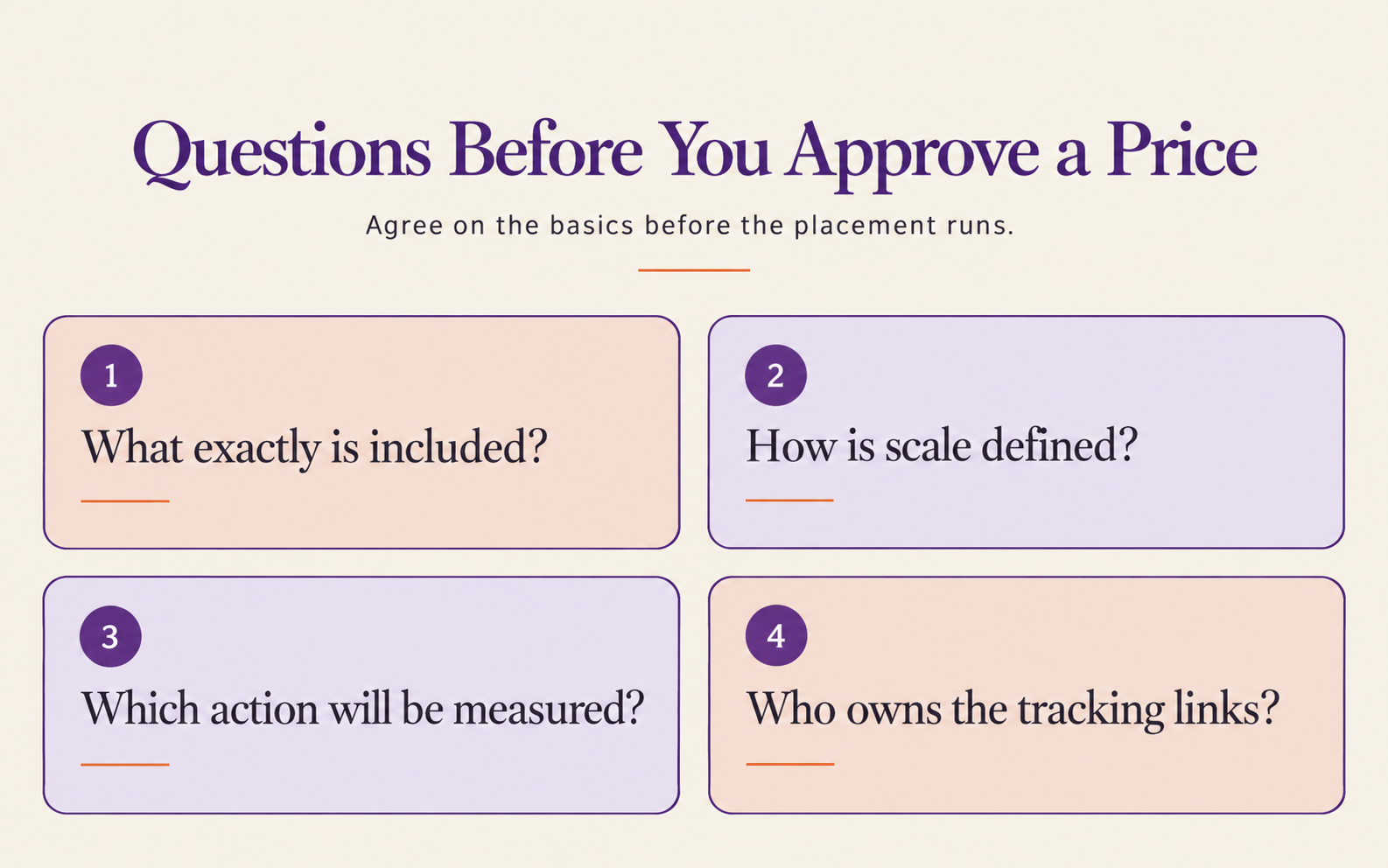
Keep the comparison simple. Put the proposed price beside the placement description, the expected scale, the reader context, the destination page and the report. If one of those items is missing, ask for it before the plan is approved. This is not extra administration. It prevents the team from explaining a disappointing result with information that should have been agreed before the issue was sent.
Give each placement one job. A first placement might introduce a problem and bring the right readers to an educational page. A later placement might make a product comparison easier or invite a sign-up. Trying to ask every placement to do everything makes pricing harder to judge because the team has not decided what it is buying.
When the job is clear, the proposal becomes easier to assess. A flat fee can be judged against the agreed scope. CPM can be judged alongside scale and reader fit. Performance terms can be judged against a defined action and a tracking plan. The discussion moves from a debate about one number to a practical decision about the campaign.
Make the First Test Useful
The first sponsorship does not need to settle every future media decision. It should answer one useful question. Does this publication reach readers who care about the subject? Does the message earn qualified visits? Does the landing page continue the conversation well? Use the answer to improve the next placement rather than treating one issue as a final verdict on the channel.
Start with a brief that states the audience, the campaign job, the message and the next step. Then ask the publisher for a proposal that explains placement, price and reporting in plain terms. For more on the information to request before a buy, see what audience data to review before buying a newsletter sponsorship and how to prepare a newsletter sponsorship brief.
Frequently Asked Questions
Considering a Newsletter Sponsorship?
Montagu Publishing helps brands reach engaged female reader communities through newsletter placements and sponsored educational content.
For newsletter placements or sponsored educational content, email sales@10almonds.com.