


Direct Answer
Before booking a newsletter sponsorship, a brand or agency should ask for more than a subscriber count.
A publisher should be able to explain who the readers are, why they read, why the message fits the publication and what the campaign is meant to show. This does not require a long report or a pile of numbers. It requires clear information that helps a marketing team make a sensible decision.
Newsletter audience data is useful when it gives context. A list size can show possible reach. It cannot, by itself, show whether the reader is likely to care about the message or whether the campaign is set up to learn anything useful.
For a brand with a limited budget, that difference matters. The question is not only how many people could see the placement. It is whether the brand has a good reason to appear in that reader’s inbox.
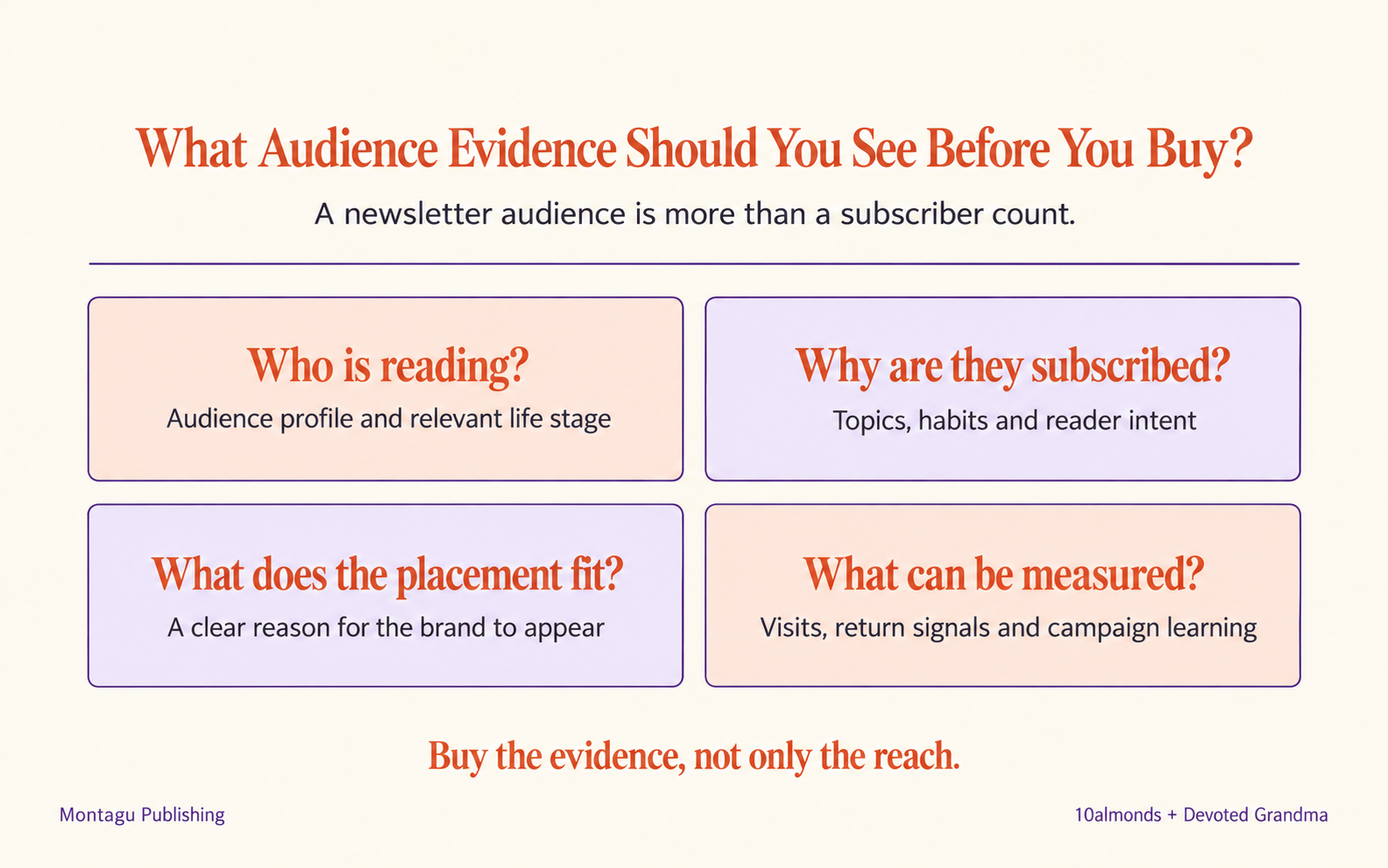
A Subscriber Count Is Not a Media Plan
A large list can be valuable. It can also be a poor fit.
A subscriber count does not explain what readers come to the publication for, what decisions they are making or whether the product belongs in that setting. Those questions matter more than a broad description such as women over 50 or wellness readers.
A woman reading about sleep, mobility or nutrition may be in a different frame of mind from a woman reading about family activities, gifts or household choices. Both may be relevant to a brand, but the message and the offer may need to change.
That is why audience context should come before audience size. The brand first needs to understand why the reader is paying attention. It can then decide how much reach is worth buying. Audience context versus audience size explains that distinction in more detail.
The Four Questions Behind a Responsible Buy
A good publisher conversation should answer four plain questions.
- Who is reading? Ask for a clear audience description that relates to the brand’s category. This may include life stage, common interests, reader surveys or editorial topics.
- Why are they subscribed? A newsletter is not simply a list of email addresses. Readers may subscribe for practical advice, health information, family ideas or a regular routine. That habit gives the publisher useful context.
- Why does the message fit? The publisher should explain why the product, problem or offer makes sense for the reader. The audience is large is not a complete answer.
- What will the campaign measure? Agree on the campaign job before the placement runs. It may be to introduce a problem, bring visitors to a page, build a retargeting audience or test whether readers return later.
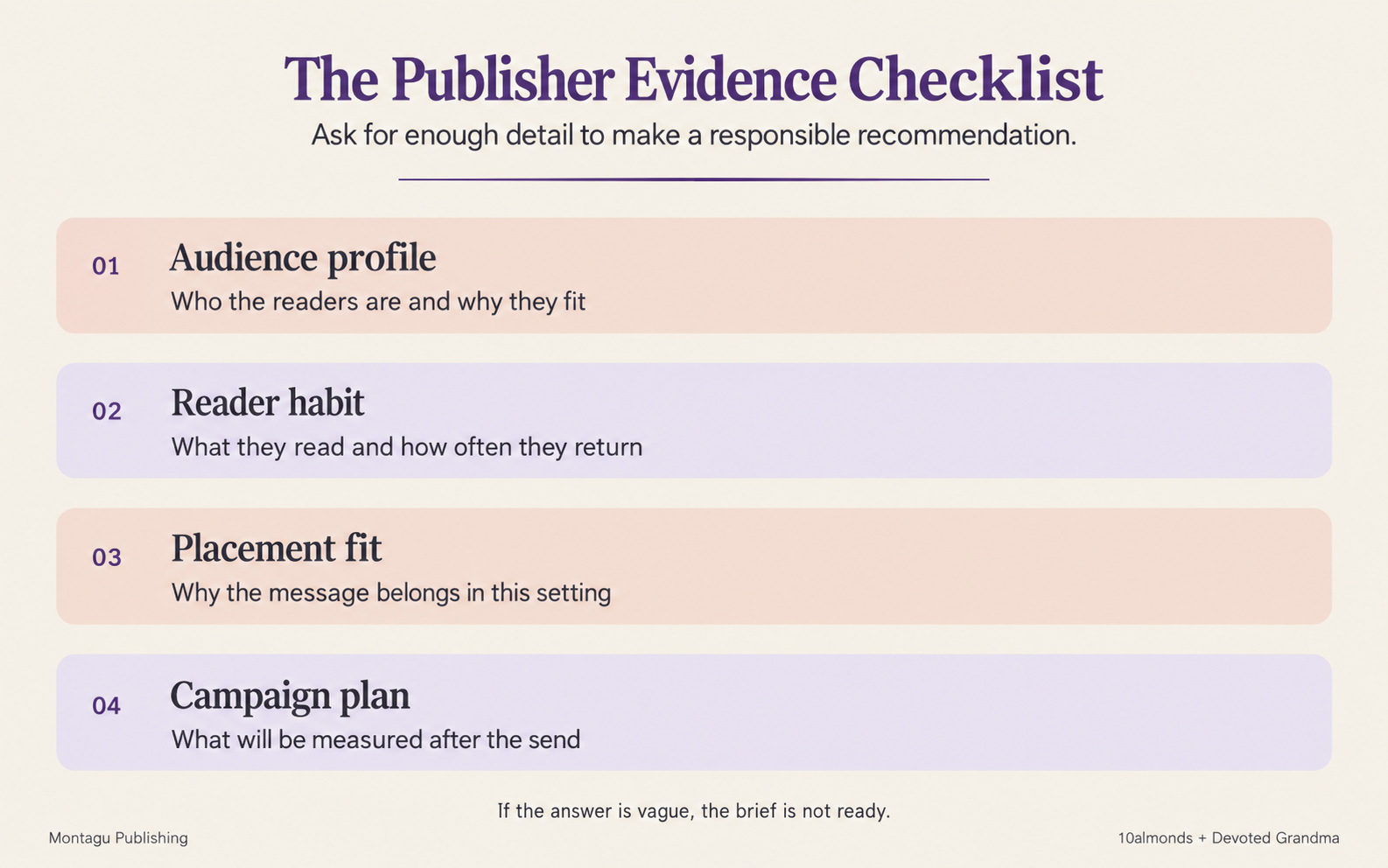
How to Read Publisher Information
A useful publisher briefing does not need to be complicated. It should help a buyer understand the reader, the editorial setting and the role of the placement without forcing the team to guess.
Start with the publication itself. Read a few recent issues and look at the topics readers receive. This shows more than a broad audience label. It shows the questions, habits and interests that bring readers back.
Then ask the publisher to explain where the message will appear, what format is available and what the reader will see after clicking. A short, direct answer is more useful than a long collection of figures with no connection to the campaign.
Finally, agree on what the first campaign is meant to test. It may be relevance, useful visits, sign-ups or a later action. The evidence should help the brand choose the right question before it buys the placement.
What Good Audience Evidence Looks Like
Good audience evidence is specific enough to help a team make a decision. It may include:
- Editorial topics that readers return to.
- Reader survey findings, with the date and sample size explained.
- Subscriber preferences or stated interests.
- Engagement patterns around relevant content.
- Past campaign observations where the category and placement are similar.
- A clear explanation of the placement, landing page and follow-up plan.
The point is not to demand private reader information. A publisher should protect its subscribers. The point is to understand the reader environment well enough to decide whether the message belongs there.
An agency should also ask what the publisher cannot show. That makes the brief more useful, not less.
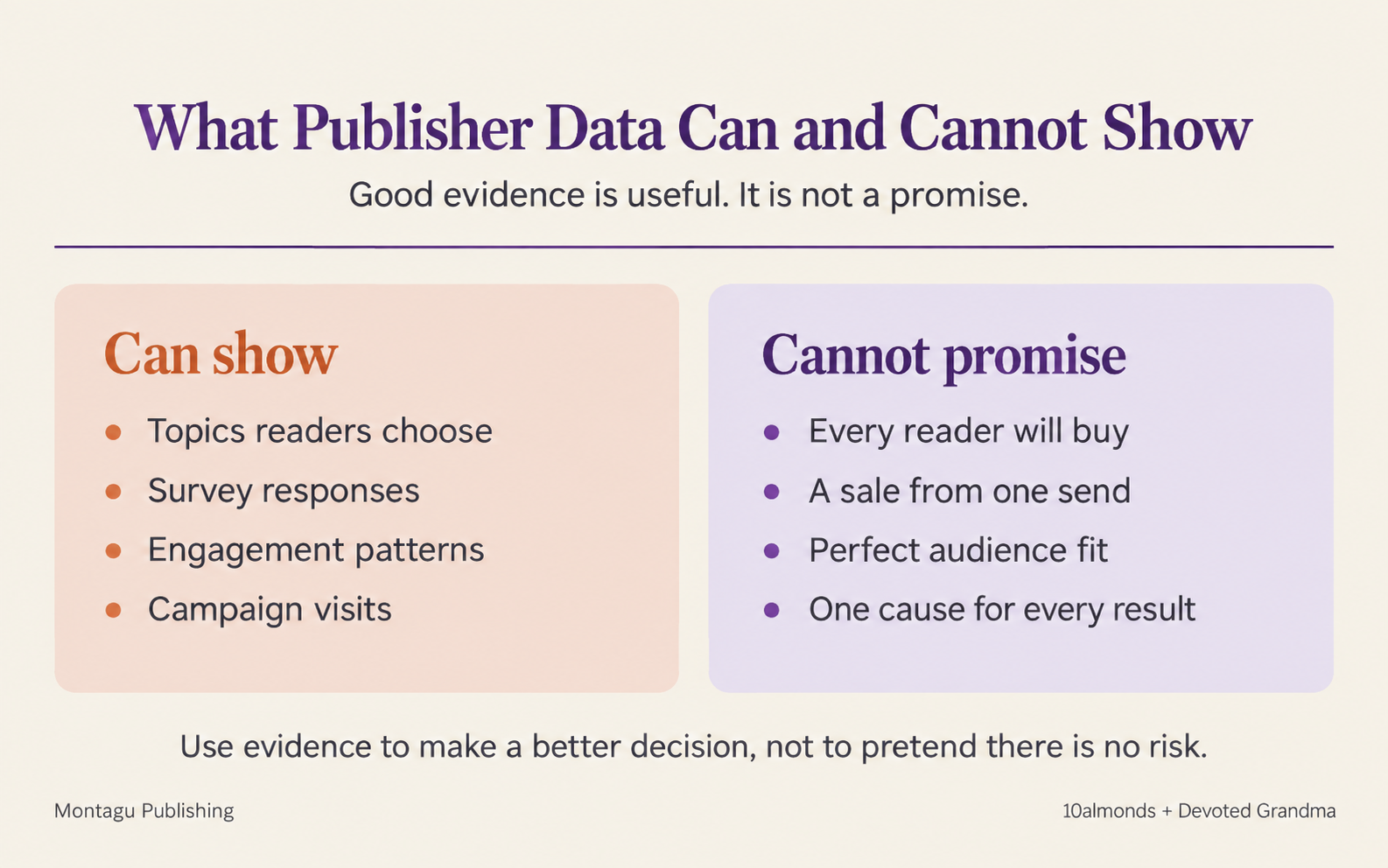
The Line Between Evidence and Assumption
Good audience evidence helps a brand decide whether a placement deserves a test. It does not predict every result.
A publisher can show the topics readers choose, survey responses, engagement patterns and campaign visits. It cannot tell a brand which individual reader will buy or give one placement full credit for a later sale.
The product, price, offer, landing page, timing and follow-up all affect the result. Clear limits make it easier to set a useful test and review it properly afterward.
What an Agency Needs Before Recommending the Channel
An agency does not need a publisher to solve the entire media plan. It needs enough information to give the brand a clear recommendation.
Before adding a newsletter placement to a brief, agree on the audience problem the campaign is addressing, the role of the placement, the message the reader will see, the page the reader will reach after clicking, what happens if a reader shows interest but does not act immediately, and what the team will review after the campaign.
That is a better starting point than selecting a channel because it has a large mailing list or a low price. What should a brand include in a newsletter sponsorship brief? offers a practical next step.
Measure the Question You Set Out to Answer
A first campaign should answer one clear question.
- Does this audience visit the landing page?
- Do visitors return after the first click?
- Does the content help people understand the product?
- Does the placement build a useful retargeting audience?
- Do later conversions include people who first encountered the brand through the campaign?
Google Analytics can help teams look at customer touchpoints before conversion through its attribution paths report. That does not give one placement all the credit. It does help a team look beyond one click.
The best campaign readout should make the next decision easier. How to measure sponsored content beyond clicks covers the practical reporting questions.
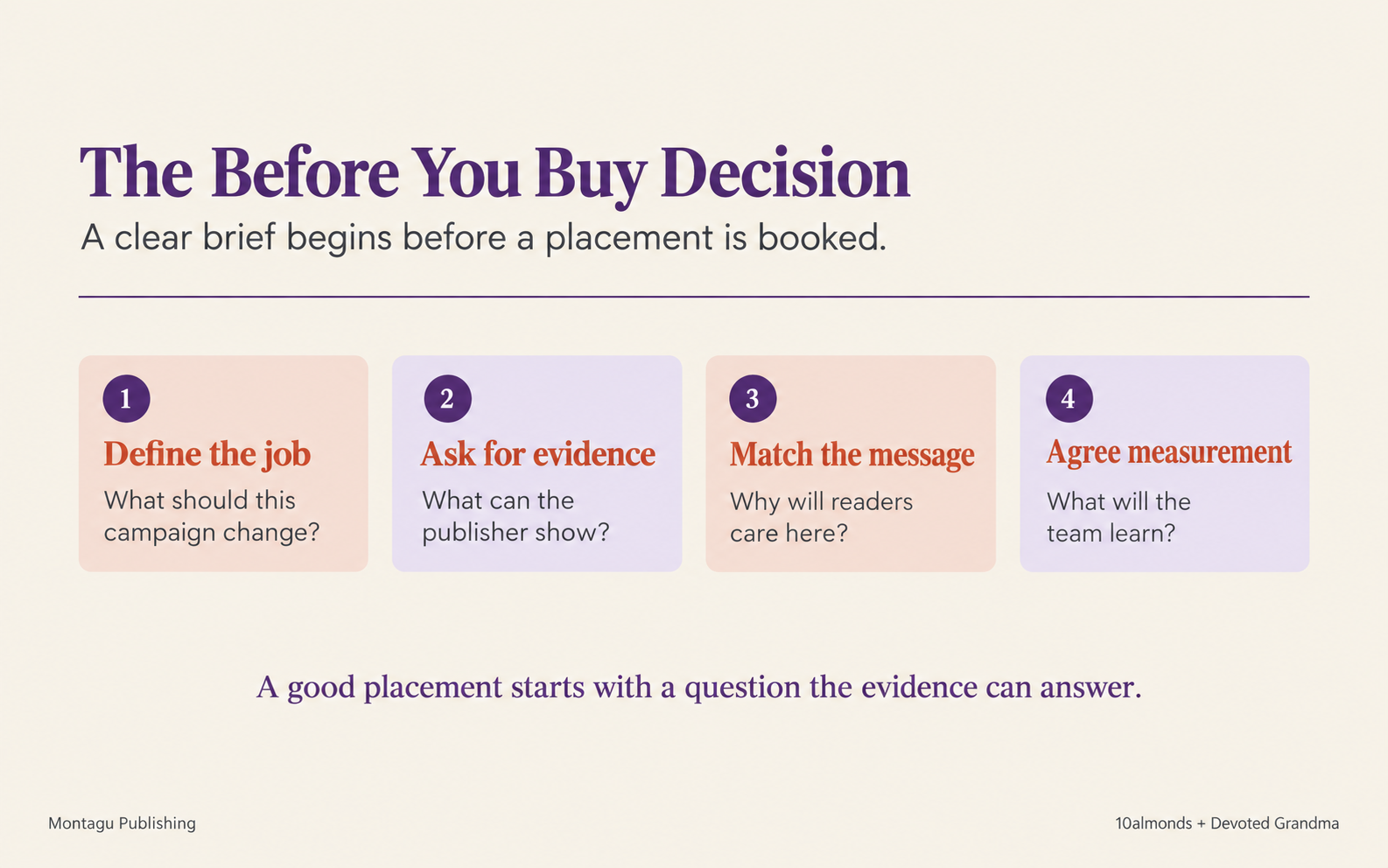
The Before You Buy Decision
A good newsletter placement starts before the email is written.
The brand should define the campaign job. The publisher should provide relevant evidence. The message should fit the reader context. The team should agree on what it wants to learn.
When those pieces are clear, a newsletter sponsorship becomes easier to brief, easier to review and easier to compare with other media options.
Frequently Asked Questions
The Bottom Line
Newsletter audience data should help a brand make a better decision.
Before buying, ask who the readers are, why they are there, why the message belongs and what the campaign will teach the team. If those answers are vague, the brief needs more work.
Planning a Newsletter Sponsorship?
Montagu Publishing helps brands reach engaged female reader communities through newsletter placements and sponsored educational content.
For newsletter placements or sponsored educational content, email sales@10almonds.com.