


Yes. A newsletter sponsorship can belong in a performance media plan when it has a clear job.
It is not a replacement for paid search, paid social or retargeting. It can help introduce an idea, give a reader useful context and send interested people to a landing page. Other channels can then help the brand bring people back or capture demand when they are ready to act.
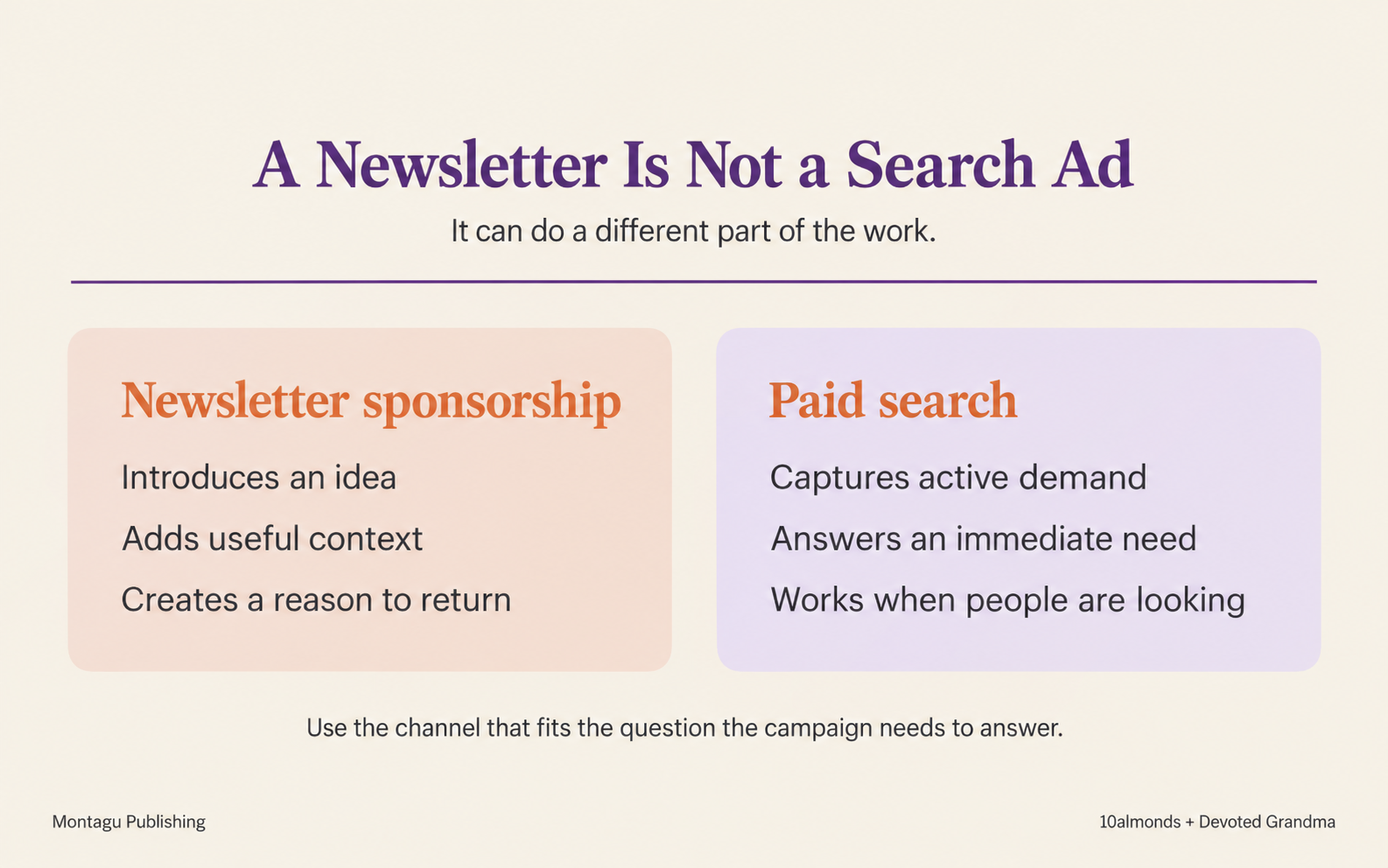
The mistake is judging every channel by the same immediate number. A paid search campaign may be built to capture someone already looking for a product. A newsletter placement may be built to make the product easier to understand before that search happens.
For a brand with a limited budget, the question is simple: what should this placement do that another channel cannot do as well?
Performance Is More Than an Immediate Sale
A performance plan should lead to an outcome, but the outcome does not always happen in the first visit.
A reader may see a newsletter placement, visit a page, leave, search for the brand later or return after seeing a follow-up message. That does not make the first placement irrelevant. It means the campaign should be built to understand the path, not only the first click.
Google Analytics attribution reports can show touchpoints that happened before a conversion. They do not give every result to one placement, but they can help a team see more than the last action. Google Analytics attribution paths.
Give Each Channel a Job
A good media plan does not make every channel do the same work.
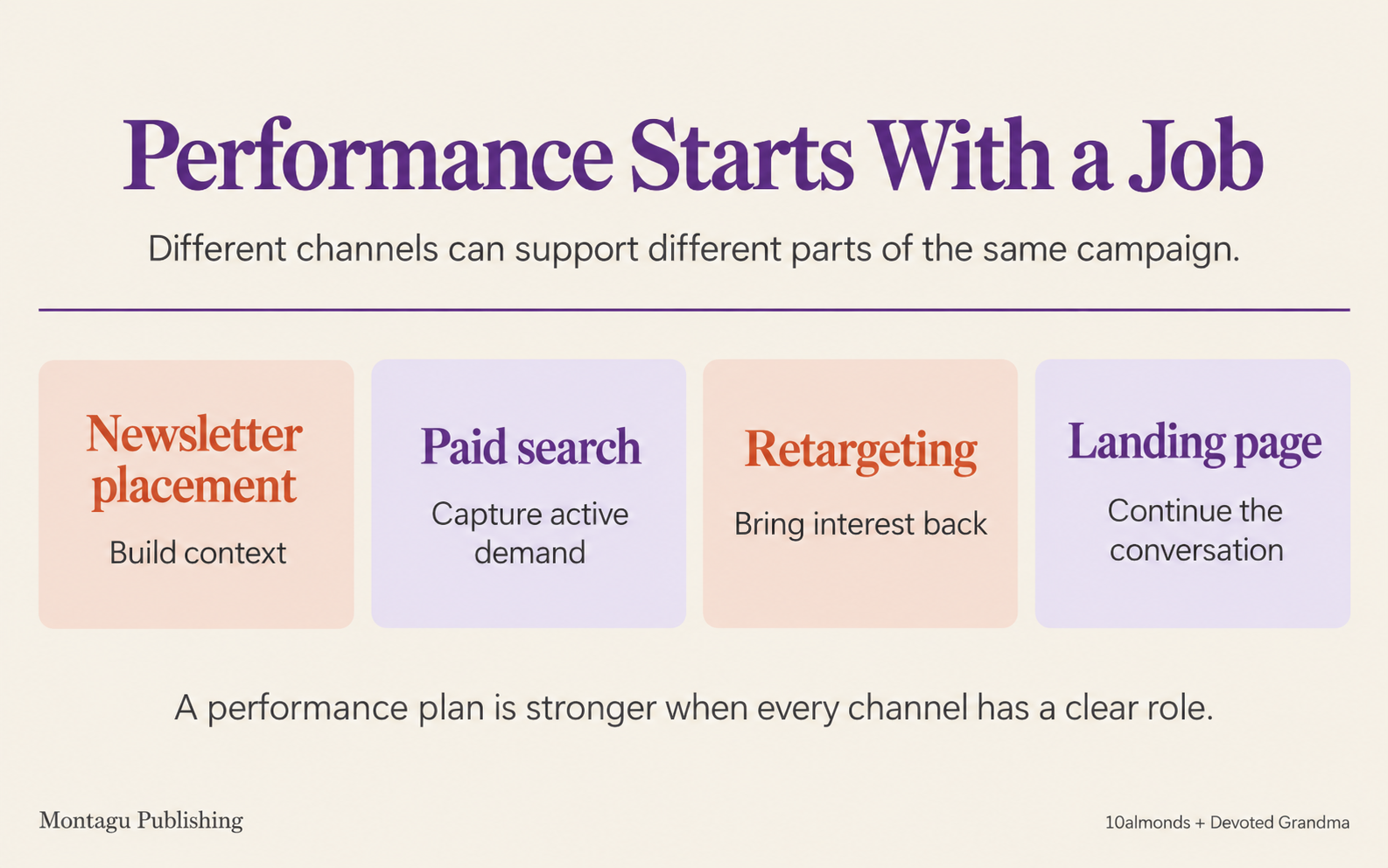
A newsletter sponsorship can introduce a problem or a product in a setting where readers are already interested in a topic. Paid search can capture people who are actively looking. Retargeting can remind people who showed interest. A landing page can continue the message after the click.
The question is not whether a newsletter is better than search. The question is whether the campaign needs more context before search can do its job.
When a Newsletter Placement Fits
- The product needs explanation before a reader is ready to buy.
- The category depends on trust, education or comparison.
- The audience has a clear interest connected to the product.
- The brand wants to test a message in a relevant reader setting.
- The campaign needs useful visits, return behaviour or a retargeting audience before it expects a sale.
It may be less useful when the only goal is to capture immediate demand from people already searching for a product. In that case, search may be the more direct choice.
Build the Plan Before the Placement Runs
The newsletter placement should not be treated as a one-time send.
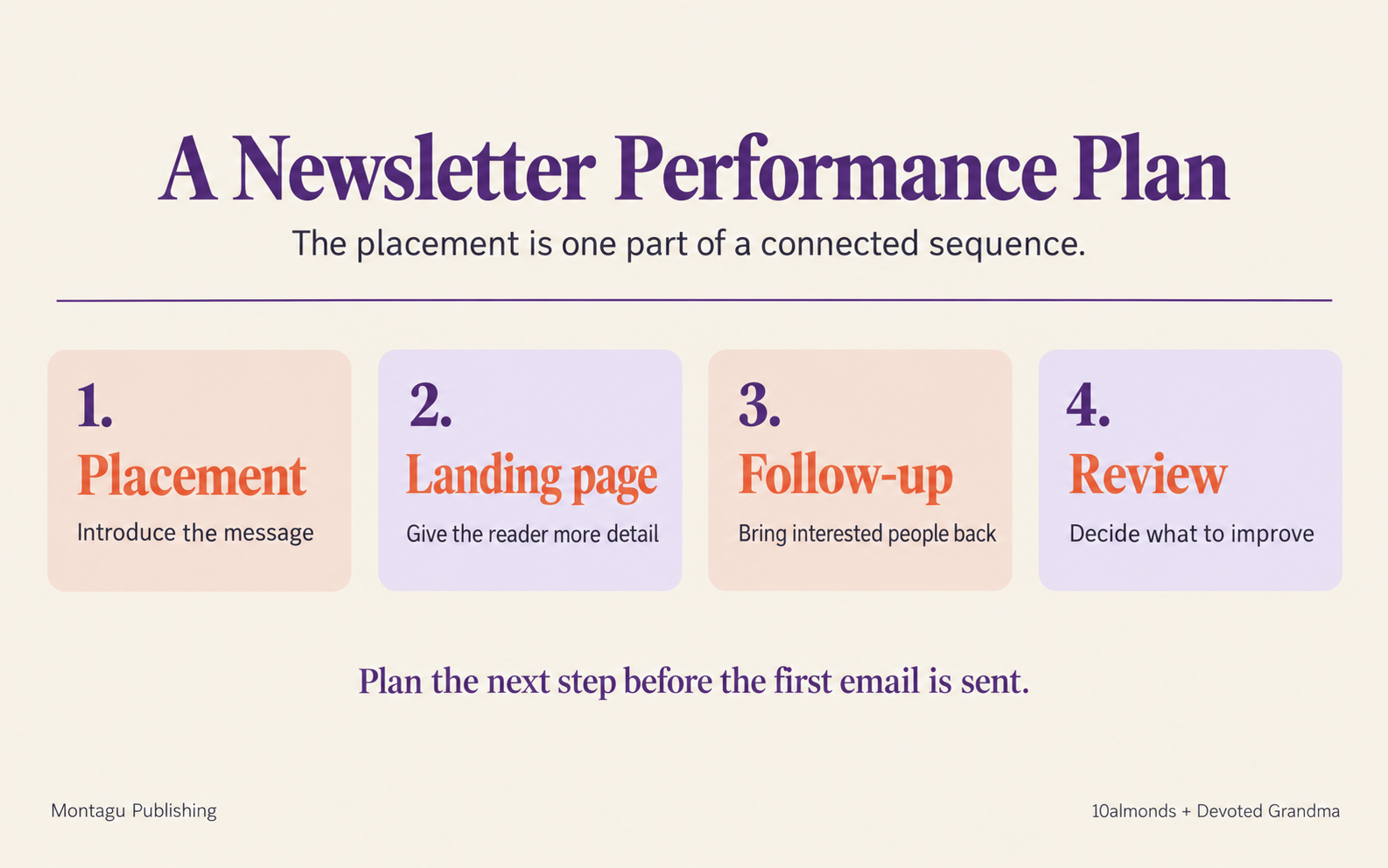
Before the campaign runs, the team should agree on the message, the landing page, the tracking links, the follow-up plan and the result it wants to review.
- Use the newsletter placement to introduce the message.
- Send readers to a page that explains the product or problem clearly.
- Use follow-up activity for people who showed interest.
- Review the result and decide what to change next time.
That gives the placement a role in a wider plan. It also prevents a useful first touch from becoming a dead end.
Make the Landing Page Match the Placement
A reader should recognise the same idea when she reaches the landing page. If the newsletter placement introduces a problem, the page should explain that problem clearly. If the placement makes one practical promise, the page should show the detail behind it.
A general homepage often asks the reader to do too much work. She may have to search for the product, work out why it is relevant or choose between several unrelated next steps. That can make a useful placement look weaker than it was.
The page does not need to be elaborate. It needs a clear heading, a short explanation that continues the newsletter message and one fair next step. That step may be reading more, viewing a product, signing up or buying. The right choice depends on how much context the reader has already received.
Decide What a Useful Visit Looks Like
Before the send, decide what would count as a useful visit. It might be a reader reaching a second page, spending time with an explanation, opening a product page, subscribing to updates or returning later. This prevents the report from being limited to the click total.
It also helps the agency explain the recommendation to the client. The placement is not being asked to do every job at once. It is being asked to move the reader one sensible step forward, then give the rest of the campaign something useful to work with.
Decide What to Measure
The campaign should be measured against the job it was given.
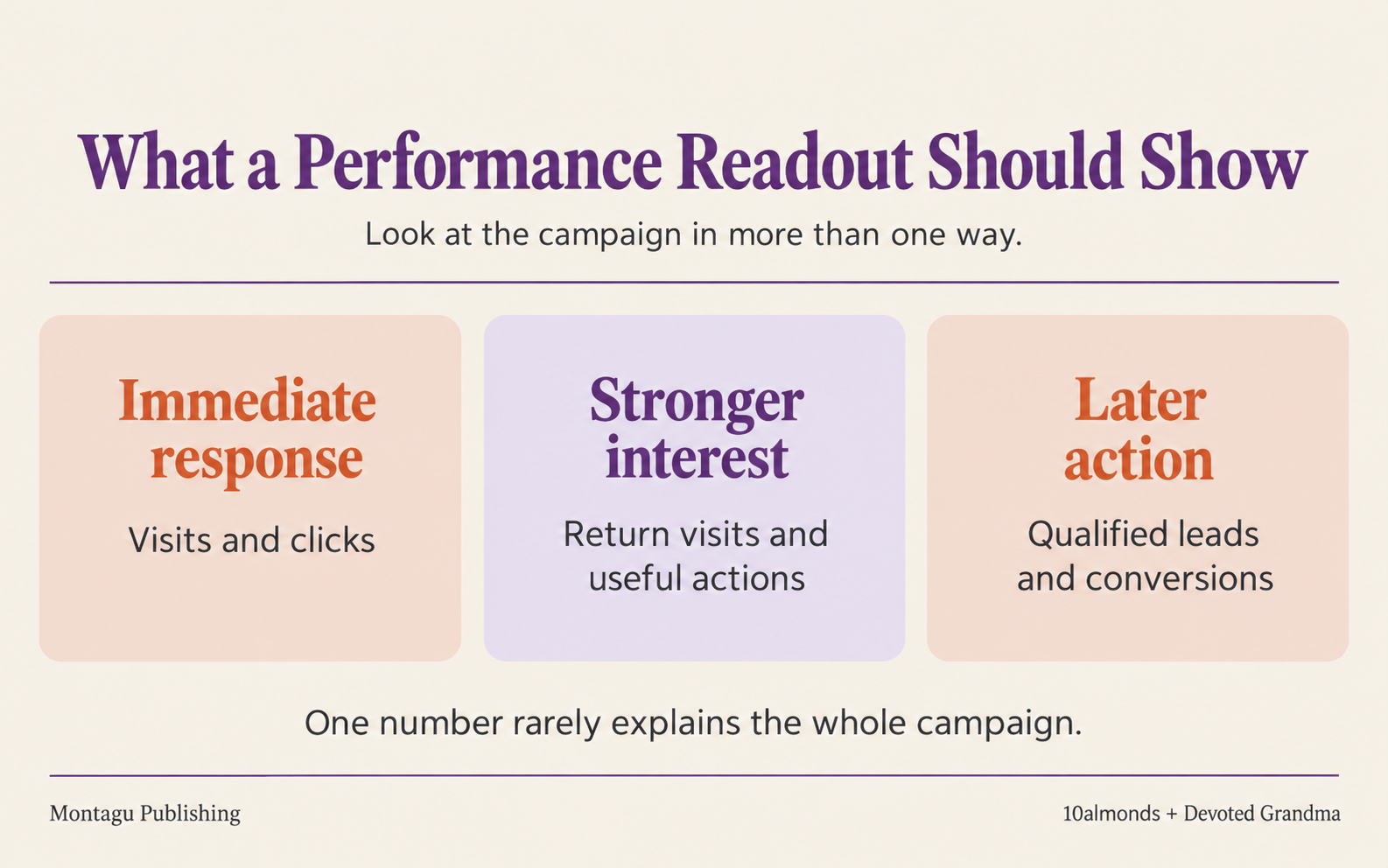
For immediate response, review visits and clicks. For stronger interest, review return visits, time on the page, related-content clicks or other useful actions. For later action, review qualified leads, sign-ups or conversions where the tracking allows it.
One number rarely explains the whole campaign. A placement with modest clicks may still show useful return behaviour. A placement with many clicks may be weak if readers leave quickly and do not continue.
The most useful report answers three questions:
- Did the audience respond?
- Did the response show real interest?
- What should the team change or test next?
How to measure sponsored content beyond clicks explains this reporting approach in more detail.
What an Agency Should Put in the Brief
An agency does not need to promise a result before a campaign starts. It needs to set up a clear test.
The brief should state:
- The audience problem the campaign addresses.
- The role of the newsletter placement.
- The message the reader will see.
- The page the reader will reach.
- The follow-up activity after the placement.
- The measures the team will review.
That makes the recommendation easier to explain to a client. It also gives the publisher enough information to suggest the right format, message and follow-up.
What should a brand include in a newsletter sponsorship brief? provides a practical checklist.
Frequently Asked Questions
The Bottom Line
A newsletter sponsorship can support a performance media plan when it is planned as part of a connected sequence.
Give it a clear job. Build the page and follow-up before the send. Review more than one number. Then use the result to make the next media decision better.
Planning a Newsletter Sponsorship?
Montagu Publishing helps brands reach engaged female reader communities through newsletter placements and sponsored educational content.
For newsletter placements or sponsored educational content, email sales@10almonds.com.