


CPM is useful. It gives a quick way to compare the cost of a thousand impressions. It is not enough to choose a newsletter sponsorship.
CPM can help a marketing manager or agency compare scale. It cannot tell them whether the readers are right for the message, whether the message fits the reason they are reading, or whether the campaign has a clear next step after the click.
That matters because a low CPM can still be a poor buy. If the message does not fit the reader setting, a cheaper placement does not solve the problem. If the landing page is unclear, more impressions do not solve the problem either.
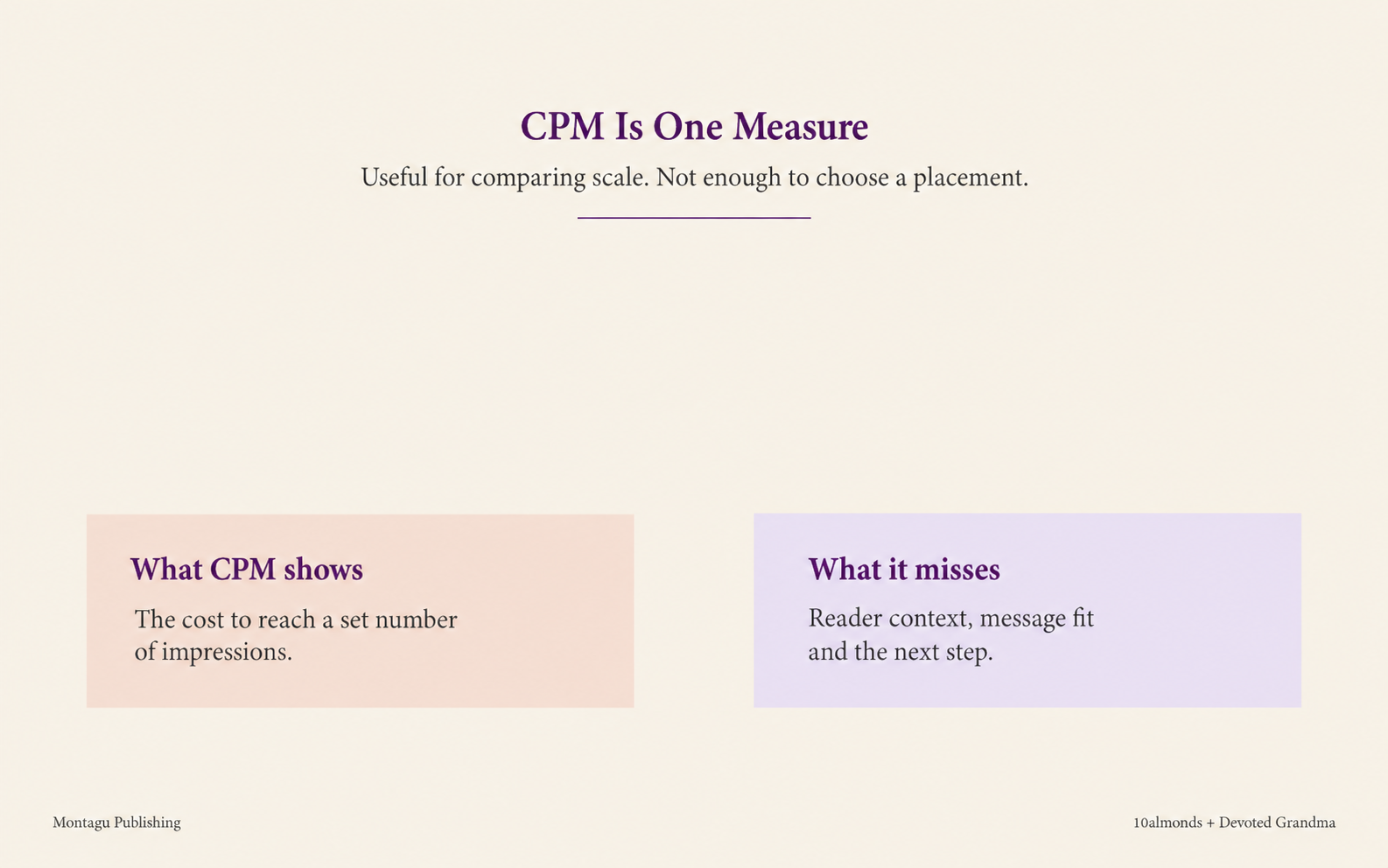
What CPM Can Tell You
CPM gives a common way to compare the price of reaching an audience at a stated scale. It can be useful when a team is looking at several newsletter placements, media channels or proposals.
It is a good starting point. A buyer should know the expected audience size, the placement price and the resulting CPM. Those numbers help a team decide what it can afford to test.
But CPM is only a price-and-scale measure. It does not measure relevance, attention or what the reader does after seeing the message.
Why CPM Is a Starting Point
CPM appears early in media planning because it is easy to calculate and easy to compare. It gives a team a shared number when several proposals have different prices and audience sizes. That is useful when a budget needs to be divided across a campaign.
However, a newsletter placement is not interchangeable with every other placement that has a similar CPM. One newsletter may be read for practical health advice. Another may be read for family ideas, product discovery or general news. The same price-and-scale figure does not explain those differences.
A good media plan uses CPM to compare the size of the opportunity, then asks whether the opportunity is relevant to the campaign. The rate is a starting point. It is not a recommendation by itself.
What CPM Cannot Tell You
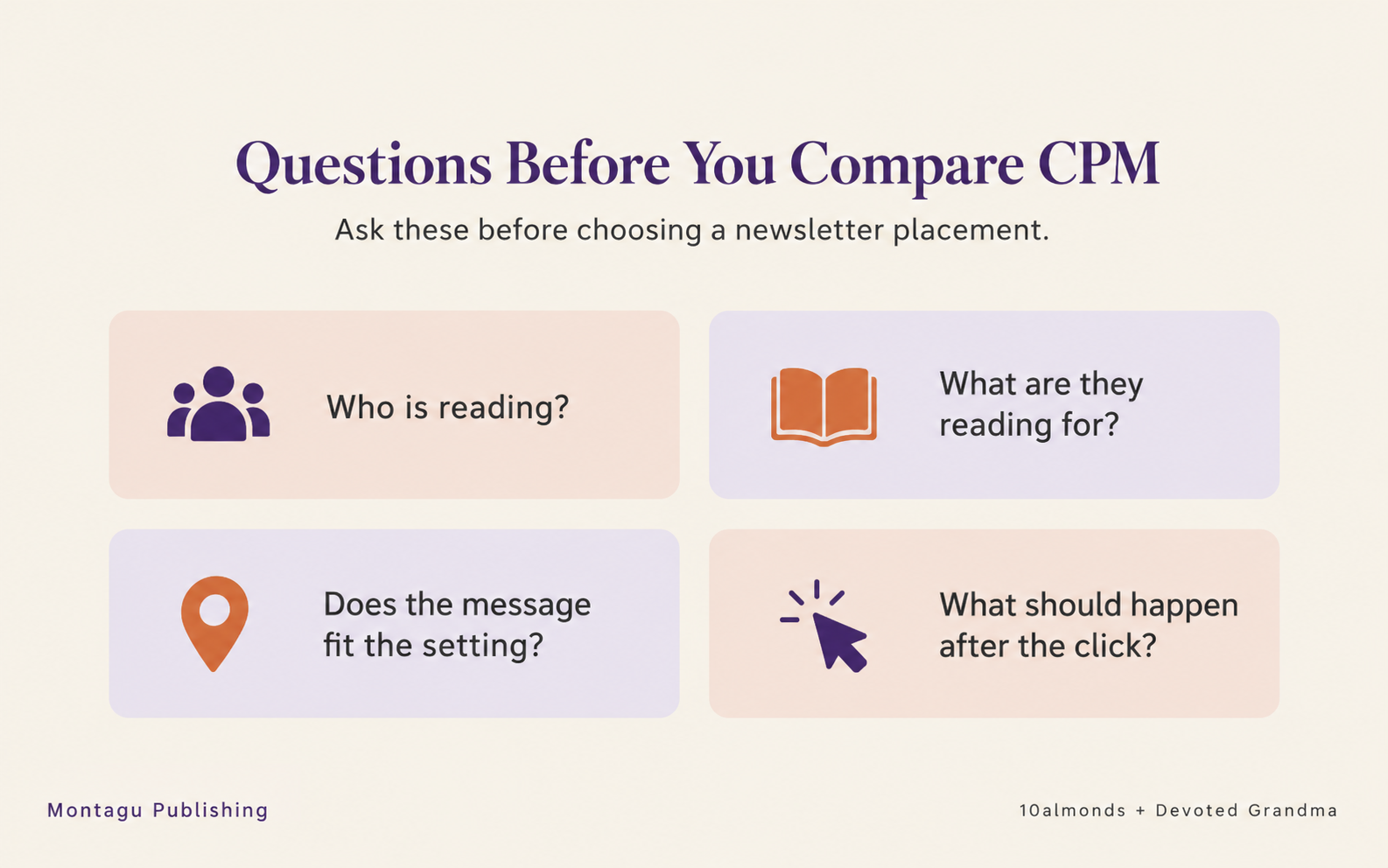
Before choosing a newsletter placement, a brand needs answers that a CPM figure cannot provide on its own.
- Who is receiving the newsletter and what are they interested in?
- Why are they opening and reading this publication?
- Does the brand message feel useful in that setting?
- What will a reader find when she clicks?
- How will the campaign be reviewed after it runs?
These are not extra questions. They are the questions that determine whether the placement has a sensible role in the plan.
Reader Context Changes the Value of a Placement
People do not read every newsletter in the same frame of mind. The subject they came for affects how they receive a sponsorship. A reader who opens a health newsletter may be looking for practical information about sleep, nutrition or prevention. A reader who opens a family newsletter may be thinking about household decisions, gifts or time with grandchildren.
This does not mean one audience is automatically better than another. It means the message should match the reader’s reason for being there. The same brand may have a useful place in more than one publication, but the angle, offer and landing page may need to change.
That is why a buyer should look at the publication as well as the audience number. Read recent issues. Ask where the placement will sit. Review the surrounding editorial subject. Then decide whether the message will make sense to a reader in that moment.
Compare the Whole Campaign, Not Just the Placement
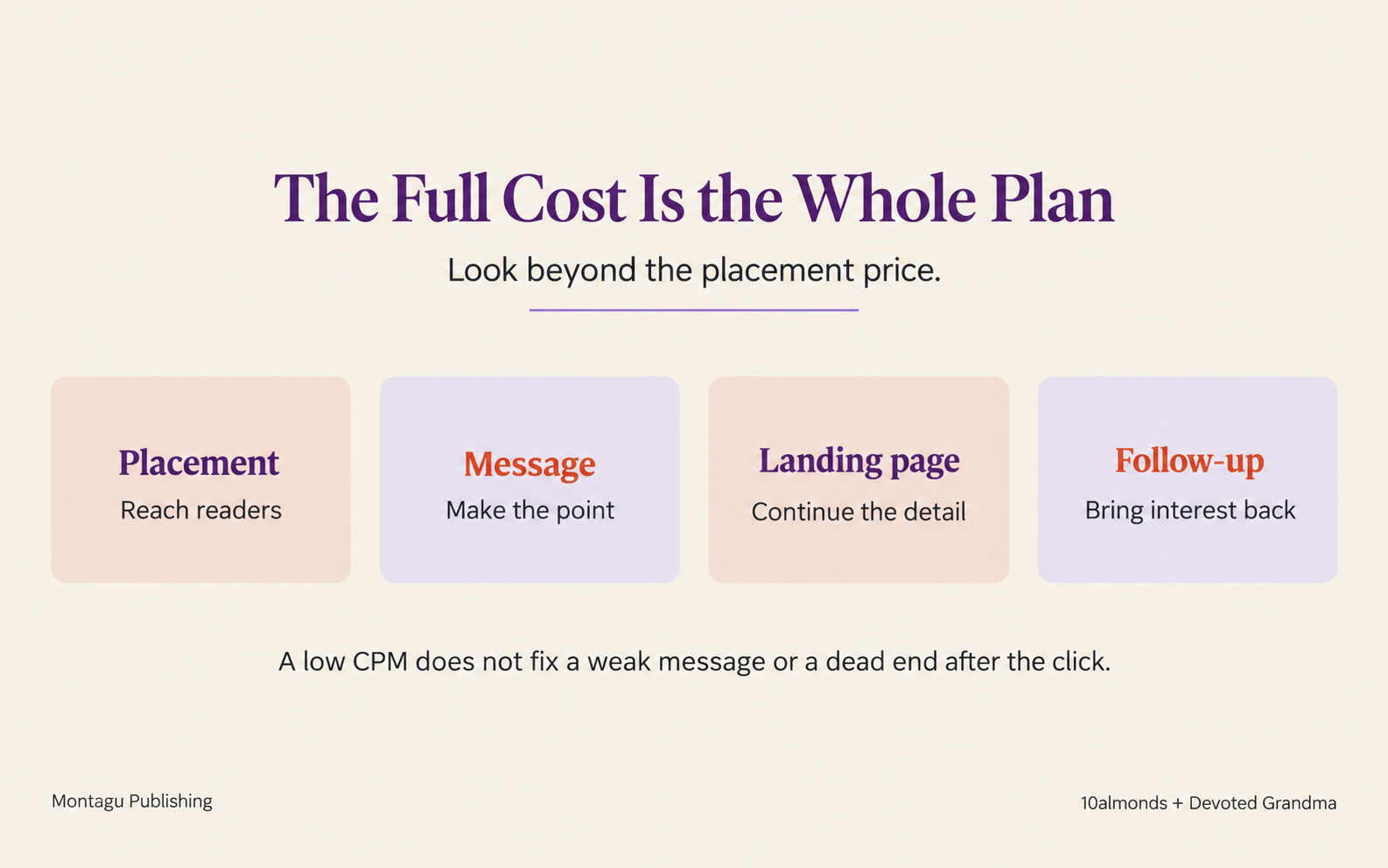
A newsletter sponsorship does not work by itself. The placement is one part of a campaign that also needs a clear message, a page that continues the conversation and a plan for readers who show interest.
Two placements can have similar CPMs and produce very different results. One may lead readers to a page that answers their question clearly. Another may send them to a general homepage with no obvious next step.
The placement price is important, but it is not the whole cost of making the campaign work. A low CPM does not fix a weak message or a dead end after the click.
A Simple Way to Compare Placements
Ask each publisher for enough detail to make a practical comparison.
| What to compare | What to ask | Why it matters |
|---|---|---|
| Audience | Who receives the newsletter and what topics bring them there? | It helps determine whether the audience fits the product. |
| Placement | Where will the message appear and what will it include? | It makes the reader experience clearer. |
| Message | What problem or question will the message address? | It gives the placement a useful job. |
| Landing page | What will the reader see after the click? | It prevents the first visit from becoming a dead end. |
| Review | Which measures will the team review after the campaign? | It helps improve the next decision. |
What audience evidence should a newsletter publisher show before you buy? covers the information a buyer should request before approving a placement.
Make the First Test Useful
A first newsletter sponsorship does not need to prove every part of a marketing plan. It should answer one clear question. For example: does this message bring relevant readers to the landing page, or do readers who click return later to learn more?
Choose the question before the placement runs. Then make sure the link, landing page and reporting match it. If the purpose is to introduce a product that needs explanation, the landing page should continue that explanation. If the purpose is to build a retargeting audience, the team should decide how those readers will be followed up with after the placement.
Review the result in the same way. Look at visits and clicks, then look at what readers did on the page. Did they read further, sign up, return or take another useful action? A clear test gives the next decision a firmer basis than a single CPM figure or click total.
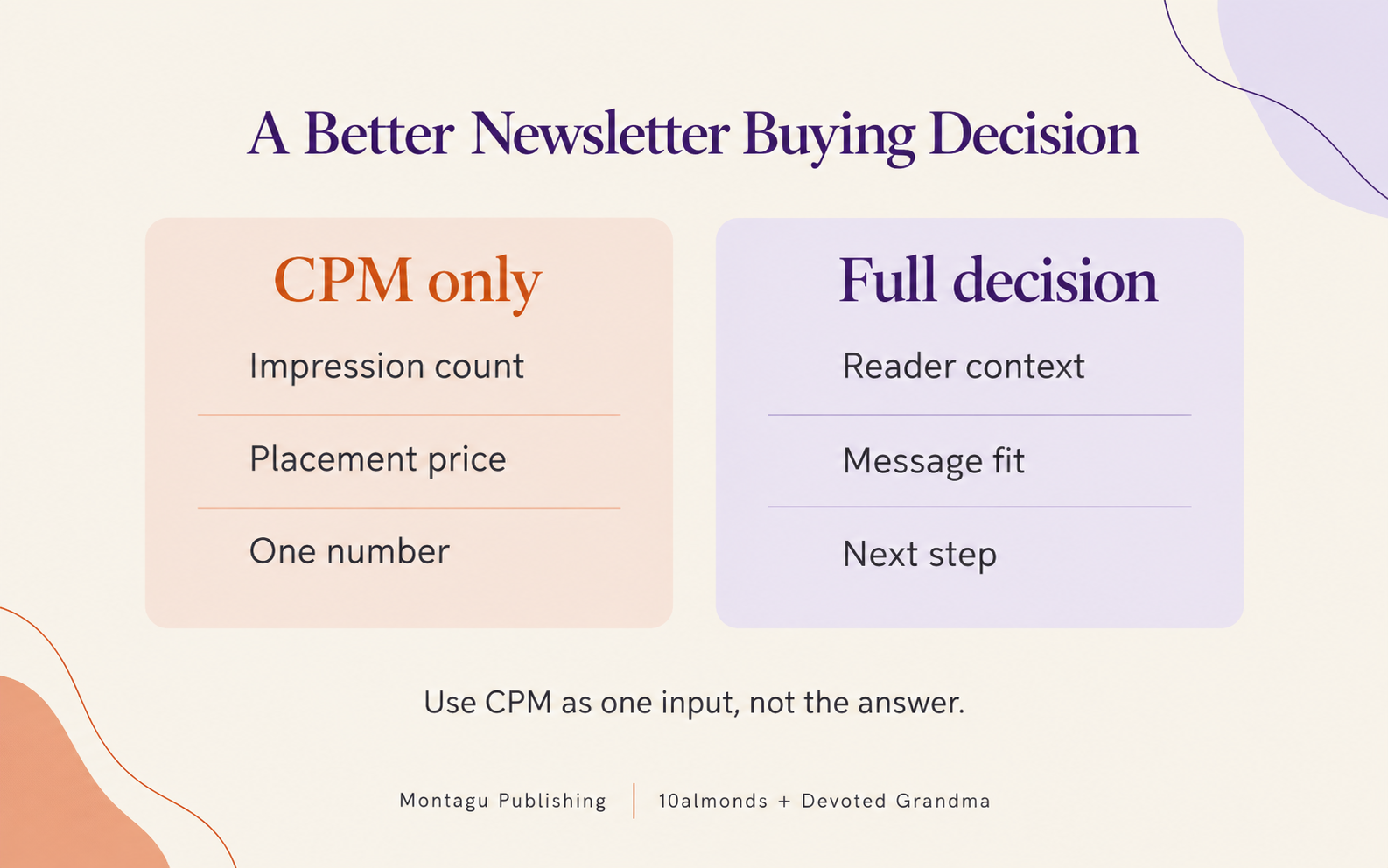
Use CPM as One Input, Not the Answer
There is no need to dismiss CPM. It is useful for comparing scale and setting a budget. The problem starts when it becomes the only number in the decision.
A stronger buying decision considers the audience, the message, the placement, the landing page and the follow-up plan. That gives the team a better chance of learning from the campaign, even when the first test is small.
Frequently Asked Questions
Planning a Newsletter Sponsorship?
Montagu Publishing helps brands reach engaged female reader communities through newsletter placements and sponsored educational content.
For newsletter placements or sponsored educational content, email sales@10almonds.com.