


A brand can book a newsletter sponsorship directly with the publisher or through a network. Neither route is automatically better. The right choice depends on the campaign job, the number of placements, the level of coordination needed and the information the team needs before it can approve the buy.
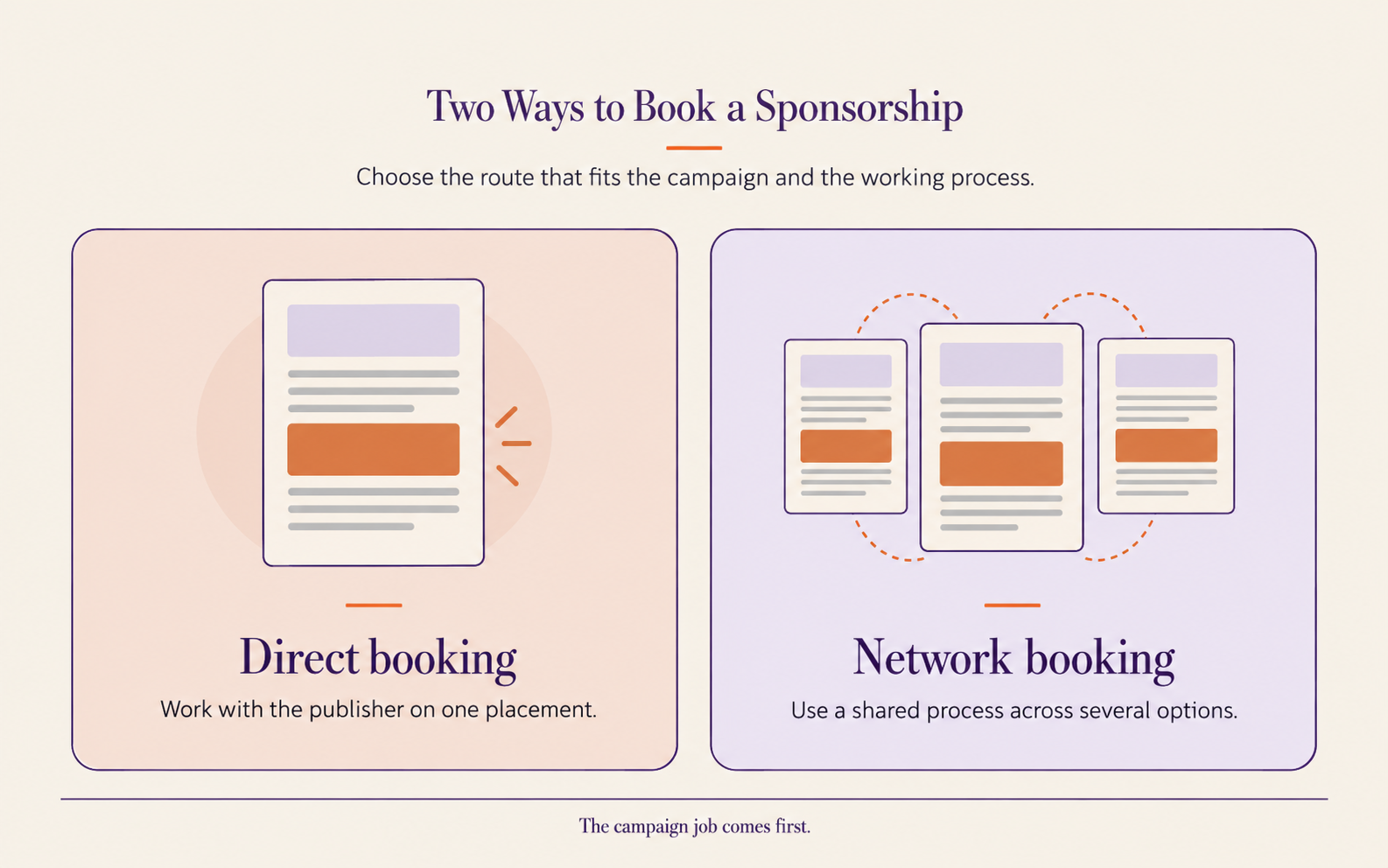
Direct booking means the brand or agency works with the publisher on the placement. Network booking means an intermediary or shared buying process is involved. Both can lead to a useful campaign. Both can also create confusion if the team has not decided what it is trying to buy.
Start with the reader and the campaign purpose. Then choose the route that makes the work clear. A booking route is an operational decision. It should support the media plan, not replace it.
What Direct Booking Can Offer
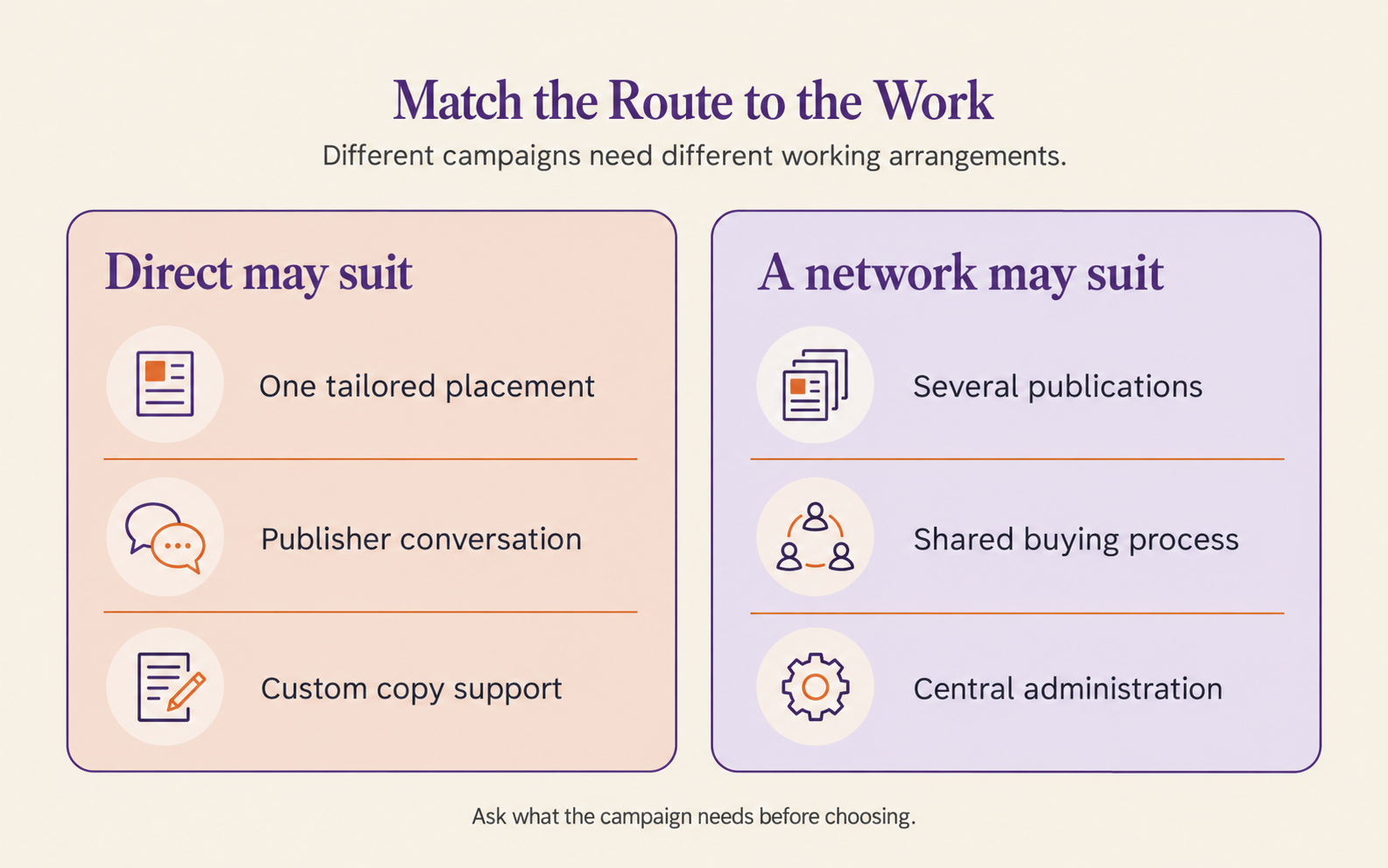
Direct booking can be useful when a brand wants to discuss one placement with the publisher in detail. The team can ask about the reader setting, the planned issue, the sponsorship format and the copy process before agreeing on the work. This is helpful when the placement needs a tailored message or a specific editorial context.
It can also make responsibilities easier to see. The brand knows who is reviewing the brief, who is preparing the copy, which link will run and who will share the report. That does not make a direct deal better by default. It simply gives the buyer a clear path for a campaign that benefits from a publisher conversation.
The buyer still needs to do the usual work. Ask who the readers are, why the message belongs with them, what the placement includes and what will be reviewed afterwards. A direct conversation should add clarity, not become a substitute for a written proposal.
What Network Booking Can Offer
Network booking can be useful when an agency is considering several publications or needs a shared way to manage the buying process. A network may give the team one process for reviewing options, confirming placements and handling the administrative parts of the buy. That can be useful when the campaign has more than one publication or several moving parts.
The important question is not whether the network is involved. It is whether the buyer can still see the information that matters. The team should be able to understand the publication, the reader context, the exact placement, the copy requirements, the tracking link and the report. If any of these points are unclear, ask before approving the placement.
A network should not turn a considered media choice into a list of names and rates. The campaign still needs a reason for each publication. The agency should be able to explain why a particular reader group, issue and placement belong in the plan.
Use the Same Questions for Both
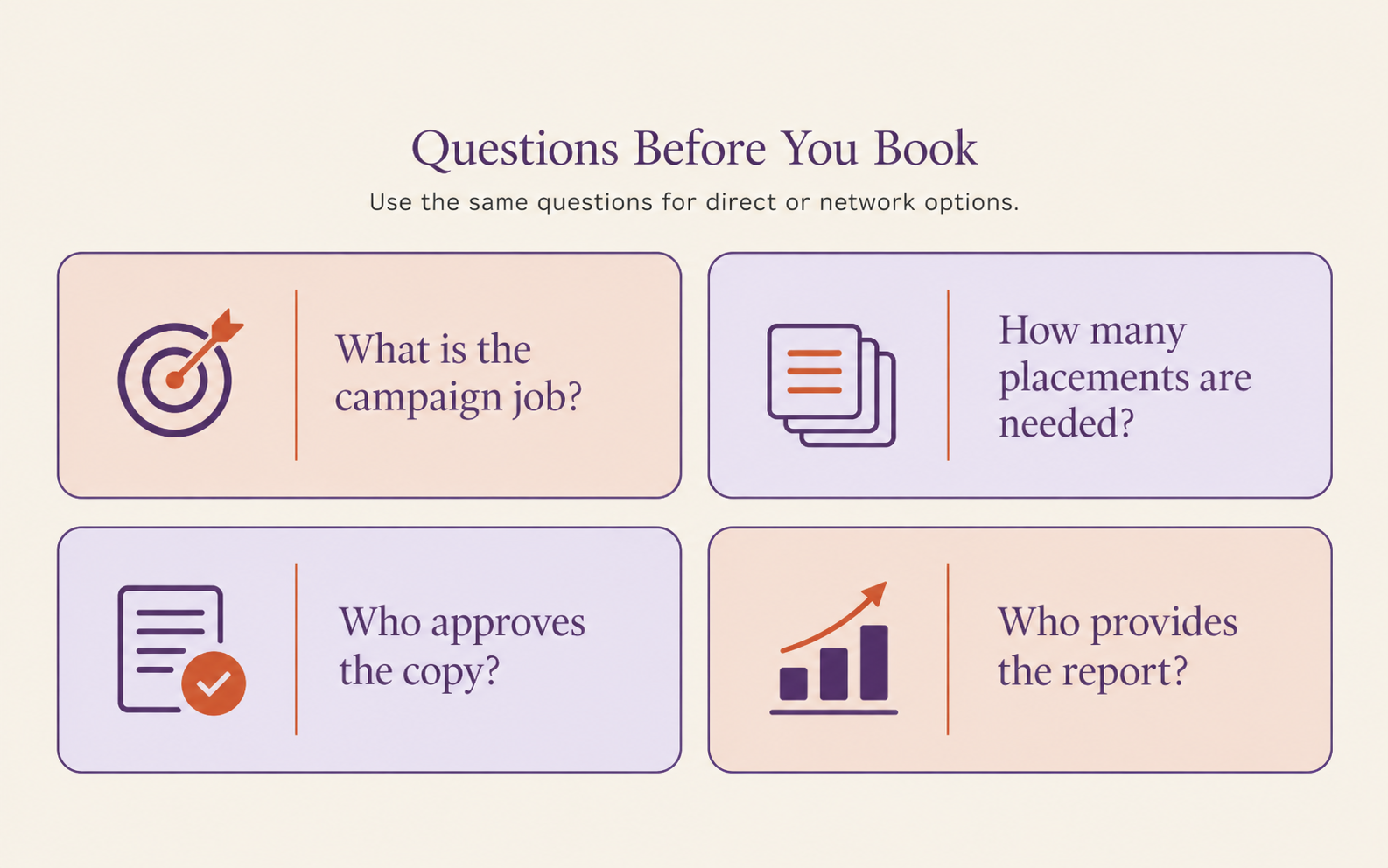
Whether the buy is direct or through a network, four questions should be answered before money is committed.
- What is the campaign job? Is the placement introducing an idea, bringing readers to an educational page, supporting an offer or helping the team learn about a new audience?
- How many placements are needed? Is this one specific opportunity or a coordinated group of publications?
- Who approves the copy? Name the person who provides brand facts and the person who confirms the final sponsorship message.
- Who provides the report? Agree on the link, the information to be shared and the date the team will review the result.
These questions prevent a common problem: the route is chosen first, and the campaign is designed around it later. That is backwards. The campaign should make the route easier to choose. A clear brief will show whether the team needs a detailed publisher discussion, a broader buying process, or a mix of both.
Do Not Outsource the Brief
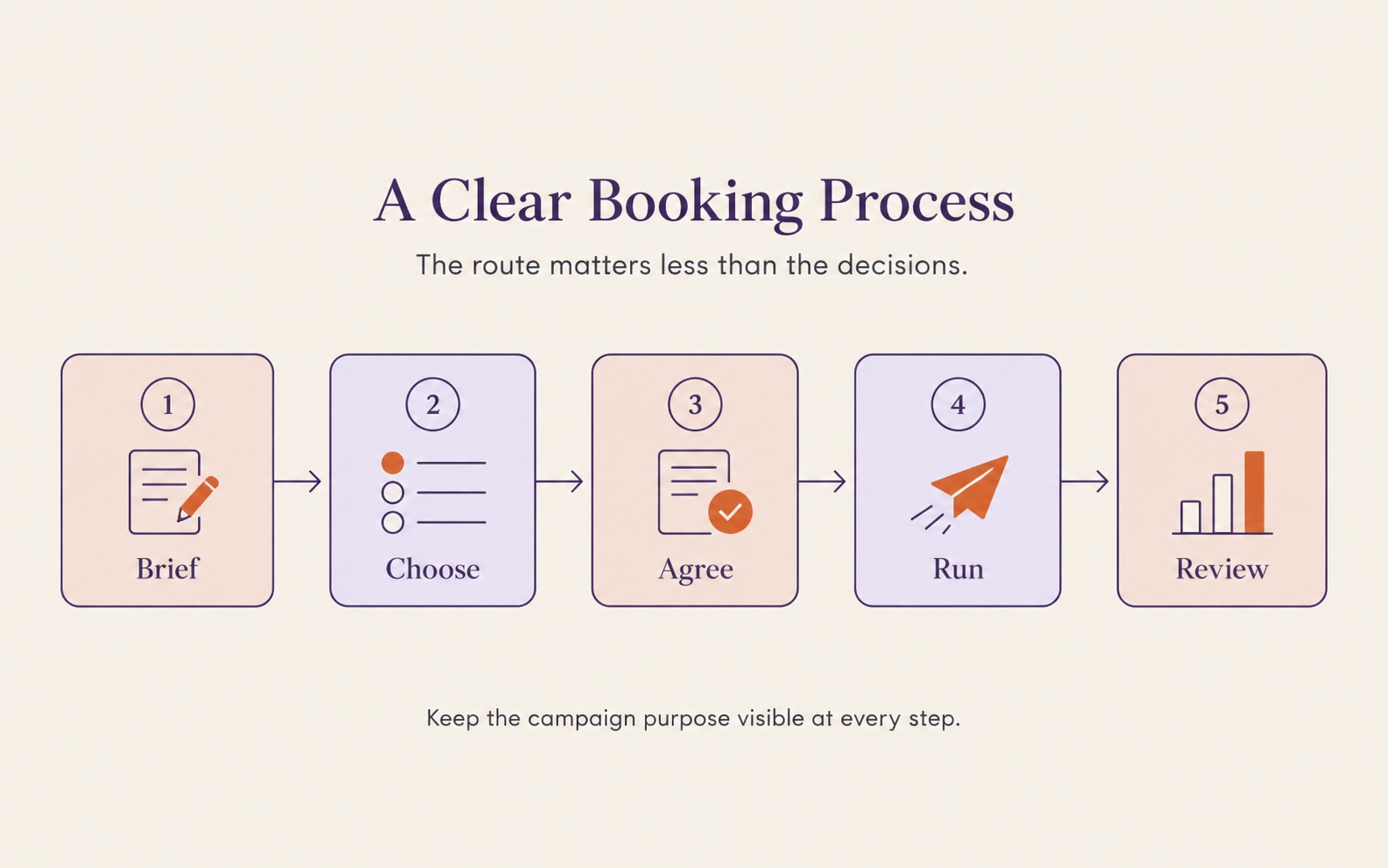
A booking partner can help with the process, but the brand or agency still needs to own the brief. The brief should name the reader, the problem or decision, the message, the offer and the next step. Without that, a publisher or network can only match a general category to a general audience.
Keep the brief short. A single page is often enough. It should state what the placement needs to do, what product facts are approved, where the link should go and how the result will be used. This gives every party a practical assignment. It also makes it easier to compare proposals without reducing the decision to audience size or a single price.
For a direct booking, the brief helps the publisher prepare the right placement. For a network booking, it helps the agency compare different options against the same purpose. In both cases, it keeps the campaign from becoming a generic request for reach. A newsletter sponsorship brief should make the campaign job clear before the buying process begins.
Keep the Proposal Concrete
Before the placement is confirmed, put the details in writing. State the publication, issue date or date range, position, format, copy and asset deadline, final link, price and reporting plan. If the campaign includes more than one publication, list what is common across the placements and what changes by publication.
This matters because the same broad idea may need different copy in different reader settings. The publisher should know which facts and claims are fixed. The brand should know how the message will be presented. Clear roles for sponsorship copy make this part of the process much easier.
Price should come after the scope is clear. A direct rate and a network rate cannot be compared fairly if the placements include different work. Review what the buyer is receiving, the reader context, the creative process and the report as well as the cost. The price model should match the campaign job, not obscure it.
Plan Across Several Publications Carefully
When a campaign includes several newsletters, keep one central idea but do not assume each placement should use the same words. The reader may have a different reason for reading each publication. Give every placement one job and adapt the explanation to the reader setting. The brand facts, offer and final link can stay consistent while the opening and supporting detail change.
Use one tracking approach across the plan so the team can see which placement led to which visit or action. Agree on the review date before the campaign starts. This does not mean every publication must be judged by one number. It means the agency has a clear record of what was planned, what ran and what should be improved next time.
Make the Report Serve the Next Decision
After the placement runs, review the information that answers the original brief. Did the publication reach the intended reader setting? Did the message send qualified visitors to the right page? Was the next action clear? The report should help the team decide whether to repeat, adjust or stop the placement. It should not become a collection of numbers with no decision attached to it.
That final decision belongs to the brand and agency, whatever booking route was used.
Frequently Asked Questions
Considering a Newsletter Sponsorship?
Montagu Publishing helps brands reach engaged female reader communities through newsletter placements and sponsored educational content.
For newsletter placements or sponsored educational content, email sales@10almonds.com.